How the UAE built a humanitarian lifeline for Gaza beyond emergency aid
From field hospitals to food aid, UAE scales long-term support for Gaza civilians
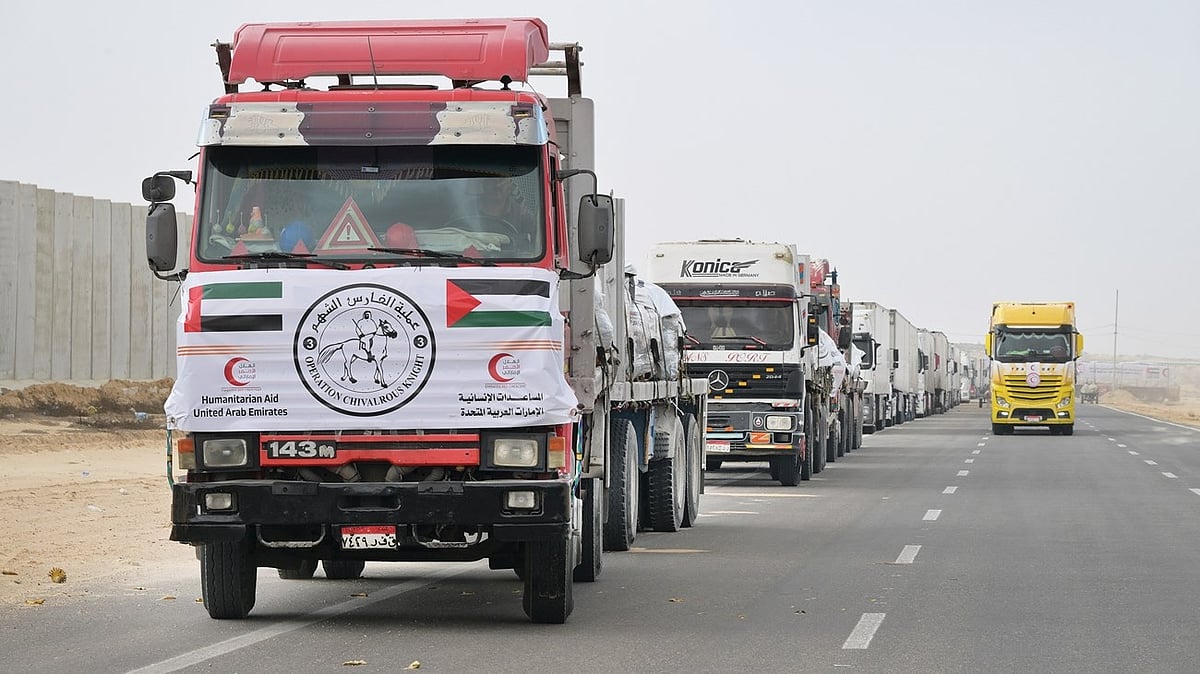
The UAE’s humanitarian role in supporting the Gaza Strip stands out as a model of direct intervention delivered through a structured and organized relief framework. It approaches the crisis as an ongoing humanitarian emergency requiring rapid, sustained action, with a clear focus on alleviating civilian suffering, free from political considerations or secondary agendas.
According to a report by MTV Lebanon, Gaza today represents a harsh test that is redefining the meaning of effective presence in the face of catastrophe. In this context, the report highlighted Operation “Chivalrous Knight 3” (Gallant Knight 3), describing it as a response that extends far beyond the immediacy of the moment.
Get updated faster and for FREE: Download the Gulf News app now - simply click here.
Following the outbreak of war in Gaza after October 7, 2023, and the subsequent large-scale humanitarian collapse, the UAE launched Operation “Gallant Knight 3.” The initiative has since evolved into a continuous support mechanism that goes beyond emergency aid, encompassing the management of growing humanitarian needs within an exceptionally complex environment, including food security, water supply, medical care, and support for displaced populations.
Sustained response
The report noted that the UAE’s approach reflects a transition from conventional relief efforts to the concept of a sustained humanitarian response, whereby assistance becomes an integral part of daily life aimed at preventing the gradual collapse of living conditions within the enclave.
It emphasized that UAE aid has evolved from emergency interventions into a comprehensive daily support system that touches every aspect of basic life. This includes supporting the operation of bakeries to ensure a continuous supply of bread, as well as the regular delivery of essential food items, water, and critical supplies to maintain a minimum level of food security.
The report further highlighted efforts to support displaced families through shelter assistance and direct aid, helping ease pressure on a community facing a severe decline in essential services and a rapidly deteriorating living environment. Daily humanitarian action has therefore become an integral part of crisis management rather than merely a reaction to it.
Direct and continuous medical intervention
In the healthcare sector, the UAE Field Hospital has emerged as one of the most significant instruments of direct response inside Gaza. It has received large numbers of critically injured patients and those requiring urgent medical attention, providing emergency medical and surgical services under highly challenging conditions marked by limited resources and unprecedented pressure on the healthcare system.
Patients requiring specialized treatment have also been transferred to hospitals in the UAE to continue their care, reflecting an advanced level of direct medical intervention within a severely strained healthcare environment.
This medical presence represents a shift from humanitarian relief to direct therapeutic intervention at a time when Gaza’s healthcare system continues to face a sharp decline in operational capacity.
An integrated food support system
Meanwhile, the report indicated that field data points to the delivery of tens of thousands of food parcels across Gaza, benefiting large numbers of civilians. Support for bakeries has also continued, enabling the daily production of bread to meet the essential needs of significant segments of the population.
Assistance has included tents, shelter materials, infant formula, medical supplies, and dates, reflecting both the diversity and scale of the UAE’s response despite complex logistical challenges, disrupted supply chains, and difficulties in accessing basic necessities.
The report concluded that the humanitarian presence is no longer limited to occasional aid shipments. Instead, it has evolved into a daily operational system designed to ease humanitarian pressures on residents. Essential supplies are being delivered on a near-daily basis, while shelter operations have expanded to support thousands of displaced families in an effort to prevent further deterioration of living conditions and avert a complete humanitarian collapse.
Network Links
GN StoreDownload our app
© Al Nisr Publishing LLC 2026. All rights reserved.