Little Abbas with his father (left) and the rest of the family.
From Malappuram to Dubai in 1972: Meet Keralite who put Al Wasl on his village map
Abu Dhabi historian Abbas Panakkal recollects his late father’s extraordinary journey
Last updated:
4 MIN READ
On UAE National Day known as Eid Al Etihad, Abbas Panakkal, a 49-year-old Abu Dhabi-based historian, recalled how his late father, Muhammed Panakkal, transformed Dubai’s Al Wasl football club into a household name in their small village in Malappuram district of Kerala.
A journey of courage
“My father was the only male child among all his siblings,” Abbas recalled.
“Once, a postman came to our home, and my father offered him juice. Curious, I asked why. He revealed he had once been offered the postman’s job but had already paid a travel agent to journey to the UAE.”
After seeing many people eke out a living in the Gulf, Muhammed decided to try his luck. In 1971, just as the UAE was forming, then 22-year-old Muhammed from Kannattipadi in Vengara prepared for the journey.
The Panakkal family
In August 1972, he travelled by bus to Mumbai and then boarded a traditional wooden dhow, or ‘Uru’, bound for Ras Al Khaimah. What was meant to be a 20-day voyage stretched to 43 days, plagued by sickness, dwindling drinking water, and fatalities among the passengers.
“When the Uru neared Ras Al Khaimah, survivors were ordered to jump into the sea as they lacked proper entry documents. They swam to shore, exhausted and lungs filling with saltwater,” Abbas recounted.
Life at Al Wasl
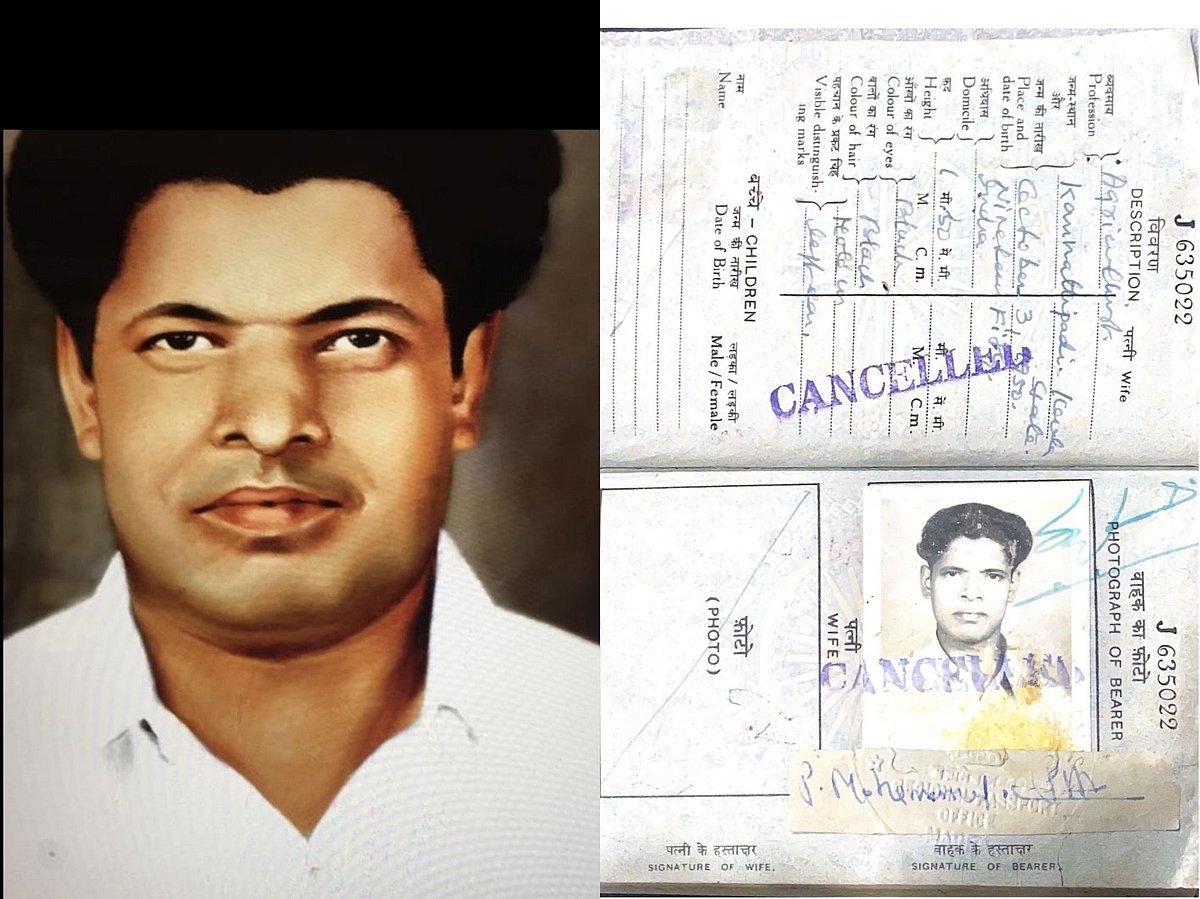
Muhammed Panakkal’s handwritten passport
From contacts in the UAE, Muhammed immediately found work at Al Zamalek Club, later renamed the iconic Al Wasl.
“He arrived with nothing but the fire in his belly,” said Abbas. “He did every task imaginable: managing footballs, taking care of the ground, helping players. There was no air conditioning, no TV, only a fan, but the club became his life.”
His dedication earned him a work visa, and in 1974, he returned home on vacation. It was then that he introduced Al Wasl to his village.
Over time, Muhammed helped many people from Vengara secure jobs at the club. Al Wasl became both a workplace and a refuge for newcomers, while the children of the village received their first footballs.
“Opportunity is not to be hoarded, it is to be shared,” Abbas quoted his father.
Playing in Kerala, Abbas’ brother dons the Al Wasl jersey, a nod to the family’s enduring connection.
Even today, Al Wasl stickers adorn doors, and Muhammed’s sons proudly wear the club’s jerseys.
With the advent of computers in the UAE, the club asked Muhammed to run a small shop serving food and drinks to players and juniors.
Returning home
Abbas Panakkal (left) with a copy of his father’s visa page.
After 14 years in the UAE, Muhammed returned to Kerala permanently in 1986.
“He always wanted to come back. He built perhaps the first concrete house in the village and started businesses like a sawmill and a furniture shop. Whatever he did, he found success,” Abbas, a father of four children, noted.
A Vengara football club celebrates winning the Best District Club title in 1987.
Muhammed became a successful businessman and came to be widely known as P.C. Muhammed Haji. He always remained grateful to the club and its stakeholders for the remarkable opportunities that shaped both his life and the life of his village. He passed away in 1995.
Opportunity is not to be hoarded, it is to be sharedAbbas quoted his late father
Abbas’ mother visits club
Five years later, in 2000, Abbas visited Dubai for the first time and toured the famous club where his father once worked.
“It was emotional to see a few people from my village still at the club.”
In 2019, Abbas moved to Abu Dhabi, and the following year, he brought his mother to the club, revisiting the place that had shaped her husband’s life.
Abbas Panakkal with his wife and children.
Abbas, the fourth of eight brothers, is a historian who serves on the advisory board of the Religious Life and Belief Centre at the University of Surrey and is a Fellow at the Edward Cadbury Centre, University of Birmingham, UK.
His monograph, The Hindu Amīr of Muslims, published by Bloomsbury London, begins with his father’s perilous journey and is dedicated to his beloved father.
“His courage and vision inspired my education, research, and writing, opening doors to fellowships and opportunities that culminated in my Golden Visa,” Abbas highlighted.
Legacy lives on
The Al Wasl connection remains strong. Abbas shared a photo of his elder brother, now around 60, still playing football and badminton in the club’s jersey.
“From the deck of a wooden Uru to the heart of Dubai’s most iconic football clubs, my father did not just cross an ocean, he built a bridge of hearts,” Abbas added.
Sign up for the Daily Briefing
Get the latest news and updates straight to your inbox
Network Links
GN StoreAbout Gulf NewsTerms & ConditionsReach by GNSitemapContact usPrivacy PolicyGN FocusHave your sayWork with usAdvertise with usGulf News epaperPrinting Services
Download our app
© Al Nisr Publishing LLC 2026. All rights reserved.