What Dubai’s new nature reserve plan means for residents and wildlife
Project will strengthen biodiversity protection, explore future expansion under Dubai 2040
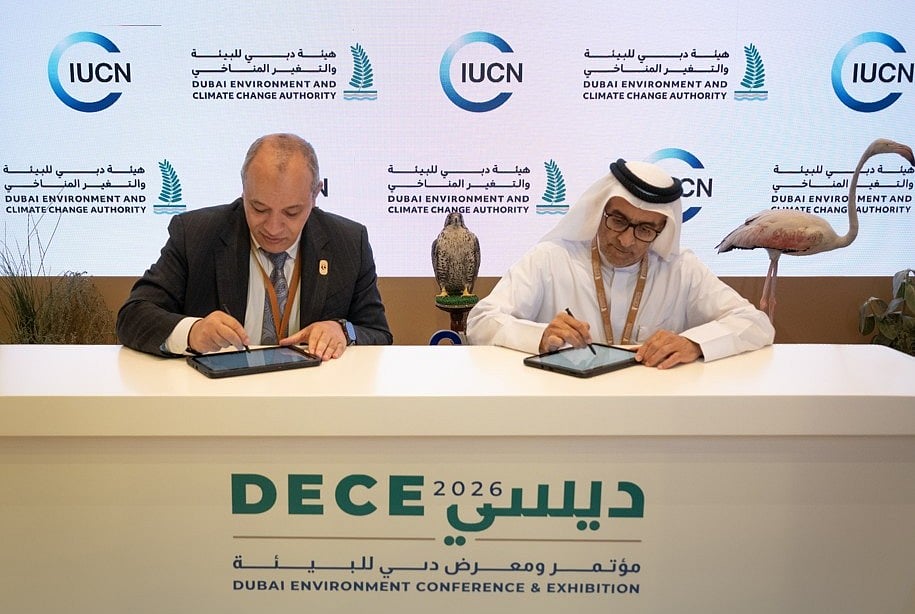
Dubai: Dubai is taking a more integrated approach to protecting its natural areas, with a new one-year project set to assess the emirate’s eight existing nature reserves and establish a long-term framework for their management and development.
The Dubai Environment and Climate Change Authority (DECCA) has partnered with the International Union for Conservation of Nature, Regional Office for West Asia (IUCN ROWA), to develop and implement an integrated plan for Dubai’s nature reserve network.
The first phase of the project will establish a science-based assessment of the current status of the reserves and help guide their development according to international best practices. The aim is to support biodiversity conservation while also enhancing community wellbeing.
The initiative has been announced during the inaugural Dubai Environment Conference and Exhibition 2026. The signing ceremony has been attended by Ahmed Mohammed bin Thani, director general of DECCA, and Dr. Hany El Shaer, regional director of the IUCN West Asia office.
Get updated faster and for FREE: Download the Gulf News app now - simply click here.
Eight reserves
The project will look at Dubai’s reserves as one connected network rather than as separate locations managed independently. The assessment will establish a baseline for the current status of the reserves, including habitat representation, ecological connectivity corridors, and their resilience to climate change.
Moreover, it will assess management effectiveness using globally approved tools and compare the results against IUCN Green List standards.
The project covers the eight existing reserves and will also explore opportunities for future expansion in line with the Dubai 2040 Urban Master Plan.
The eight reserves managed by DECCA are Hatta Mountain Reserve, Al Marmoom Desert Conservation Reserve, Ghaf Nazwa Conservation Reserve, Jebel Nazwa Conservation Reserve, Ras Al Khor Wildlife Sanctuary, Jebel Ali Wildlife Sanctuary, Dubai Desert Conservation Reserve, and Al Wohoosh Desert Conservation Reserve.
Wildlife first
The plan has been designed to strengthen the protection of Dubai’s biodiversity by using scientific data to guide the management of habitats and protected areas.
It will examine how well the different reserves represent Dubai’s habitats, how they are connected, and how resilient they are to the effects of climate change.
“Today, we are not merely creating a management plan; we are mapping a future where Dubai’s global ambitions meet its ancient natural heritage,” stated Thani.
He has regarded the Dubai Integrated Plan for Nature Reserves as a cornerstone in the development of a “smart, interconnected network” based on scientific foundations and global practices. The project will also look at the wider benefits provided by healthy ecosystems.
“We believe that protecting wildlife is protecting our future. By activating ecosystem services, we are not just protecting the Arabian Oryx or Ghaf trees; we are enhancing the ecosystem services that ensure the sustainability of our city and reinforcing Dubai’s role as a global leader in addressing climate change.”
He added, “This project is a message of commitment to future generations that Dubai will always remain a green oasis where nature thrives alongside innovation and humanity.”
Benefits for residents
For Dubai residents, the plan has been expected to support the development of natural spaces that can contribute to quality of life, recreation, learning, and public wellbeing.
The authority has highlighted the ecosystem services provided by nature, including air purification and local climate regulation, as well as providing peaceful environments for recreation and learning.
Additionally, the project has aimed to support sustainable tourism and create opportunities for nature-based experiences while preserving the natural character of the reserves.
DECCA has bared that the initiative could create job opportunities for Dubai nationals in areas including environmental guiding, natural resource management, and nature-related science and research.
Community input
The planning process will include workshops involving experts, private-sector representatives, local communities, and young people.
Government agencies and non-governmental organisations will also be involved in discussions eyed at developing a shared vision for the future of Dubai’s nature reserve network.
The objective has been to ensure the plan reflects the needs of different groups and encourages greater community participation in environmental conservation.
Global standards
A key part of the partnership is the use of the IUCN Green List framework for protected areas.
El Shaer has mentioned that the project would not simply adapt a ready-made model for Dubai. Instead, it would build global standards around the emirate’s local environmental conditions.
“What distinguishes this project is that it does not adapt a ready-made model but rather builds global standards upon a local environmental reality,” shared El Shaer.
He has pointed out that IUCN’s work with DECCA would focus on the listing of Dubai’s natural reserves on the IUCN Green List and placing them within a global recognition framework designed to support their long-term sustainability.
Green economy
Furthermore, the project has an economic dimension, with DECCA describing it as a potential new driver for the green economy in Dubai.
The development of sustainable tourism could create opportunities for visitors to experience the emirate’s natural environments while maintaining protections for sensitive ecosystems.
The authority has also seen potential for new employment opportunities linked to conservation, environmental management, guiding, and scientific research.
At the same time, the plan has been intended to ensure that greater use of natural areas does not come at the expense of biodiversity and the protection of natural resources.
New rules
The partnership has two integrated tracks. The first focuses on strengthening the nature reserve network through the comprehensive scientific assessment. This will establish the current baseline, examine ecological connections, and assess resilience to climate change.
The second will focus on the legislative framework governing nature reserves.
The scientific findings will be used to help modernise this framework, with a focus on management and governance principles, the role of communities, sustainable use of reserves and natural resources, conservation mechanisms, and enforcement.
The initiative forms part of DECCA’s ongoing work since its establishment under Law No. 11 of 2024 for the management of nature reserves in Dubai.
Looking ahead
Meanwhile, Thani has underscored that the project represents a commitment to ensuring that Dubai’s development continues alongside the protection of its natural environment.
“A nature reserve is infrastructure in every sense of the word: it is thoughtfully designed, sustainably managed, and its impact is measured by what it provides for the community,” said Thani.
The one-year first phase will provide the scientific foundation for the wider plan, with the longer-term objective of creating a unified reserve network that protects biodiversity, strengthens climate resilience, and provides benefits for Dubai’s residents and future generations.
Network Links
GN StoreDownload our app
© Al Nisr Publishing LLC 2026. All rights reserved.