Nature’s intelligence can be our greatest asset, if we choose to protect it
Biodiversity is emerging as a strategic asset in an increasingly fragile world
At a time when the world feels increasingly fragile, the International Day for Biological Diversity, celebrated annually on May 22, offers a reminder that one of our most enduring sources of stability lies in the natural world.
Nature is not separate from our economies or societies, it underpins them. And this year’s theme, “Acting locally for global impact,” reinforces a simple but powerful idea: that resilience is built from the ground up, shaped by how we value and protect the ecosystems around us and by how local action contributes to global biodiversity goals.
Biodiversity is often framed through the lens of conservation, as something to protect for its intrinsic value. But it is also something far more fundamental. It is a living system of intelligence, formed over millennia that enables life to adapt, respond and endure. Every species and every ecosystem carries within it a complex record of what works, how to survive scarcity, recover from disruption and function within complex, interconnected environments. When biodiversity is lost, we are not only losing nature. We are losing knowledge.
Marine corridors
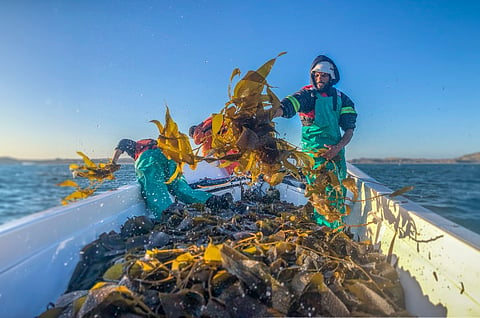
This is particularly evident in our region. Across the Gulf, biodiversity exists within some of the most strategically significant and heavily used marine corridors in the world. Mangroves, seagrass meadows and coral systems support fisheries, protect coastlines and sustain livelihoods, yet they sit alongside dense shipping routes and expanding coastal development. In nearby waters, ecosystems stretch across borders, linking habitats as part of a wider, interconnected system. In times of heightened regional tension, these natural systems face additional strain, reminding us that environmental resilience and regional stability are more closely linked than we often acknowledge.
These systems are not abstract. Pollinators sustain agriculture. Wetlands regulate and store water. Healthy soils underpin food production. Coastal ecosystems provide natural protection for communities. They operate quietly, often unnoticed, yet their contribution is constant and essential. And yet biodiversity continues to be treated as secondary, something considered alongside development rather than as a foundation of it.
A durable path
This is beginning to change. Around the world, there is growing recognition that working with nature offers a more durable path forward. In agriculture, regenerative approaches are improving soil health while increasing productivity. Community-led conservation efforts are strengthening both ecosystems and local economies.
What unites these approaches is not just innovation, but alignment. No single sector or country can address these challenges alone. Safeguarding biodiversity, like long-term resilience, depends on cooperation across systems, sectors and borders.
This is particularly relevant in regions where access to natural resources is closely tied to broader social and economic resilience. Where water is scarce, where food systems are exposed to disruption, and where environmental degradation compounds existing pressures, the health of ecosystems becomes inseparable from the stability of communities. In this context, biodiversity is not a peripheral concern. It is a strategic one.
Benefits of nature
Recognising this requires a shift in how we assign value. For too long, the benefits of nature have been taken for granted, valued only when they become scarce, or when they are lost. This has led to patterns of short-term decision-making that erode the very systems we depend on. Investing in biodiversity is not simply about protection. It is about strengthening the foundations on which societies operate.
Encouragingly, this shift is gaining momentum. Governments are embedding biodiversity into national priorities. Businesses are reassessing the role of nature in securing supply chains and long-term viability. Financial institutions are beginning to direct capital towards conservation and restoration.
At the same time, the role of communities is increasingly recognised. Indigenous peoples and local communities, in particular, have long demonstrated how ecosystems can be managed in ways that balance human needs with environmental stewardship. Their knowledge shows how resilience is built in practice and sustained over time.
Commitment to investing in ideas
Supporting and scaling these efforts is critical. Organisations such as the Zayed Sustainability Prize, which is currently open for submissions, help spotlight and support locally grounded solutions that strengthen resilience across sectors. Alongside this, the Mohamed bin Zayed Species Conservation Fund is also open for submissions, supporting conservationists working directly to protect species and ecosystems worldwide. Together as part of the broader platform of Erth Zayed Philathropies, these platforms reflect a commitment to investing in people and ideas that translate environmental stewardship into measurable impact.
Ultimately, International Day for Biological Diversity is an opportunity not only to reflect, but to recalibrate. In a world defined by growing complexity and interdependence, resilience cannot be built on fragile foundations. It must be grounded in systems that have proven their ability to endure. Nature has already demonstrated this. The question is whether we are prepared to recognise biodiversity for what it truly is, not a secondary priority, but a fundamental asset, and to act accordingly.
Because in a world defined by complexity and change, our greatest source of strength may not be something we need to create. It is something we need to protect.

Razan Khalifa Al Mubarak is President of the International Union for Conservation of Nature


