Emirati women also represent 71 per cent of the total Emirati workforce across both the public and private sectors.
Emirati women drive national growth, topping Arab world in working hours
UAE leads region in global gender equality and women’s empowerment rankings
Last updated:
3 MIN READ
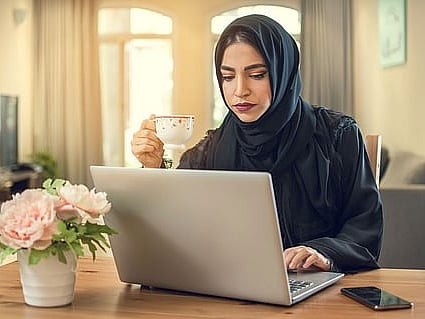
Women make up 26 per cent of the UAE Cabinet, leading critical portfolios such as education, climate change and environment, and community and family development.
Supplied
The UAE continues to secure top positions in international reports and global competitiveness indicators related to women’s empowerment and gender balance. The country ranked first in the region in the 2025 Global Gender Gap Report issued by the World Economic Forum.
It also ranked 13th globally and first regionally in the 2025 Gender Equality Index issued by the United Nations Development Programme (UNDP). In addition, the UAE scored 82.5 out of 100 in the World Bank’s 2024 Women, Business and the Law report, and topped the region in the Women, Peace and Security Index 2023–2024 published by the Georgetown Institute for Women, Peace and Security.
Furthermore, women make up 26 per cent of the UAE Cabinet, leading critical portfolios such as education, climate change and environment, and community and family development. Emirati women also represent 71 per cent of the total Emirati workforce across both the public and private sectors, hold 63 per cent of leadership positions in the government sector, and comprise 13 per cent of the country’s ambassadors accredited around the world.
At the Arab world level, the UAE has topped the list of Arab countries with the highest average weekly working hours for women in 2025, with Emirati women clocking an average of 48.5 hours per week, according to a report published by World Population Review. This reflects the active, dedicated nature of the UAE’s female workforce and its growing presence across key sectors in a modern, fast-developing economy.
The report highlights the strong participation of Emirati women in the labour market and their expanding role across various industries. Data further shows that UAE nationals — both men and women — work nearly the same number of hours, averaging around 48 hours per week, underscoring the balanced contribution of both genders to the national workforce. This also affirms the leading role of Emirati women in the country’s development journey, aligned with national policies that support women’s empowerment across all fields.
Diverse and high-impact sectors
World Population Review also pointed to the UAE’s competitive and efficient work environment, marked by diverse, high-impact sectors that attract both national and expatriate talent. These include services, tourism, construction, and technology — industries that have significantly boosted employment rates and encouraged many workers to invest additional hours in pursuit of higher income and better support for their families.
Relevant authorities in the UAE emphasise the nation’s commitment to implementing advanced labour regulations that safeguard workers’ rights and wellbeing, including laws governing working hours, leave entitlements, and workplace standards. These frameworks enhance productivity and support the sustainability of economic growth.
Arab Women Working the Most in 2025
Top Countries by Average Weekly Working Hours for Women
UAE — 48.5
Qatar — 47.6
Sudan — 45.7
Jordan — 43.6
Tunisia — 42
Egypt — 40.8
Kuwait — 40.1
Oman — 39.2
Lebanon — 38.8
Libya — 38.8
Saudi Arabia — 37.1
Mauritania — 36.3
Algeria — 35
Morocco — 34.5
Bahrain — 34.4
Palestine — 31.8
Syria — 21.9
Yemen — 18
Iraq — 17.3
45.4% of female workers are skilled employees
New statistics reveal the growing presence of women in the UAE labour market, especially in skilled and specialised professions. Skilled female employees now represent 45.4 per cent of the total female workforce, while women account for 29.9 per cent of all skilled workers in the UAE during the third quarter of the current year.
Additionally, 35.8 per cent of establishments hired women during the same period, signaling a broadening of economic opportunities for women in the private sector.
Women also maintain a strong presence in critical sectors up to Q3 of this year:
66.4% of healthcare jobs
72.3% of education positions
37.9% of IT jobs nationwide
The data further shows that Emirati women constitute 71 per cent of all UAE nationals employed in technical and specialized roles, and that 97.3 per cent of Emirati women working in the private sector are classified as skilled employees. Emirati women also make up 71 per cent of all skilled Emirati nationals within the private sector.
Network Links
GN StoreAbout Gulf NewsTerms & ConditionsReach by GNSitemapContact usPrivacy PolicyGN FocusHave your sayWork with usAdvertise with usGulf News epaperPrinting Services
Download our app
© Al Nisr Publishing LLC 2026. All rights reserved.