Why intangible skills are important for schools and students
Tools such as mind mapping and NLP can help teachers give children the skills to grow and create a utopian society that previous generations could only dream of
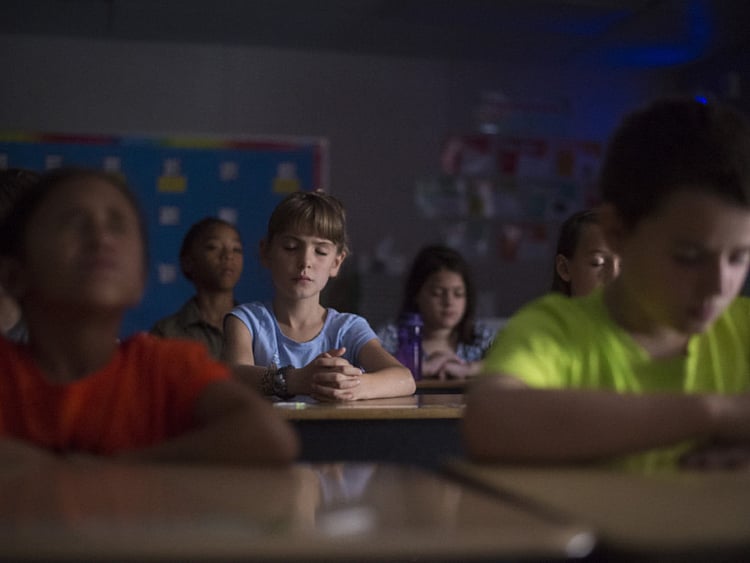
I was recently asked to define in one word the mission of what I do. I was somewhat baffled by this request. To define such a mission in one paragraph is challenging enough; to do so in a single word, impossible! The phrase, “A Parenting Class”, may seem an adequate summary for the uninitiated, but to me, it hardly begins to reveal the journey that is to be undertaken. This is an odyssey that culminates in the achievement of self-actualisation in order to raise children who are healthy and positive not only physically and mentally but also emotionally and spiritually.
Perhaps this is the reason why topics so important as Parenting or Soft Skills are not included in school curricula. If I have difficulty to find appropriately concise and simplistic tag lines for what is my specific field of study and daily tuition, then how can someone unfamiliar with these topics — especially a child — be expected to be drawn sufficiently to measuring their relevance? Parents who attend the classes understand the significance of The Conscious Competence Matrix, but I suspect they are a minority.
Perhaps an easier way to explain this field without using complicated jargon would be through anecdotal reference. For example, recently I was approached by a teacher who told me of the complete change she had witnessed in the attitude of one of her pupils. When she had first arrived in the classroom, this beautiful, four-year old girl had been withdrawn in her attitude. She would hardly speak and rarely had the courage to look directly into the eyes of anyone who approached her. Now, however, her teacher was amazed at the change in attitude shown by the girl as a result of her time with us. She was a joy to teach: smiling, radiant, and talkative. Her eyes sparkled with enthusiasm.
Another example is provided by a nine-year-old girl who had been struggling with the consequences of peer pressure: she would return from school and cry every evening. Yet, now, within a very short space of time, she has discovered a sense of balance, a positivity that helps her to cope with skills and resolution. Her mother was fascinated to discover how her daughter’s attitudes could change so directly.
How are such positive results achieved? By recognising the values of self-esteem, self-worth and self-confidence, the child is set free from the so-called obligations of submission that a child often experiences. This allows a child to believe in the realm of possibilities rather than feeling overwhelmed by self-imposed limitations that can only sabotage personal performance with fear. This programme can only build resilience, persistence and perseverance.
Thanks to Tony Buzan (the inventor of mind maps) we are able to build structure and creativity through the means of a methodology that allows radiant thinking. This opens our minds, allowing us to understand that daydreaming is healthy: in no way does this mean that we lack structure.
We no longer need to feel we are on the brink of stomach ulcers because we have to perform perfectly simply to make it through to the next year of school. We can perform well in our exams by learning the tools of concentration as well as those of relaxation, all the while believing in our ability to succeed. It is fascinating how so simple a process can reframe nerves and allow an exam week to be enjoyable — and with a healthy celebration at the end of it!
This is an informal education in the art of being that understands empathy and how our body language affects how we are interpreted. It excludes judgement from our interactions with people; this allows us to give and receive freedom of expression within the confines of respect. It inspires random acts of kindness. It encourages us to believe in and aspire towards a modern-day utopian society. It revives not only human connection but also allows the joy of our beautiful world to burgeon. This can only enhance and encourage further abundance.
Children can be held back so easily by the worries of decision at school. As adults we have a menu of options at our fingertips to acquire whatever we feel that we may be lacking personally. We can redefine ourselves, if we choose. We may consult with or take counsel from those who have the knowledge and required skill sets. What avenues do children in every school have in order to help them grow up without those issues we may have to resolve later as adults?
Imagine if we all had received these tools of mindfulness, mind mapping and neurolinguistic programming as we were growing up.
It is possible we could well have achieved more in our lives if we had been able to benefit from these tools that can help us to create the best version of ourselves from very early days rather than only beginning to seeking self-realisation later in life.
When children at a young age are given the resources to weather any situation, then they will grow up to create and live within a utopic society of which our generation can only dream. It is not an impossible task for a curriculum of this type to encompass standard education practices to include the value of values.
— The writer is Founder, Garden of Ayden
Sign up for the Daily Briefing
Get the latest news and updates straight to your inbox
Network Links
GN StoreDownload our app
© Al Nisr Publishing LLC 2026. All rights reserved.