From left: Lisa Crausby, Keith Miller and Rebecca Gray
UAE's new school admission rule: Age cut-off eligibility alone won't guarantee enrolment, clarifies Ministry
Here's what else will also matter for enrolment as more students become eligible to apply
Last updated:
5 MIN READ
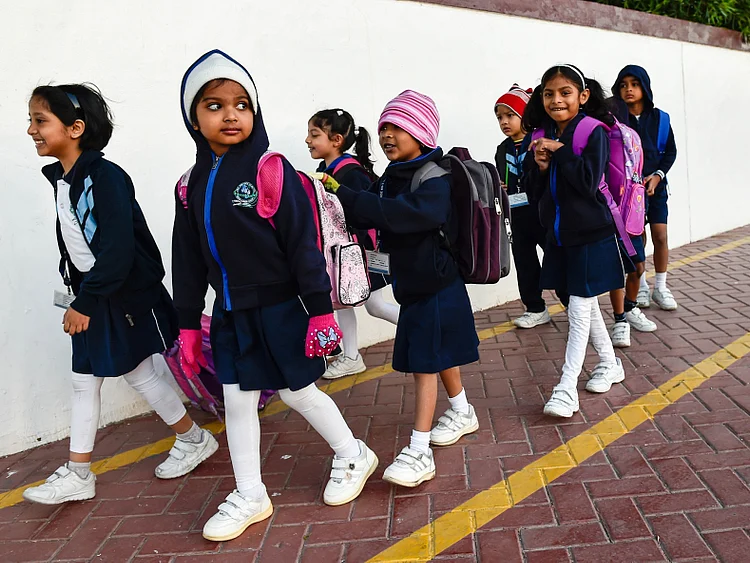
Photo used for illustrative purposes only.
Virendra Saklani/Gulf News Archives
Dubai: The UAE Ministry of Education has clarified that meeting the new age cut-off requirement alone will not guarantee school admission for students from the 2026-2027 academic year onwards.
The ministry made this crucial clarification while presenting answers to frequently asked questions regarding the amendment of admission age requirements for kindergarten and grade 1, which comes into effect from the 2026-2027 academic year.
Under the new rule, the age cut-off date for school admissions has been moved from August 31 to December 31 of the admission year. This means children must be three years old by December 31 for Pre-KG/FS1, four years old for KG1/FS2, five years old for KG2/Year 1, and six years old for Grade 1/Year 2.
The new age of acceptance date applies to all public and private schools, nurseries and early childhood centres in the UAE that follow the new academic year beginning in August or September.
Expanded eligibility, nuanced admission
While addressing a question on how the decision will affect children who were previously not eligible to enrol due to their date of birth falling between September 1 and December 31, 2021, the ministry clarified that those children who were not eligible in the 2025-2026 academic year will have the option to enrol in either KG1 or KG2 in the 2026-2027 academic year.
However, the ministry emphasised that "for private schools, placement decisions will depend on the school's assessment of the child's readiness and the availability of spaces at the school."
Speaking to Gulf News, some of the top school groups in the UAE confirmed that admission decisions will be multi-faceted, taking into account factors far beyond chronological age.
Developmental readiness matters most
Lisa Crausby, Group Chief Education Officer at GEMS Education, explained the pedagogical implications of the extended cut-off. "Previously, children had to meet the age eligibility cut-off by the end of August; now, they must meet it by the end of December. This change increases flexibility for children born from September to December, though teachers across the UAE may need to adapt to a wider range of student readiness."
Under this policy, she pointed out, the age gap between youngest and oldest students has expanded from 12 to about 16 months, likely increasing developmental and cognitive differences in classrooms.
"Research shows that 3-year-olds and 4.4-year-olds differ significantly in language, social, and emotional skills, affecting school readiness and classroom dynamics. To manage this new dynamic, teachers will need to be more divergent in their teaching approaches to ensure appropriate stretch and challenge for all children in the class," Crausby noted.
She added: "At GEMS Education, teachers are trained to address these differences through adaptive teaching methods, flexible strategies, and strong collaboration amongst staff and parents. It is our moral purpose to ensure each child makes exceptional progress in a happy and caring environment regardless of their starting point."
Crausby confirmed that "admissions teams are reviewing applications to comply with the new guidelines while aiming to place each child in the most suitable environment for their development."
Managing more applications
Addressing concerns about whether the extension of the cut-off date would result in more students qualifying for admission and thereby creating pressure on schools to raise enrolment quotas, Crausby said the extension is likely to increase the number of children who are eligible to apply, particularly those born between September and December. "However, this does not automatically translate into increased enrolment quotas. Admissions decisions will continue to be guided by each school's capacity, staffing, and ability to meet children's developmental needs."
She explained: "GEMS Schools will manage this by maintaining careful admissions review processes, assessing readiness beyond age alone, and ensuring class sizes and staffing ratios remain appropriate. Where needed, schools will plan additional support, strengthen differentiation in classrooms, and work closely with parents to place each child in the most suitable learning environment. The priority at GEMS Education remains educational quality and wellbeing, rather than simply increasing numbers."
Beyond academic ability
Rebecca Gray, Chief Education Officer at Taaleem, welcomed the policy shift while emphasising the importance of holistic readiness assessments.
"The move to a December 31 cut-off brings flexibility for families. For some children, this additional option will provide a smoother pathway into Foundation Stages, KG or Grade 1, particularly where they are socially, emotionally, and academically ready to take that step.
However, Gray stressed: That said, age alone should never be the sole determinant of school readiness. While research suggests that early entry does not necessarily disadvantage children academically, readiness at this stage is about far more than academic ability. Factors such as emotional maturity, social development, confidence, and independence play a critical role in a child’s long-term success at school.
She added: “As a result, it will be important for parents and educators to continue working closely together to make thoughtful, individual decisions that place the child’s overall wellbeing at the centre. Schools are well accustomed to supporting a range of developmental profiles in the early years, but professional guidance and parental insight remain essential in ensuring that each child starts school at the right time for them.”
Balancing growth, standards
Keith Miller, Executive Principal at Aldar Education, described the policy as marking "an important shift in how early learning pathways are structured."
"The policy responds to demands of families whose children were previously caught between nursery and school eligibility, often waiting an extra year to start their academic journey," Miller said.
He noted that "the change also supports more consistent age grouping, allowing children to learn alongside peers at similar developmental stages, which can positively influence confidence and classroom readiness. For families, this initiative offers clarity and reassurance at a critical early-education decision point."
Addressing capacity concerns, Miller stated: "The extension of the cut-off date means that more children will have the opportunity to join schools this academic year. Schools have been preparing for this growth in line with the UAE's expanding population. At Aldar Education, we are fully equipped to accommodate the increase whilst maintaining the highest standards of education. As our group of schools' network continues to expand, we remain committed to fostering an inclusive educational experience where students feel empowered, connected to their identity, and ready to embrace the opportunities of the future."
Miller added: "We are also proud to see the UAE leading in evidence-based education and continuously introducing new initiatives to support inclusive learning environments ensuring every child receives a developmentally aligned, holistic, and meaningful learning experience."
'It looks complicated'
Meanwhile, parents have weighed in on the age cut-off change. Some who wrote to Gulf News expressed differing views on how it would impact children who are either too young or too old to be in the same classroom.
Sharing concerns about the age gap within classrooms, one mother whose daughter was born on August 25 shared: "In her class, everybody turns five this year, and she just turned four in the last August…It looks complicated. At the end of her school for university, it is OK, but for now, no."
Is it a struggle or is it boring?
Another parent pointed out potential challenges with developmental expectations. "The expectations for achievement at the end of the EYFS remain the same and some children will not even be turning 5 until the following academic year. Summer born children can already struggle to meet the expectations. Now there will be even younger children in the cohort."
Meanwhile, one parent described a different scenario for her daughter. "She is September [born]. So, she is bigger and smarter than everyone in the class and she is bored."
Network Links
GN StoreAbout Gulf NewsTerms & ConditionsReach by GNSitemapContact usPrivacy PolicyGN FocusHave your sayWork with usAdvertise with usGulf News epaperPrinting Services
Download our app
© Al Nisr Publishing LLC 2026. All rights reserved.