UAE Back to School 2026: Record 1.27 million students to return with phased start and new reforms
It’s full return to classrooms after shifts between schools, online learning before break
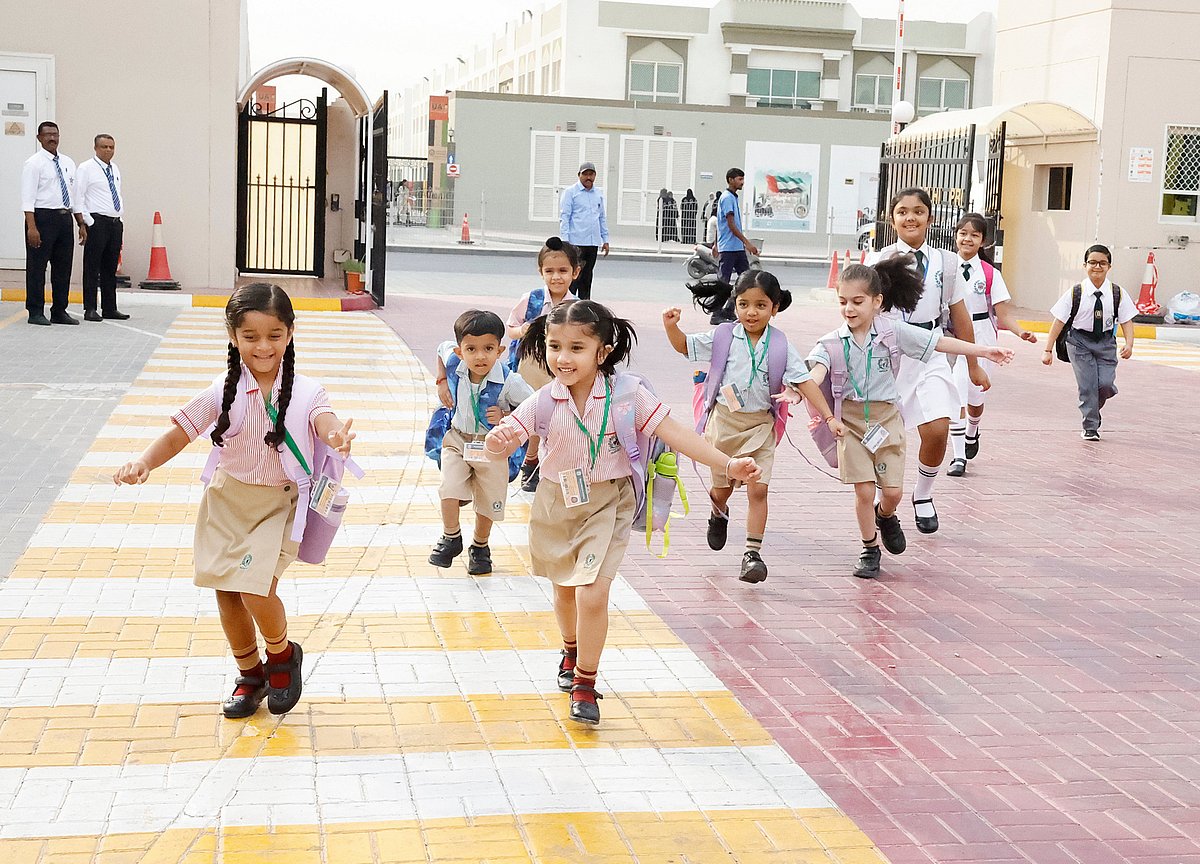
Dubai: More than 1.277 million students across the UAE head back to classrooms on Monday, August 31, in the country's biggest return to school in years and the first full, uninterrupted return after an academic year in which classrooms switched between in-person and distance learning due to disruptions caused by the US-Iran war.
The Ministry of Education has confirmed it is back to school for all students this year, even as relevant authorities continue to monitor the regional situation, with schools keeping in place the contingency plans they developed last year should circumstances change again.
Get updated faster and for FREE: Download the Gulf News app now - simply click here.
Scale of return
According to the Ministry, more than 1,180 public and private schools across the UAE are ready to welcome over 1.277 million students for the 2026-27 academic year, including 26,700 new students joining the public system for the first time.
Ahead of the new term, the Ministry has opened 11 new schools and educational complexes, deployed 5,810 school buses and distributed around 8 million textbooks.
Meanwhile, in Abu Dhabi specifically, authorities have readied 10,000 school buses to serve more than 279,000 pupils across the emirate.
Sharjah’s private education sector is reopening with more than 204,000 students, six new private schools and thousands of school buses cleared for operation.
Four-day return
Rather than a single opening-day rush, the ministry said, students will filter back over four reduced-hour days, running from Monday, August 31, to Thursday, September 3, with schools deciding which year groups attend each day before all students resume the regular timetable on Friday, September 4.
Principals can rearrange the sequence of year groups or extend the phased period depending on readiness.
Many private schools are also running their own staggered timetables to ease congestion and first-day nerves.
Some parents get flexible work hours
The return reshapes the working day for thousands of parents. Federal government employees with children in primary school and above can arrive late or leave early on the first school day, with flexibility capped at three hours, subject to managerial approval.
Parents of nursery and kindergarten children get similar flexibility throughout the first week, and the policy extends to authorised absences for parent-teacher meetings and school events later in the year.
Some employees working with private companies are also changing their work hours on their children’s first day of school.
Accident-Free Day
Back-To-School is one of the biggest campaigns in which various entities in the country join forces and run several initiatives to ensure a smooth and safe return of students to campuses.
The Ministry of Interior has rolled out its annual Accident-Free Day campaign for August 31, offering motorists who register, sign a safety pledge and commit no traffic violations or accidents on the day a reduction of four black points from their driving record.
Organised by the Federal Traffic Council in coordination with police forces nationwide, the initiative urges drivers to slow down, stay off their phones and give way to pedestrians as school traffic returns to the roads.
Buses and roads
Dubai's RTA has completed traffic-improvement works at six school-zone locations benefiting more than 10 schools, including a new access road near Motor City and doubled parking at a school in Umm Al Sheif.
It has also launched a 30-day intensive bus inspection campaign checking safety standards, driver and attendant permits, and operating procedures across Dubai's school bus fleet.
To ease the morning and afternoon rush, RTA is boosting taxi availability and increasing frequency on more than 30 bus routes serving school zones including Al Nahda, Muhaisnah, Al Barsha, Al Quoz, Dubai Silicon Oasis and Al Garhoud.
Parents also get more mobility choices this year through e-hail school-ride services such as Careem School Rides, Uber Teens and BOLT School, a new School Ride Pooling initiative in Al Barsha via the Yango app, and a 50 per cent discount on Metro, Tram and public buses through the student nol Card.
Police on patrol
Dubai Police will deploy 253 security and traffic patrols, 28 drones and 775 personnel, with 19 awareness events planned on the first day involving 16 partner entities.
Abu Dhabi Police is running an integrated plan focused on road safety and peak-hour congestion, alongside lectures on drug awareness and cybercrime prevention.
Abu Dhabi Police has also warned motorists to come to a complete stop when a school bus extends its side-mounted “Stop” arm, with drivers required to remain at least five metres from the bus. Failing to stop carries a Dh1,000 fine and 10 traffic points, the police has reminded.
Sharjah Police is intensifying bus inspections and rolling out its Ma'man system, letting drivers send an emergency alert with instant location tracking at the press of a button.
National Ambulance has stepped up dynamic deployment near schools and major roads, while Sharjah Civil Defence trained 1,200 school bus drivers and supervisors over a two-day workshop covering emergency evacuation and risk prevention.
More teachers too
More than 24,000 school leaders, teachers and support staff took part in the Ministry's Specialised Training Week from August 24 to 28, covering AI integration, inclusive education and school safety.
Schools have also gone on a hiring spree to meet the demands of teaching staff. GEMS Education alone is welcoming 1,550 new teachers this year, taking its educator community past 10,000.
What's changing this year
Students from kindergarten to Grade 2 in schools under the Ministry of Education will no longer get homework, with a push towards daily reading instead.
Grade 6 pupils in public schools will use pen and paper rather than digital tools for Arabic, English, maths and science, following a pilot study across 2,500 students that found improved performance and focus.
Grade 9 to 12 students move to a 50-50 split between centralised and school-based tests for Group A subjects, while Project-Based Learning and Assessment launches in Grade 7 across 366 schools, reaching more than 129,000 students.
A new evaluation programme covering public and ministry-licensed private schools will also begin this first semester, running over two academic years.
Age cut-off rules
Parents enrolling children for the first time in Dubai should note KHDA's updated guidance: for schools starting in August or September, children must reach the required age by December 31.
Five-year-olds join KG2/Year 1 and six-year-olds join Grade 1/Year 2 under the September-start deadline. The rule applies only to first-time KHDA registrations this year.
Meanwhile, for April-start schools, the cut-off is March 31.
Charter vision
Underpinning the Ministry’s Back-To-School campaign is the National Education Charter, launched by President His Highness Sheikh Mohamed bin Zayed Al Nahyan in February, setting out the values and competencies expected of future Emirati graduates.
This year's campaign, themed "Guided by the Charter, Building Tomorrow," gives every student a Charter passport.
Network Links
GN StoreDownload our app
© Al Nisr Publishing LLC 2026. All rights reserved.