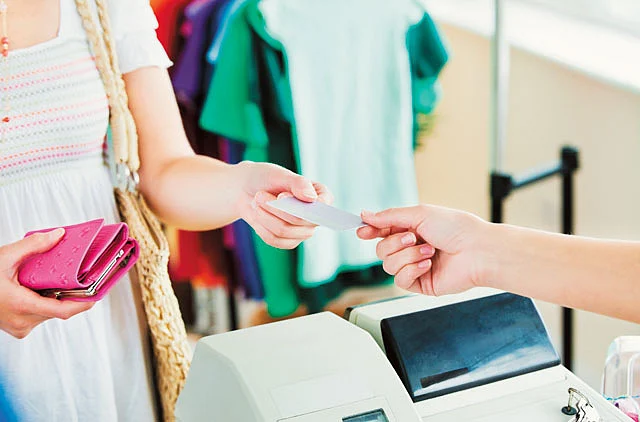
The way you spend is an important indicator for how much you save. In times of financial crisis where the entire world is going through a liquidity crunch, families that are more comfortable are those that had saved for a rainy day and have a cash cache to fall back on.
And yet, most of us shy away from negotiating a minefield of difficult financial terms. We like to believe that as long as we have our credit cards and incomes to support those cards, we are safe and allow ourselves to be at the mercy of financial experts who knock us breathless with jargon. For instance, how many of us really pay attention to the fundamentals of savings or really understand the role of credit cards in our lives?
How many of us understand the basics of a home budget and the importance of writing out every single expense we make against the income that accrues to us for that month? It is this blithe approach to the real value of money that needs to be done away with in order to become money literate and achieve financial liberation.
Trying to understand the basics of domestic finance, planning, budgeting and saving, Friday spoke to Lama Kabbani, corporate communications manager of Visa Services to demystify certain common concepts.
Build your own budget
Kabbani feels the cornerstone for prosperity for any family unit is savings. For this it is essential to draw up a family budget and keep track of your expenses and income and set aside a small amount that is easy to dispense with each month as a saving.
"Setting a budget is an important first step in determining the amount you can realistically save each month. The following guidelines will help you to build a doable budget:
- Add up your income
To set up a monthly budget, you will need to determine how much ‘take home' pay you receive each month. Be sure to add any other sources of income too.
- Estimate your expenses
Divide your expected monthly expenses into different categories. For instance, household expenses, transportation, savings, utilities, food and entertainment.
- Compare the difference
After creating your budget, you will need to keep track of your actual income and expenses and compare this with the amount you have budgeted for. This will help you to fine tune your budget accordingly.
- Track, trim and target
As you track your monthly expenses, see if there are any areas where you can reduce spending. How do you decide what expenses to trim down? This will vary from household to household, but the most common overspending areas are entertainment and food, especially eating out."
Kabbani gives an example of a template that one should have to draw up a budget which should have columns marked for monthly income and monthly expenses (these can further be divided into fixed and flexible). The next column should actually state the budget estimates for the month and at the end of the month based on the expenses the actual budget figures need to be marked against the estimates and in yet another column the difference needs to be worked out. Once that is done, people can get an idea on how much more they are spending than they can afford and then re-examine heads that need to be sized down. Once that is done, the savings column becomes a reality, she says.
Savings make you feel secure
Saving should be a priority for everyone, says Kabbani. "In these economic times, it is important to ensure that you are covered for any eventuality. Follow these guidelines to help you plan a saving:
- Assess your needs
Before beginning a savings plan, you will need to evaluate your current financial situation. Remember, there is a big difference between what you want and what you need and it is important to differentiate between the two.
- Set realistic goals
Achieving financial security must begin with organised financial goals. These can be divided into short-term (goals to be achieved in the next year or so), intermediate goals (with a time-frame of two to five years) or long-term goals such as retirement savings or educational funds for your children.
- Make a plan
Once you have established your financial goals, it is now time to determine the actions you need to take in order to achieve these goals. Ask yourself where you want to be in five, ten or even 20 years. Once you have this in mind, it will be easier to visualise the steps you will need to take to reach these goals.
- Take action
Having a plan does not automatically mean you will reach your goals. Make sure you have every action laid out in your plan and don't be tempted to skip any steps.
How much to save each month?
There is no set amount for this, and how much you save for a rainy day is dependent on the amount you can put aside in a given month. Every little bit helps though, and even by putting Dh200 a month in an interest bearing savings account will make a big difference.
One of the safest ways of encouraging savings each month is to cap our expenditures.
Cash or credit?
Sometimes people are misled about their spending power because of the ease with which they are able to disburse their payments. However,we need to be wise about these modes of payment.
"Today a range of electronic payment mediums exist from credit to debit to prepaid cards designed for the varying needs and preferences of card holders," Kabbani says. She explains the convenience in simple terms. "A credit card is a "buy-now, pay-later" tool, while a debit card is a "buy-now, pay-now" tool.
A credit card is an unsecured loan that a financial institution provides to you as a payment convenience. The benefit of using a credit card is that you can shop with peace of mind - with a credit card, you will only pay for what you authorise in person, on the phone or online. In addition, credit cards provide a convenient form of payment at home or abroad, without having to carry cash. Debit cards on the other hand, are increasingly becoming popular as a replacement for cash and cheques.
A debit card is linked to your current or savings account. When using a debit card either for cash withdrawal or for purchases at point of sale, money is directly subtracted from your account. The benefit of using a debit card is that it allows you to have access to your money directly, from anywhere in the world. In addition, debit cards also eliminate risk, as you don't need to carry cash around with you. They are also accepted by almost every merchant, online, everywhere.
What are smart cards?
Essentially, a smart card, is a payment card with an embedded computer chip and functions like a mini-computer. Smart cards, which are not yet widely used in the UAE, are set to transform the way in which payments are made. Unlike the magnetic strip on most cards, smart card chips are able to process as well as store data, and hold at least 80 times more data than regular magnetic strip cards. As an added bonus, smart cards are a more secure method of payment that protects card holders from fraud.
What are the things to keep in mind with credit cards?
Before selecting a credit card provider, make sure you shop around from bank to bank and do your research before selecting a product that suits your individual needs, advises Kabbani.
Credit cards are convenient as they allow you to purchase items then and there, without having to carry cash. They also allow you to keep a record of your purchases, thus enabling you to keep track of what you are spending and where. Nowadays, many banks offer a variety of incentives to credit card holders, such as loyalty points, price reductions at certain outlets as well as air miles, redeemable as air travel discounts.
As with all financial tools, credit cards should be used responsibly. It is important to ensure you are aware of your bank's policies with regards to fees and interest, as these may vary considerably among cards. Make sure you read and understand the terms and conditions of your card holder agreement, which is essentially a contract between you and the bank.
She adds a useful tip for all credit card holders, "In order to avoid fees and interest charges, it is always advisable to try and pay off the full amount on your credit card each month. This can either be done through a direct debit payment, which you can arrange with your bank, or making the payment at your bank branch or through an ATM. If at all possible, try to pay more than the minimum as this will reduce the amount of interest charged.
For more solutions on common financial conundrums, visit Visa's recently launched financial literacy website, www.mymoneyskills.me
Sign up for the Daily Briefing
Get the latest news and updates straight to your inbox
Network Links
GN StoreDownload our app
© Al Nisr Publishing LLC 2026. All rights reserved.