Lieutenant General Abdullah Mubarak bin Amer, Commander-in-Chief of Sharjah Police
EXCLUSIVE
How 172,544 CCTV make Sharjah residents feel safer
Police use real-time surveillance to solve crimes and track offenders
Last updated:
3 MIN READ
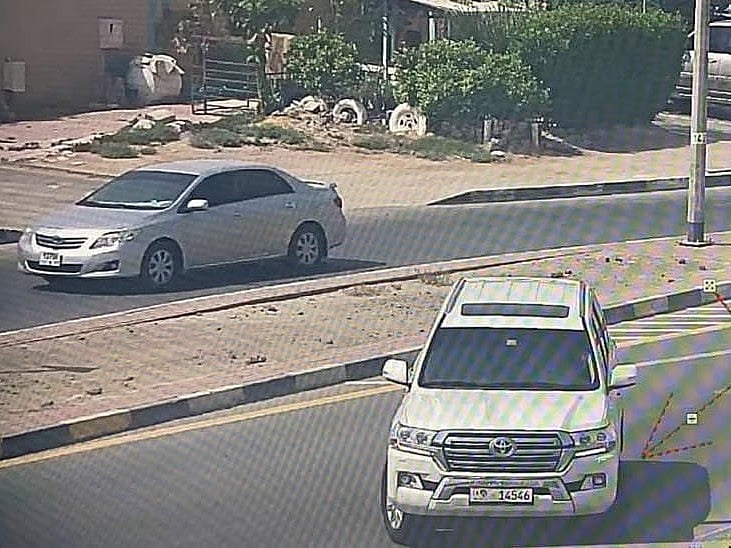
Sharjah Police’s 172,544-camera network strengthens security and crime prevention
Sharjah Police
Sharjah: From busy roads to residential neighbourhoods and commercial hubs, Sharjah’s extensive network of 172,544 high-tech surveillance cameras has become one of the emirate’s strongest shields for public safety — helping police crack serious crimes, monitor traffic and respond faster to incidents. The system has also earned public confidence, with 99.7 per cent of residents saying they feel safer because of the emirate’s advanced monitoring network.
The surveillance network, operated by Sharjah Police, includes analytical cameras, automatic number plate recognition (ANPR) systems and early warning technologies strategically installed across residential, commercial and industrial areas.
The cameras provide round-the-clock support to criminal, security and traffic operations, enabling officers to monitor incidents in real time, track vehicles, identify suspects and gather evidence that supports investigations.
Get updated faster and for FREE: Download the Gulf News app now - simply click here.
Lieutenant General Abdullah Mubarak bin Amer, Commander-in-Chief of Sharjah Police, told Gulf News that the surveillance system has become an essential tool in preventing crime, detecting violations and enhancing police response.
“Surveillance cameras play a vital role in tracking vehicles, solving crimes, recovering stolen vehicles and detecting offences such as begging, illegal street vending and traffic violations,” he said.
Evidence that strengthens investigations
Bin Amer said CCTV footage often becomes critical evidence when crimes are discovered after they have taken place.
“When a crime is only discovered after it has been committed, surveillance footage becomes a crucial piece of evidence during an investigation,” he said.
The high-definition cameras allow investigators to capture clear images of faces and vehicle number plates, helping them establish suspects’ movements, reconstruct incidents and build accurate timelines.
The system has assisted police in identifying suspects, investigating hit-and-run cases, monitoring vandalism and verifying witness accounts.
“With security cameras, police do not have to rely on assumptions. They can use footage to confirm the direction of the investigation and ensure it is based on facts,” Bin Amer said.
Cameras help solve major cases
The surveillance network has played a key role in resolving several major cases.
In one incident, police tracked a driver who fled after hitting a pedestrian. Cameras followed the vehicle’s movements and revealed that the driver had used a fake number plate, which was later removed and discarded. The suspect confessed after police confronted him with the recorded evidence.
In another case, Sharjah Police recovered a vehicle stolen in Abu Dhabi after surveillance cameras detected it entering the emirate. Officers monitored the vehicle’s movements until the driver was arrested.
Authorities said the system allows investigators to trace vehicle routes across multiple cameras, helping reconstruct movements linked to serious accidents and criminal cases.
Improving road safety
Sharjah Police stressed that the purpose of surveillance cameras is not limited to issuing fines but focuses on improving road behaviour and encouraging motorists to follow traffic regulations.
He said the objective is to educate drivers, improve compliance and reduce dangerous behaviour on roads.
In one case, cameras recorded a motorist repeatedly committing traffic violations over a month on a Sharjah road. When summoned by police, the driver denied the offences, but footage from the surveillance system proved the violations had taken place.
Supporting businesses and resolving disputes
The surveillance network has also helped resolve disputes involving individuals, businesses and workplaces.
Police said camera recordings have been used to settle disagreements involving families, customers and employees by providing an accurate record of events.
Companies are required to install surveillance systems and connect them to the police operations room, particularly businesses operating in sensitive sectors such as banks, money exchange centres and jewellery shops.
Ensuring compliance with camera regulations
Criminal Investigation Department teams regularly inspect buildings to ensure surveillance systems are properly installed and operational.
Under Executive Council Resolution No. 28 of 2015 on securing vital facilities, establishments that fail to meet surveillance requirements face fines ranging from Dh5,000 to Dh15,000. Authorities may also order closure of the facility or suspension of its licence when necessary.
Sharjah surveillance systems at a glance
172,544 security cameras installed across key locations in Sharjah.
19,903 residential buildings, commercial establishments and industrial facilities covered under a separate surveillance camera compliance system.
Around 200 companies licensed by Sharjah Police to provide camera installation services.
Systems include analytical surveillance, ANPR technology and early warning capabilities.
The network supports crime prevention, traffic monitoring, investigations and faster police response.
With one of the region’s most advanced surveillance networks, Sharjah continues to use smart security technology to enhance public safety and provide police with faster, more accurate tools to prevent and investigate crimes.
Network Links
GN StoreAbout Gulf NewsTerms & ConditionsReach by GNSitemapContact usPrivacy PolicyGN FocusHave your sayWork with usAdvertise with usGulf News epaperPrinting Services
Download our app
© Al Nisr Publishing LLC 2026. All rights reserved.