The corridors of The Cultural Foundation
Qasr Al Hosn draws visitors seeking Abu Dhabi’s authentic past
City's oldest landmark, a living story for locals to revisit and travellers to discover
Last updated:
5 MIN READ
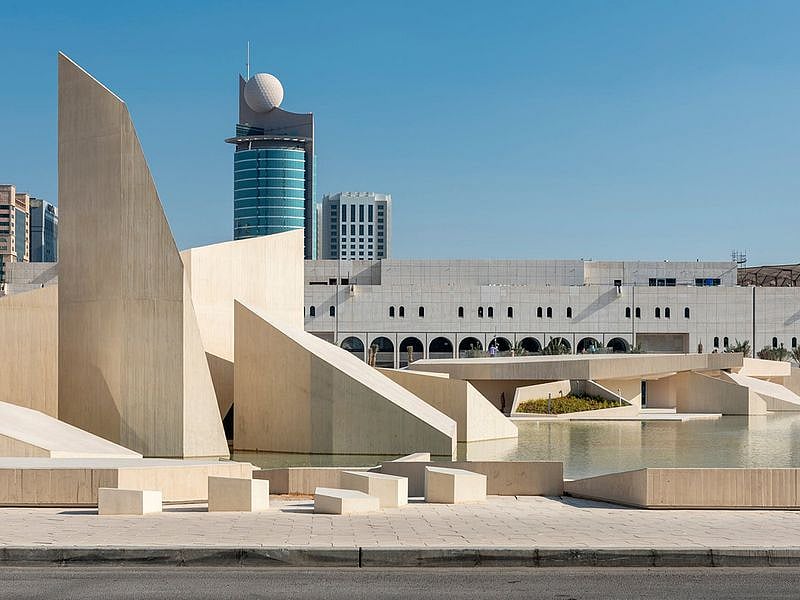
Qasr Al Hosn Park scape in Abu Dhabi, by CEBRA Architecture, in Abu Dhabi. The landscape project reconnects Abu Dhabi’s important heritage site surrounding the Qasr Al Hosn Fort with the modern metropolis and its inhabitants
World Architecture Festival/CEBRA
Abu Dhabi- When a resident thinks of introducing the city to a tourist, and when a tourist thinks of ‘authenticity of the nation’, they all find themselves making way to Qasr Al Hosn, the oldest building structure of Abu Dhabi.
Amid the skyscrapers of downtown Abu Dhabi stands a white, coral-and-stone fortress that is older than the city around it.
Qasr Al Hosn, meaning "Palace Fort", is the iconic landmark that shares the story of how a fishing and pearling settlement on a desert island became the capital of the UAE.
If I were showing someone around, I’d take them through it in chronological order. Start at the Cultural Foundation and see the old images. Then step outside and walk through the local shops and restaurants and look at the architecture and how the landscape has changed.Dina Roshdy, Architect living in Abu Dhabi
Roshdy said she would then take visitors to the neighbouring history area, which explains why Qasr Al Hosn was built, its purpose and how it was used, giving them a fuller understanding of its history.
Leila A., a legal consultant from Dubai, said this part of the city is where she and her friends can explore the traditional side of the Nation. Her itinerary included visiting the House of Artisans at Qasr Al Hosn, among the other.
The friend accompanying Leila was Ina B., her college friend from France. Ina, an Algerian legal consultant in tax based in France, was visiting Abu Dhabi and discovering the city’s culture. She said this is where one can enjoy a slower pace of life, even while sitting in a café.
view of Qasr Al Hosn from the Cultural Foundation
Leila chose this landmark to show her friends, the more authentic side of the UAE, noting Abu Dhabi has a ‘slow life’, allows people to enjoy even the simple activity like sitting in a coffee shop.
A seat of Government and a cradle of the Nation
The fort was restored over several years and formally reopened in December 2018. For generations, Qasr Al Hosn was where Abu Dhabi was governed.
Rulers lived and held their majlis within its walls. In 1966, Sheikh Zayed bin Sultan Al Nahyan became ruler of Abu Dhabi and took up residence at the palace, beginning the era of rapid development that would transform the emirate. In later years the building also served institutional roles, housing the Consultative Council and, for a time, the national documentation and archive functions.
The fort's significance is as much political as architectural. It stood at the centre of the decisions that led towards the union of the emirates in 1971, and it remains a powerful symbol of national identity.
The addition
Next door to the fort, inside the Cultural Foundation, sits one of the site's newest attractions: the Abu Dhabi Children's Library, and the outdoor Amphitheatre.
The Children's Library opened there on 4 September 2019 and took the place of the Foundation's original national library. It is the emirate's first library dedicated entirely to children.
The library spreads across three floors and about 5,250 square metres, arranged around a new diagonal atrium. Its design is inspired by a life-size pop-up book, and children move through spaces themed on the UAE's landscapes. The ground floor holds workshop and exhibition areas, the first floor takes children into the desert with play areas shaped like sand dunes, and the second floor is an oasis, with "falaj" water channels that carry books instead of water. Stories are presented in both print and digital formats.
Sign up for the Daily Briefing
Get the latest news and updates straight to your inbox
Network Links
GN StoreAbout Gulf NewsTerms & ConditionsReach by GNSitemapContact usPrivacy PolicyGN FocusHave your sayWork with usAdvertise with usGulf News epaperPrinting Services
Download our app
© Al Nisr Publishing LLC 2026. All rights reserved.