The Kurators’ Art Dubai 2026 Highlights: Breaking Open the Art Fair Model
The exhibition brought together works spanning West Asia, North Africa, and South Asia
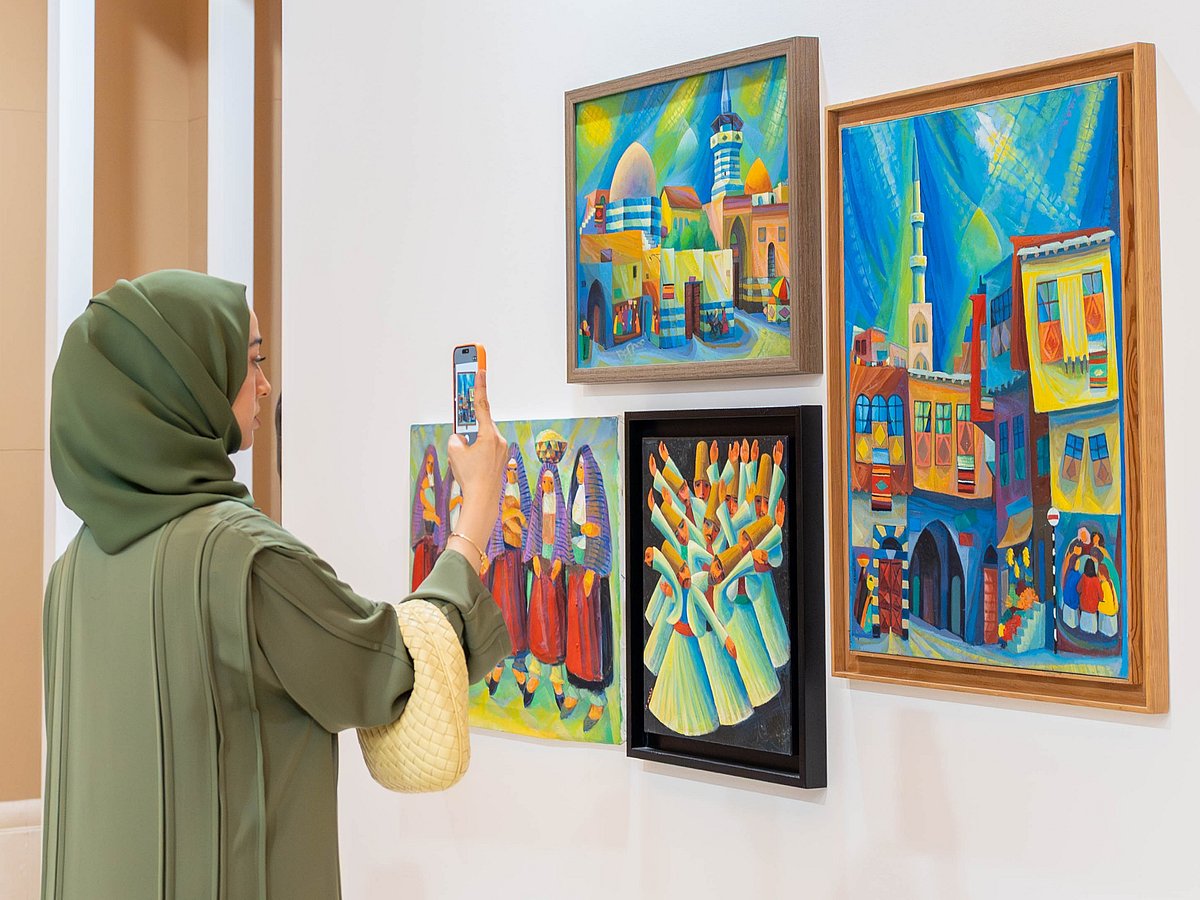
The 20th anniversary edition of Art Dubai has come to a close, leaving behind a clear sense of a fair in transition. Presented at Madinat Jumeirah, the 2026 edition signalled a shift in how an art fair can operate - less as a closed circuit of display and transaction, and more as an expanded cultural platform shaped by access, research, and exchange. A refreshing shift within the contemporary art fair format.
Across exhibitions, institutional presentations, gallery booths, and public programming, Art Dubai 2026 pointed to a broader structural rethinking of the fair format itself. Collecting, exhibiting, speaking, and researching were increasingly interwoven, producing an environment where the boundaries between market, institution, and public discourse became more porous.
What emerged was not a single curatorial theme, but a shared condition running through the programme: art understood less as an isolated object than as a system of memory, material, language, and interaction.
Collecting as cultural memory: Dubai Collection’s Made Forward
A defining institutional presentation of the edition was Made Forward, organised by the Dubai Collection. Drawing from more than 20 private collections across the UAE, the exhibition brought together works spanning West Asia, North Africa, and South Asia.
Rather than constructing a linear art-historical narrative, the presentation placed different artistic positions in proximity, allowing abstraction, figuration, and experimental practices to form a layered reading of regional modern and contemporary production. The emphasis was on collecting as an active cultural process rather than a fixed archive - shaped through accumulation, selection, and circulation over time.
Within the wider framing of the fair, the Dubai Collection’s approach positioned collecting as a mechanism for producing cultural memory in real time, rather than preserving it as a closed historical record.
Material memory: textile, landscape, and residue
If Made Forward located memory within institutional structures, the gallery presentations translated it into material form.
At SOLO Bucharest, Honduras-born, Lebanon-based artist Adrian Pepe, working in dialogue with UAE-based artist and designer Omar Al Gurg, presented sculptural systems constructed from Awassi sheep wool - an agricultural material increasingly displaced through industrial production.
Through felting, braiding, stitching, and compression, Pepe transformed this material into layered surfaces where plant, animal, and human traces become entangled. Embedded seeds and organic matter operate as markers of movement, tracing how landscapes travel through bodies and how displacement leaves physical residue behind. Embroidery functions here as structure - registering pressure, repetition, and contact - in the best way possible.
Nearby, Lebanese artist Lana Khayat, presented by Hafez Gallery, worked through layered textile and script-based abstraction. Botanical forms, stitched surfaces, Arabic script, and Tifinagh elements formed dense visual fields in which language operates as material rather than fixed sign.
Meaning remains consciously unstable - continuously broken, repeated, and reconfigured.
Digital systems and shifting perception
At Dom Art Projects, Alisa Bagdonaite framed digital practice as an embedded artistic language rather than a separate category.
The presentation brought together artists including Sofya Skidan, Michiko Tsuda, and Kirill Makarov, whose practices moved between AI-generated video, analogue photography, VR, and drawing.
As Bagdonaite told the Kurator:
“This is our first participation in Art Dubai, and our booth presents three contemporary artists, each taking an alternative approach to digital art. Sofya Skidan, Michiko Tsuda and Kirill Makarov show us that digital is not a separate part of art today, but an organic and essential instrument for artists. Sofya’s new video work is the result of her residency at Dom Art Projects filmed across landscapes in the UAE, where she uses AI to change the perception of the reality. Michiko Tsuda comes to the digital through a deeply analogue relationship with the camera, and Kirill Makarov moves between VR, painting and drawing, treating the digital as a workbench that extends rather than replaces traditional practice. The response from the audience at the Fair has been both immediate and encouraging.”
Across these works, digital tools appear not as rupture, but as extension - expanding rather than replacing established methods of image-making.
Immersive environments and lived interaction
Elsewhere, Montreal-based studio Iregular transformed its booth into an environment of light, sound, and interaction, presenting four interactive works: As Water Falls, Control No Control, Nest, and Faces.
As the studio’s founder Daniel Iregui told us:
“Our public artworks are designed to be experienced briefly and collectively. The works we’re presenting at Art Dubai are different. They're imagined to live with people for years, becoming part of their daily lives.”
The presentation operated between exhibition and environment, with works activated through movement, presence, and sensory engagement. The booth also introduced proprietary systems such as CURSOR, a long-range tracking technology enabling hand and facial interaction, and SONAR, an ultra-directional sound system designed to create localized acoustic experiences within shared space.
HUNA Talks: discourse as exhibition structure
Alongside the exhibitions, HUNA Talks extended the fair into a structured programme of public discourse, bringing together artists, writers, designers, and cultural practitioners to examine the systems behind contemporary cultural production.
Rather than functioning as a standalone or supplementary forum, HUNA operated within Art Dubai’s broader public programming ecosystem, alongside other talk formats and institutional dialogues. Within this structure, conversation became part of the fair’s curatorial core - another medium through which interpretation, exchange, and cultural positioning were actively produced.
The result was a model in which discourse did not sit outside the exhibition, but functioned alongside it, shaping how meaning circulated across the fair.
Safeya Sharif Al Awadhi: landscape as structure
At Iris Projects, artist Safeya Sharif Al Awadhi presented aluminium cut-outs and layered wall works translating desert landscapes into systems of repetition, fragmentation, and accumulation.
As the artist described:
“For my presentation with Iris Projects, which also marks my first time showing at the fair, the works I’ve created are aluminium cut-outs and layered panels that carry references to repetition, shifting lines, and accumulated marks reminiscent of desert landscapes. The larger wall-based sculpture, Lines of Persistence, allows the viewer to physically engage with the work almost as a shifting field. The works move between presence and disappearance, reflection and fragmentation, echoing the way the desert continuously reshapes itself through time, movement, and light.”
Here, landscape is not depicted but constructed - embedded into the pace, surface, and spatial logic.
Across institutional, material, digital, and discursive frameworks, Art Dubai 2026 revealed a consistent shift in how the art fair is being redefined.
Collecting operated as memory-making. Textiles became record. Conversation became structured. Digital systems reshaped perception. The landscape became logical.
Rather than reinforcing the art fair as a closed circuit, this anniversary edition exposed it as a more open and unstable structure: a platform where contemporary art is continuously assembled in public.
Sign up for the Daily Briefing
Get the latest news and updates straight to your inbox
Network Links
GN StoreDownload our app
© Al Nisr Publishing LLC 2026. All rights reserved.