Design as a living system
Architect Patricia Urquiola on rethinking materials, technology and human interaction
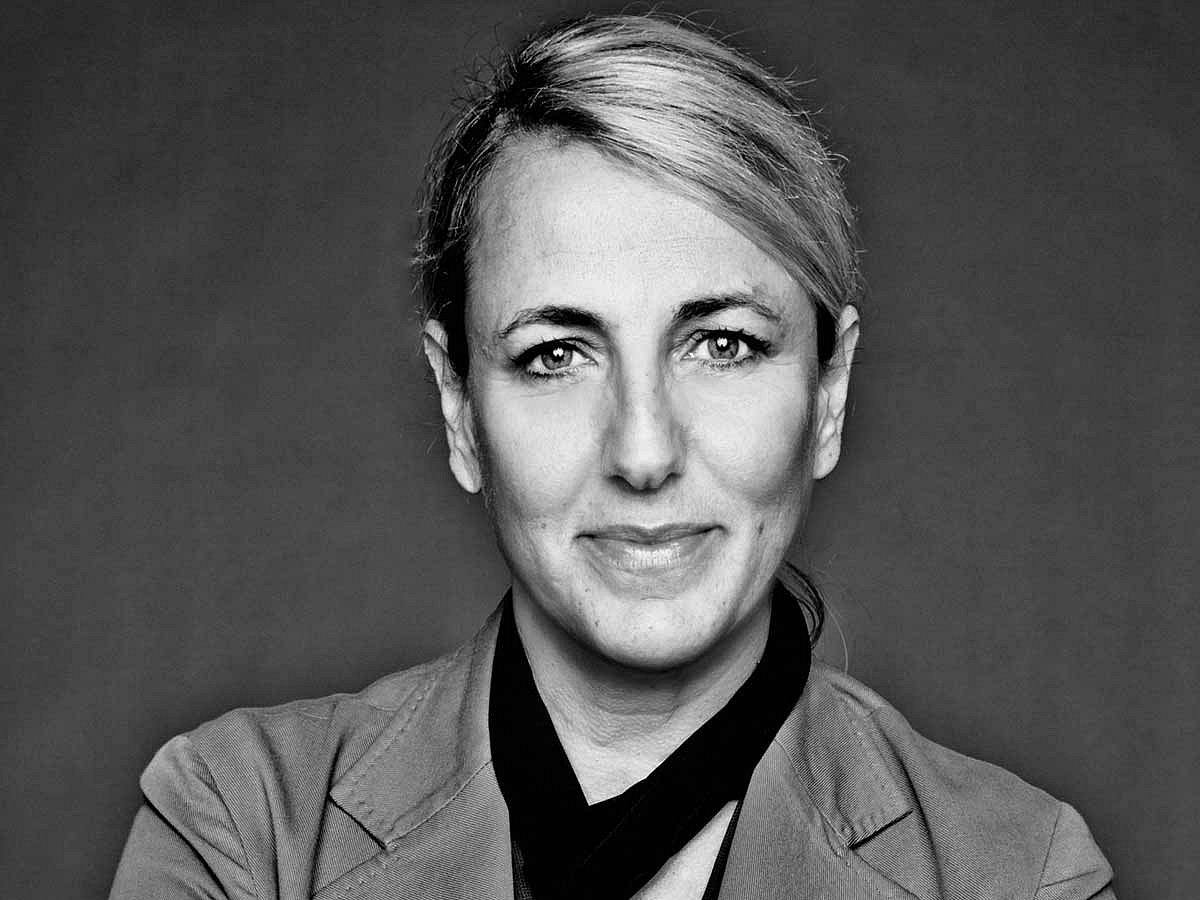
What if we think of textiles as active participants in space and experience rather than static elements? This question lies at the heart of Patricia Urquiola’s ongoing exploration of textiles design - one that consistently moves beyond the traditional norms. Her new design installation at Heimtextil 2026 “Among-all” marked a new chapter in rethinking textiles as transformative forces and a natural continuation of her first installation at the fair “Among-us” where textiles become a place we inhabit together. To explore Urquiola’s unique vision, and how her work continues to redefine contemporary design, The Kurator sat down with the renowned Spanish architect, industrial designer and art director, who shared her insights on human interaction, artificial intelligence, material innovation, sustainability and more.
Your approach is often described as “Sensory Functionalism.” How did this concept develop and how does it continue to evolve in your practice today?
I don’t really work through labels. What interests me is how things are used, how the body relates to space and objects, how comfort, touch, and movement shape experience. Over time, this way of working has naturally absorbed other layers, materials. The focus has remained the same: designing spaces and objects that feel lived in, open, and responsive rather than fixed or formal.
You have established a significant ongoing partnership with Heimtextil centered on the idea of “textile thinking.” How can fabrics shape architecture, sustainability, and human interaction?
Textiles change the way architecture behaves. They filter light, absorb sound, soften boundaries. Textile thinking introduces flexibility and reversibility into space, which is important. It’s interesting that fabrics make architecture more adaptable and closer to the scale of the body.
“Among-us” marked the first chapter of this collaboration, focusing on conviviality and the tactile nature of textiles. How did the transition into “Among-all” come about, and how does it expand or complement the initial concept?
“Among-us” explored closeness and shared experience. “Among-us” is the second chapter in an ongoing exploration on textiles, this new project unfolds as a landscape that listens and responds. “Among-us” widens the field. The project reflects on coexistence between people, materials, technologies, and systems. The space is in a way less intimate, but more connected.
In your practice, how do technology and craft coexist? Could you elaborate on the idea of “contamination,” and how it was implemented in the installation?
For me technology and craft are not in opposition. I see them as parallel energies that can work together. Craft introduces variation and intuition. Technology extends these qualities, allowing them to circulate, to be repeated, to evolve. In “Among-us”, this relationship takes shape through materials that carry a tactile, almost handmade quality, even when produced through advanced processes. What interests me is this zone of exchange.
“Textile Thinking” and circularity have always been present in your work. How do you approach sustainability through these lenses?
Designing a fabric is the same as designing a surface. It is an extremely vast field of design. Like other materials, fabric is a membrane that carries a layer of temporality within it. Circularity becomes a design condition rather than an added value.
Today, a lot of the work focuses on upcycling, on both natural and synthetic fibres, and on what happens to materials at the end of their life. Sustainability enters the project through processes, it is about understanding how materials can be reactivated, reworked, and reintroduced into new systems.
In “Among-all”, this approach was already present. The Giano piece reappears in Among-all with a new fringe made of ECONYL® yarn, a regenerated material obtained from recovered waste such as fishing nets, discarded carpets, and industrial residues.
The same logic applies to the 3D-printed solid masses, produced by Caracol using its Heron AM robotic platform and made from ECONYL® chips developed by Aquafil. Here, circular material meets advanced manufacturing. The result is a material system that is structural, precise, and at the same time rooted in reuse.
How can materials such as orange peels, fishing nets, and carpet scraps be recontextualised within the world of luxury and high design?
Their value lies in transformation. When these materials are treated with precision and respect, they gain a new status.
In your opinion, what does luxury in design truly entail today?
I’m often asked about this word, but for me it always comes back to quality. And quality is not static, it changes with us, with our lives. If luxury has a meaning, I can only relate it to this: to the idea of time. For me, real luxury is having time to enjoy it, but also to use it well. Sometimes in layers, moving between many things, sometimes in depth, focusing on one. That balance is important for me.
Sign up for the Daily Briefing
Get the latest news and updates straight to your inbox
Network Links
GN StoreDownload our app
© Al Nisr Publishing LLC 2026. All rights reserved.