Video: Boston Dynamics humanoid robot showcases full-body control
Engineers push limits of robot balance, movement in new Atlas tests with RAI Institute
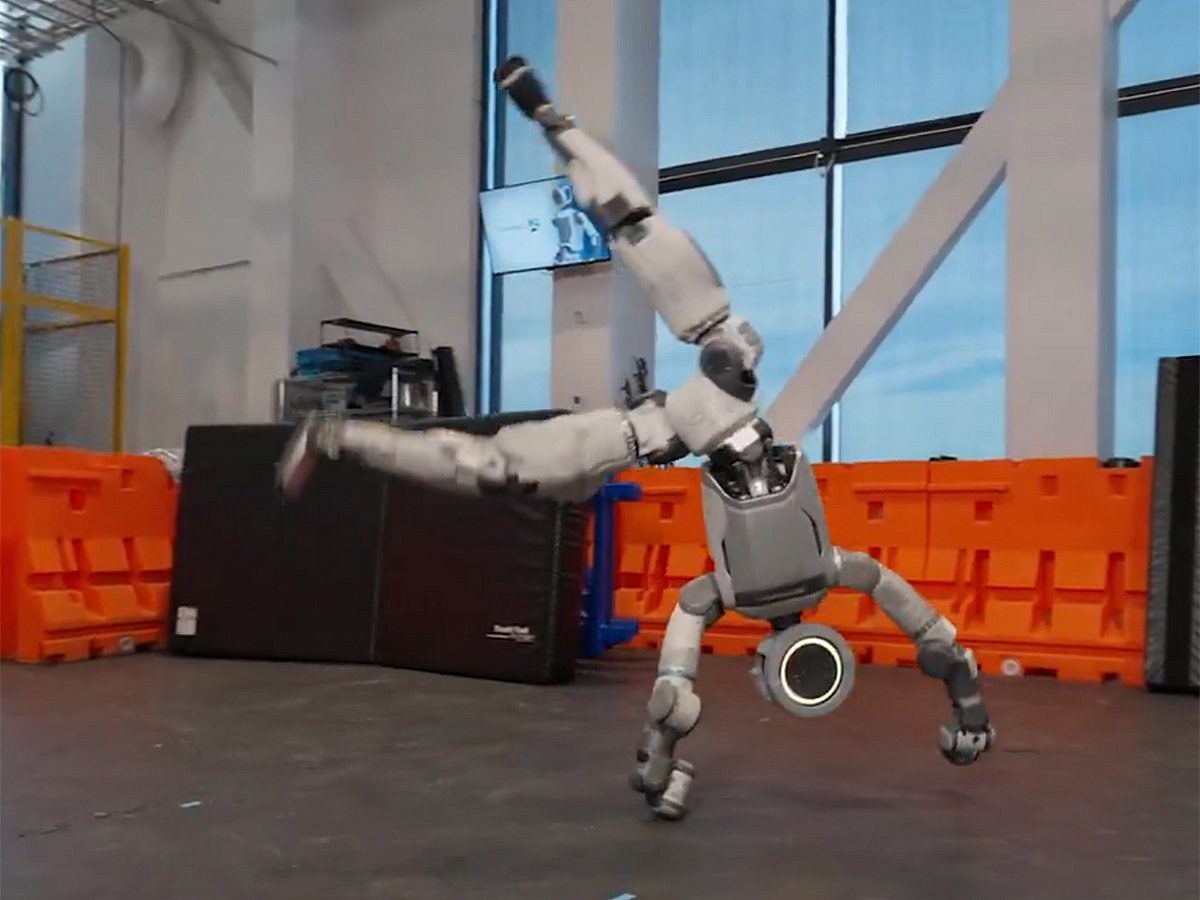
Boston Dynamics this week shared fresh footage and insights into its ongoing work pushing the limits of full-body control and mobility for its humanoid robots, highlighting progress toward robots capable of more fluid and versatile movement in real-world environments.
In a post on its official X account, the robotics developer said engineers “made one final push to test the limits of full-body control and mobility” with the support of the Robotics and Artificial Intelligence Institute (RAI Institute), which collaborates closely with the company on advanced robotics research. The video accompanying the update shows a humanoid navigating dynamic movement challenges and balancing tasks that go beyond static walking, hinting at improvements in how robots can adapt to varied conditions.
Boston Dynamics is best known for its portfolio of dynamic robots including Spot, a quadruped used in inspection and industrial settings, and Atlas, a humanoid platform designed for agile, human-like motion.
The RAI Institute, affiliated with robotics research and partly funded through collaborations with Boston Dynamics and others, has been instrumental in developing advanced control algorithms and reinforcement learning strategies tailored for highly dynamic platforms. Partnerships of this type mirror earlier efforts announced in 2025 to accelerate reinforcement learning and task-mastering capabilities for humanoid robots, particularly as electric and AI-driven robotics evolution moves beyond traditional prototype stages.
Boston Dynamics’ focus on full-body control — the ability for a robot to coordinate limbs, balance and respond autonomously to unpredictable terrain — represents a key technical challenge as robotics firms increasingly seek to deliver robots that can perform real work tasks rather than only predefined demonstrations. Industry observers note that advances in mobility often go hand in hand with improvements in perception systems and AI models that help machines interpret and react to their environments more robustly.
The company’s robotics roadmap includes expanding Atlas capabilities from the lab into enterprise contexts, such as material handling, inspection support and dynamic navigation in factory and warehouse spaces. While widespread commercial humanoid deployment remains limited, the latest footage shared by Boston Dynamics illustrates incremental progress and continued investment in fundamental motion and control innovations.
Network Links
GN StoreDownload our app
© Al Nisr Publishing LLC 2026. All rights reserved.