Ramadan peak time for viewing
Television advertising spend rockets with rate doubling or tripling
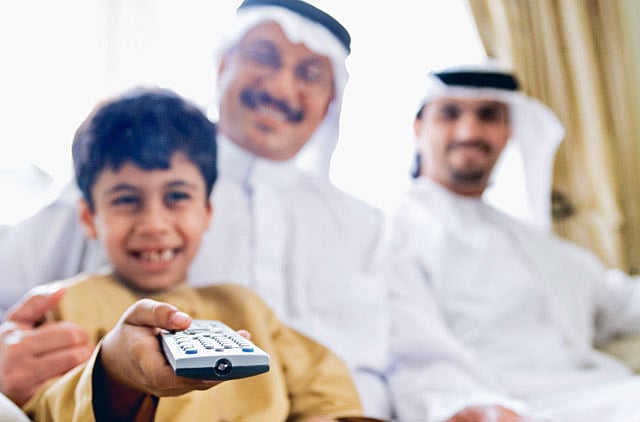
Dubai: If there's a particular time on our calendar that could be deemed expensive for the region's advertisers, then it has to be during Ramadan. With viewers skyrocketing into the millions, the television set during Ramadan more than ever becomes a window for advertisers to reach out to a huge captive audience.
MBC Group's Mazen Hayek said: "Ramadan on TV is a seasonality by itself". "So Ramadan is the peak month of TV viewing par excellence," he said.
Also, people's lifestyle and social habits changed during Ramadan. Families tended to spend more time indoors, particularly after sunset.
The regional daily average of four-and-a-half hours of TV went up to an average of six or seven hours during Ramadan, Hayek said. It's for that reason that the TV advertising spend went up significantly at this time.
"This year looks much better than last year," Hayek said about television advertising revenue. "We have a two-digit growth forecast in our commercial revenues in 2010 compared to 2009."
Ramadan is also the time when a lot of advertising is carried on satellite or pan-Arab TV stations to reach a lot more people in different countries through one spot on one station.
Once it's been decided television is the most effective medium for a specific brand, the research starts to identify the most popular TV stations — and programmes.
Karim Fahmi, managing director at media buying unit Tonic Media said: "This is when we would start to construct a media or communication plan, keeping in mind that buying is always at the back of our mind".
Popular shows
Rayan Hajjar, associate media director at media buying unit Starcom Mediavest Group, said that once the TV stations released their programme for the month of Ramadan, the process of selecting which programmes best suited the advertiser's message could begin.
"If it [the TV series] is year-on-year, then it helps," Hajjar said. "You can see the progression in ratings and we know it's going to do well."
A prime example is the popular TV drama series Bab Al Hara, which is in its fifth season. According to the preliminary data, 30 to 35 per cent of the total population watches the series.
Those most popular with viewers were usually the soaps and the game shows. In Saudi Arabia, ratings for the comedy series Tash Ma Tash have been astronomical.
"Tash Ma Tash gets you 55 share of audience on a given night," Hayek said. "That means for every TV set, there's another watching MBC1 on that time slot."
Air time during the most popular shows is obviously the most expensive. "These [popular] programmes have a premium on them as well," said Hayek.
During Ramadan, a 30-second ad which appeared once could cost anywhere between Dh55,000 up to Dh130,000, Hajjar said. That was double or triple the rate during prime time television outside of the Ramadan period, which varied between Dh37,000 to Dh55,000.
"From iftar up until 10pm is the most expensive," Fahmi said. "It's almost 200 per cent more."
But it's not only the advertisers spending the cash. For MBC1, Ramadan represented around 25 to 30 per cent of the channel's yearly budget in terms of investment in the grid.
At the same time, it also represented 25 to 30 per cent of the channel's advertising revenue.
In many ways, advertising solutions were a "hit-and-miss game," because people were no longer station driven, he said. Instead, viewers were programme driven.
Off air
You might have the right formula, but the TV series might be no good, he said.
Some advertisers said they didn't want to blow a big chunk of their budget during Ramadan, Fahmi said. Others even decided to go completely off air at this time.
However, the large number of advertisements had also created a lot of clutter.
"Almost every show is sponsored," said Hayek.
So when a brand sponsored a show, they could get the five-second bumpers before the start of the ad break, he said. Since sponsors usually get the opening and closing spots within ad breaks, a lot of ads could get stuck in the middle, he said.
While the bulk of the bookings was done at the start of the month, companies who couldn't afford to miss out had adopted a different strategy. Tonic Media, for instance, relied a lot on word of mouth to do its research on advertising placement.
"It's really asking people and finding out what people are watching, so we prefer to wait for the first two weeks or 10 days to see what everyone's talking about and then buy the time slot," Fahmi said. "At least [this way] I'm not wasting the client's money."
Huge potential
Much of the competition is between the top TV stations for the right to air the most popular shows.
Mazen Hayek of MBC said although MBC1 was not really in competition with other stations, the group kept "a close eye on any player in any category".
The station makes sure that the "pillars" of the grid include religious, comedy, drama, and game shows.
"It is expensive — if Ramadan represents 30 per cent of our investments and it does that, you schedule content that costs more than a quarter of your yearly budget," Hayek said.
"Our region has huge potential to grow by double, triple and even quadruple [rates]."
Some of the reasons such growth rates were stifled were that some still saw advertising as an expense rather than an investment.
In some cases, brand builders still think local rather than regional. Except for a few: "You have a few Arab brands with the potential to be created in the region and go global," Hayek said.
Sign up for the Daily Briefing
Get the latest news and updates straight to your inbox
Network Links
GN StoreDownload our app
© Al Nisr Publishing LLC 2026. All rights reserved.