Mobile robotic trash bins are pictured during testing at the Shinjuku Station transport complex in Tokyo
Japan trials robot bins to ease cleaners’ workload
Three automated rubbish bins are being tested at Tokyo’s Shinjuku Station to manage waste
Last updated:
3 MIN READ
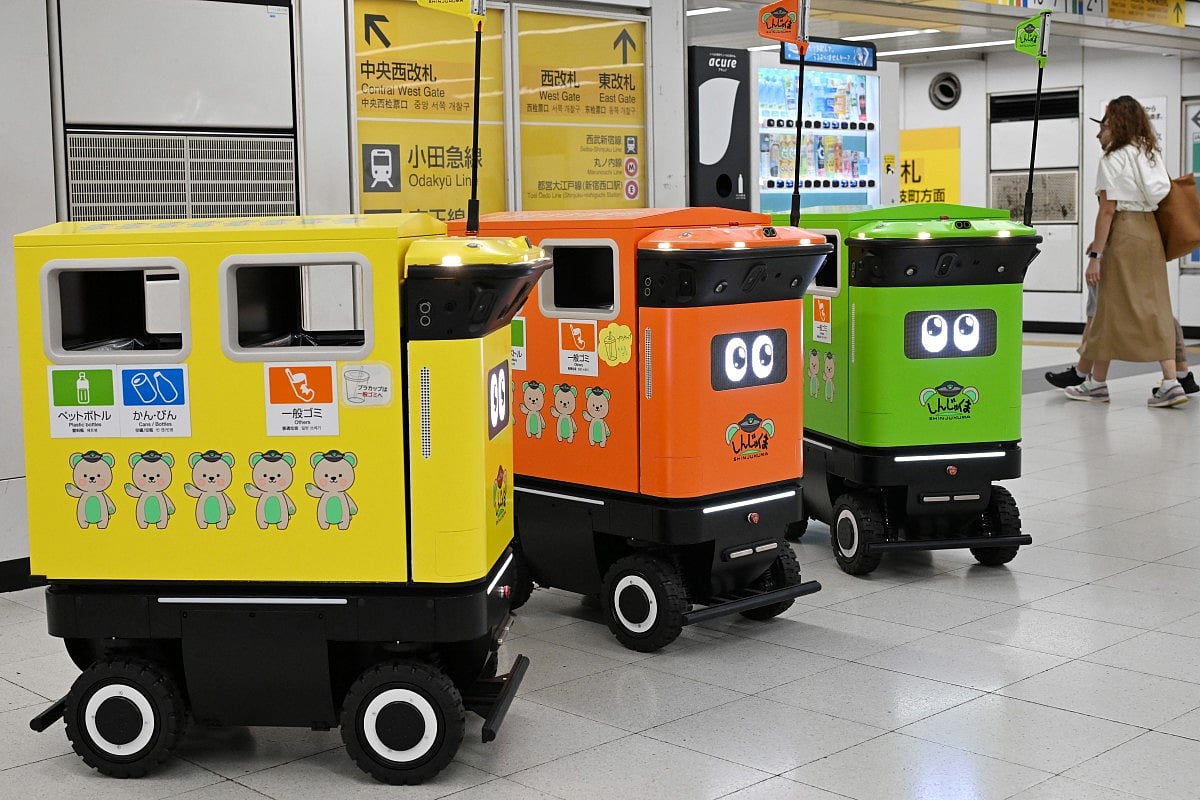
Mobile robotic trash bins are pictured during testing at the Shinjuku Station transport complex in Tokyo
AFP-TOSHIFUMI KITAMURA
Dubai: Japan is testing robot rubbish bins at one of the world’s busiest railway stations in a bid to ease the workload of sanitation workers, according to an AFP report.
Three automated bins have been trialled at Tokyo’s Shinjuku Station, a sprawling transport hub that serves more than 2.7 million passengers every day and holds the Guinness World Record for the world’s busiest railway station.
The trial has been carried out by East Japan Railway Company, or JR East, in part of the station it operates.
Get updated faster and for FREE: Download the Gulf News app now - simply click here.
Robots move through busy station
The robots stand just over one metre tall and travel at a cautious speed of about 20 centimetres per second.
Their slow pace has been deliberate, allowing passengers to approach them and throw away rubbish while enabling the machines to stop quickly if needed.
“We wanted to test how well something like this can operate automatically and safely in an environment like Shinjuku Station,” said JR East research official Shinya Kawamichi.
“We want to see how much of a difference mobile trash bins that collect garbage make, and whether people are actually willing to throw their trash into them.”
Mobile robotic trash bins are pictured during testing at the Shinjuku Station transport complex in Tokyo
Helping human workers
In the JR East-operated section of Shinjuku Station, rubbish bins are emptied manually more than 10 times a day.
The robot bins have been designed to collect rubbish and transport it to human sanitation workers, potentially reducing the amount of manual work involved in waste collection.
The trial will also allow JR East to see how well the machines can navigate the station’s crowded underground concourse.
A commuter puts waste into a mobile robotic trash bin being tested at the Shinjuku Station transport complex in Tokyo
Fewer bins in the station
Despite the enormous size of Shinjuku Station, the JR East section has only seven sets of rubbish bins and recycling boxes.
The number of wastebaskets has been reduced in recent years because of cleanliness and security concerns.
Some Japanese passengers have shared that stations can remain clean because people often take their rubbish home with them.
Meanwhile, others have welcomed the robot bins as a convenient option for disposing of waste while travelling.
People walk around a mobile robotic trash bin being tested at the Shinjuku Station transport complex in Tokyo
Robots become tourist attraction
The bulky machines, which feature large googly eyes, have also attracted attention from visitors. Many tourists have stopped to photograph the unusual devices as they move through the busy station.
For JR East, however, the trial has been focused on whether the robots can safely operate among large crowds and whether the technology could have wider applications in the future.
The robot-bin trial has been scheduled to run until late November. JR East will assess how effectively the machines collect rubbish, move through crowded areas and interact with passengers.
Network Links
GN StoreAbout Gulf NewsTerms & ConditionsReach by GNSitemapContact usPrivacy PolicyGN FocusHave your sayWork with usAdvertise with usGulf News epaperPrinting Services
Download our app
© Al Nisr Publishing LLC 2026. All rights reserved.