BRIDGE Summit: AI is changing newsrooms, but not replacing journalists
AI cannot replace humans, maintain the speakers
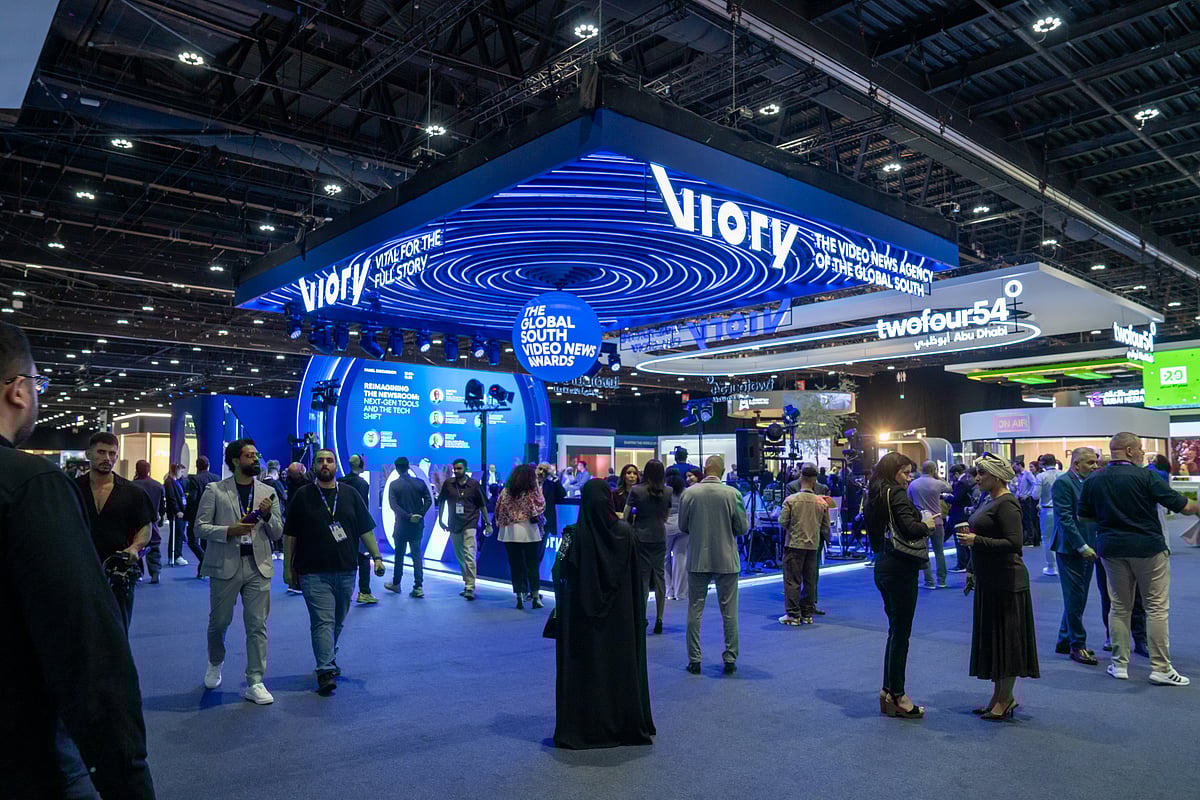
At a recent panel on AI's growing role in modern newsrooms, media leaders from the Middle East and beyond explored how artificial intelligence is transforming journalism. AI is speeding up workflows, breaking language barriers, and reshaping how content is produced and consumed. Yet, one message echoed throughout the discussion: human journalists remain irreplaceable.
AI as a language translator for news
Faisal J. Abbas, Editor-in-Chief of Arab News, revealed that the organization is preparing to launch a new AI-powered platform. He describes this as part of a wider effort to modernize their newsroom.
"The Middle East continues to be incredibly important to the world," Abbas emphasized, explaining why multilingual accessibility remains a top priority.
One of the standout tools he highlighted was Camdot.ai, a system that provides instant translation into up to 50 languages. After a full year of internal testing, Abbas shared that the technology has proven to be "extremely accurate." This is a breakthrough in widening the region's reach to global audiences.
Journalists are the most conservative about change
Rob Beynon, CEO of DMA Media, offered a candid take on newsroom resistance toward technological shifts.
"Journalists are the most conservative about change," he said, noting that AI is forcing the industry to confront new questions about accuracy, authenticity, and trust.
Beynon clarified that while AI can refine workflows, it cannot replace the essence of journalism or the courage required for on-ground reporting:
"Would you want a robot reporting from a war zone? Obviously not. AI cannot replace humans."
His comments underscored a larger point: automation can assist, streamline, and even elevate journalism. But it cannot replicate human judgment, empathy, or experience.
Speed is the new currency
Dave Mace, Lead, Media & Entertainment, MENAT, Amazon Web Services, "AI is rewriting newsrooms" panel at BRIDGE summit, listen to the audio and writr me an article on thatemphasized the competitive need for faster news cycles driven by audience expectations.
"Speed for journalism. That's where AI delivers," he said, pointing to tools that can instantly process data, summarize reports, and support real-time updates.
For newsrooms juggling breaking stories, limited staffing, and the pressure of constant coverage, AI serves as an accelerator rather than a replacement.
Future of hybrid newsrooms
Across the panel, a shared understanding emerged: the future of journalism lies in hybrid newsrooms. In these newsrooms, AI handles repetitive tasks, enhances accuracy, and expands language reach, while journalists continue to lead on investigation, storytelling, and ethical judgment.
The session ended with a discussion about risk, accuracy, and the limits of content created by machines. While AI can support real-time translation, the panelists agreed that full automation without human oversight is not yet advisable.
They also highlighted the growing need for journalists to act as curators and fact-checkers in a world flooded with content. Despite new and evolving tools, they agreed the storyteller will remain central to journalism. AI will serve as a powerful tool to speed things up rather than a replacement for human journalists. This future is shaped not by machines instead of journalists, but by machines working alongside them.
BRIDGE Summit 2025: What you need to know
Organised by the UAE National Media Office, the BRIDGE Summit 2025 is a global media, content and entertainment event taking place at the Abu Dhabi National Exhibition Centre (ADNEC) from December 8 to 10, 2025.
The summit will bring together more than 60,000 participants — including creators, producers, journalists, artists, investors and policymakers — along with over 400 international speakers and around 300 exhibitors.
Across three days, attendees will join more than 300 sessions, including over 200+ panel discussions, 50+ workshops and interactive events covering seven content tracks: media, creator economy, music, gaming, technology, marketing and visual storytelling.
The summit aims to shape the global media landscape by fostering collaboration, supporting creative talent and enabling new business deals, investments and partnerships across the entertainment and content industries.
Areeba Hashmi is a trainee at Gulf News
Network Links
GN StoreDownload our app
© Al Nisr Publishing LLC 2026. All rights reserved.