FIFA World Cup 2026: VAR under the spotlight after Mexico vs South Africa — how video assistant referees work
VAR is football's replay room, armed with multiple camera angles, slow-motion replays
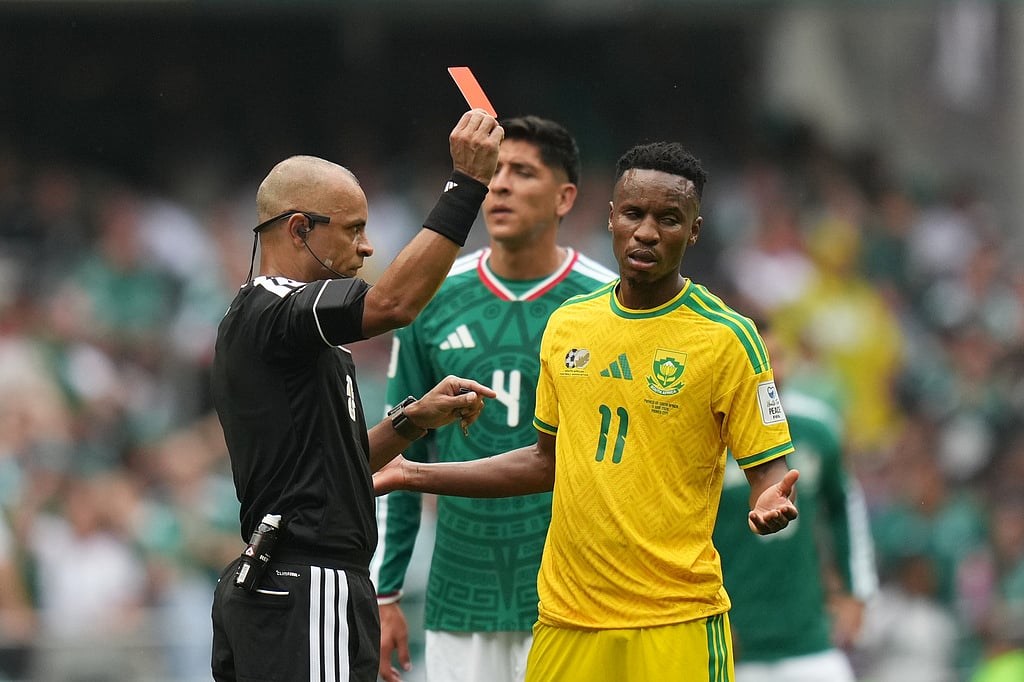
A match, three cards and a trip to the pitchside monitor. Well, hello FIFA World Cup 2026.
If the FIFA World Cup 2026 needed a reminder that football's most controversial teammate isn't wearing a kit, Mexico and South Africa delivered it on opening night. Mexico and South Africa's match second sending-off came only after referee Wilton Sampaio reviewed footage on the sideline, with South Africa's Themba Zwane eventually shown a red card.
And so, VAR was back at the centre of the conversation. Regardless of whether it was praised for correcting mistakes or criticised for interrupting the flow of the game, the Video Assistant Referee has become one of football's most influential figures, despite never setting foot on the pitch.
So, how exactly does it work?
As Inside FIFA explains, at its core, VAR is football's replay room. While the referee and assistants patrol the field, a separate team of qualified match officials watches the action unfold from a Video Operation Room (VOR), either inside the stadium, nearby or at a centralised facility.
Armed with multiple camera angles, slow-motion replays and specialist technology, the VAR team checks incidents that could have a major impact on the game. Their role, however, is often misunderstood. They are not there to referee the match remotely or overrule decisions. Instead, they act as advisers, alerting the on-field referee if they believe a clear and obvious error may have occurred.
The final call always remains with the referee.
Every VAR system is different
A full VAR operation resembles a miniature broadcast command centre. Alongside the VAR official sits an Assistant VAR (AVAR), while a replay operator manages footage from every available camera angle. The set-up includes review monitors and can be supplemented by offside-tracking technology and dedicated VOR cameras.
There is also a streamlined version known as VAR Light. Designed for competitions with fewer resources, it removes the replay operator and allows the VAR official to operate the system directly. Additional screens and offside technology can still be used, but the overall set-up requires fewer people and less equipment while preserving the core review process.
VAR was officially written into football's Laws of the Game in the 2018-19 season and has since become a fixture in many of the world's leading competitions.
But when can it actually intervene?
Only in situations that could significantly affect the outcome of a match.
Every goal is checked behind the scenes. VAR reviews whether there was an offside offence, handball, foul or even a ball that drifted out of play in the build-up. If a problem is spotted, a goal can be disallowed, or awarded if an incorrect decision was made on the field.
Penalty incidents are another major focus. Replays can help determine whether a foul occurred inside or outside the area, whether a player was offside beforehand, or whether the ball had already gone out of play.
Red-card decisions are also subject to review. VAR can recommend that a harsh dismissal be reconsidered or flag an incident where a yellow card should have been upgraded to a straight red.
And then there's football's version of a case of mistaken identity. In chaotic moments where several players are involved in an incident, VAR can help ensure the correct player receives the booking or sending-off.
In short, VAR is not designed to analyse every tackle, throw-in or disputed corner. Its job is to step in only when the game's biggest moments demand a second look.
Network Links
GN StoreDownload our app
© Al Nisr Publishing LLC 2026. All rights reserved.