Why the ability to keep going has become the new measure of power
Economic power increasingly depends on staying functional when global shocks strike
Economic strength is no longer defined solely by growth, wealth or productivity. In an era shaped by geopolitical uncertainty, supply chain disruptions and technological competition, the real advantage belongs to countries that can keep their economies functioning under pressure. This is what I describe as the ‘Continuity Economy’, a framework for understanding how the foundations of national power are changing.
For decades, economic success was measured by familiar indicators: faster growth, lower production costs, larger exports and stronger financial performance. Today, those measures are no longer enough. Increasingly, the world is rewarding something different — not the economies that grow the fastest, but those that are least likely to come to a standstill when disruption strikes.
This shift has not been driven by a single crisis. It has emerged through a succession of shocks that exposed how vulnerable even the most advanced economies can be. Supply chains stalled, shipping routes became uncertain, technology exports turned into geopolitical tools, and cyberattacks demonstrated that a single digital disruption could have consequences far beyond the virtual world. Together, these events have changed the way governments think about economic resilience.
Protecting growth
The central question is no longer simply how to generate growth. It is how to protect growth when the international environment becomes increasingly unpredictable.
‘Continuity Economy’ is not a new economic theory, but rather a different way of understanding national priorities. In this framework, economic strength is measured not only by the size of an economy, but by its ability to continue functioning under pressure, recover quickly from disruption and maintain strategic flexibility when external conditions change.
Viewed through this lens, many policies that appear unrelated begin to form a coherent picture.
Energy is no longer only about meeting today’s demand; it is about ensuring that tomorrow’s economy continues to function regardless of external shocks. Trade is no longer simply about expanding exports; it is about avoiding dependence on a single market or supply route. Likewise, the digital economy is no longer just a driver of innovation. It has become an essential layer of national continuity, enabling governments and businesses to maintain services, process information and make timely decisions in an increasingly data-driven world.
UAE as an example
The UAE offers an interesting example of this broader transformation.
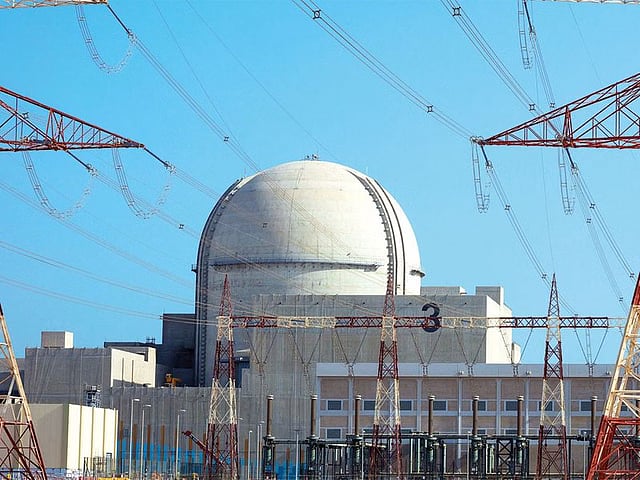
Rather than viewing the country’s major initiatives as separate development projects, they can be understood as elements of a wider effort to reduce economic vulnerability. The Barakah Nuclear Energy Plant, for example, is more than an electricity project. It represents a long-term investment in energy security and greater diversification of power generation. The continued expansion of ports and logistics infrastructure is not simply about facilitating trade; it is about ensuring that trade can continue even during periods of regional or global disruption. Similarly, investments in artificial intelligence, digital infrastructure and data centres reflect an understanding that future competitiveness will depend as much on decision-making capacity as on technological capability.
The UAE’s economic transformation reflects this thinking. Today, non-oil activities account for more than three-quarters of the country’s real GDP. More importantly, diversification has reduced dependence on a single source of growth, creating an economy that is better equipped to absorb shocks and adapt to change.
Yet continuity is not a destination. It is an ongoing process.
Perhaps the greatest mistake any country can make is to assume that today’s strengths will automatically meet tomorrow’s challenges. Every period of transformation creates new forms of vulnerability, requiring governments to rethink where future investments should be directed.
Human capital
One of the most important priorities is human capital. Global competition is no longer limited to attracting investment; it increasingly revolves around attracting and retaining exceptional talent. Building an economy capable of sustaining growth will require not only drawing global expertise but also investing continuously in developing national talent, ensuring that both remain complementary pillars of long-term competitiveness.
Supply chain resilience represents another defining priority. Recent years have demonstrated that disruptions in logistics affect far more than trade. They influence manufacturing, healthcare, food security and energy markets. Strengthening supply chains through diversified sourcing, strategic partnerships and greater domestic capabilities in critical industries has therefore become an essential component of economic security.
Food security deserves equal attention. In a region that relies heavily on international markets, resilience can no longer be measured solely by strategic reserves. It increasingly depends on diversified sourcing, investment in agricultural technology and long-term international partnerships capable of withstanding future uncertainty. The same principle applies to pharmaceutical security, which has evolved from a public health concern into a strategic component of national resilience.
Ultimately, continuity should not be mistaken for the absence of crises. No nation can eliminate uncertainty altogether. The real advantage lies in reducing vulnerability, expanding strategic options and building institutions capable of adapting before disruption turns into instability.
The traditional definition of power is therefore changing. Wealth alone is no longer sufficient. The countries best positioned for the decades ahead will not necessarily be those with the largest economies, but those with the greatest capacity to protect them.
Perhaps that is the defining lesson of our time. For much of the last century, nations competed to accumulate wealth. In the decades ahead, they may compete for something even more valuable: the ability to keep their economies moving when the world around them does not.
That, in essence, is what I call the Continuity Economy.
Fatima Musabah Alremeithi is a Senior Researcher at Trends Research and Advisory
Sign up for the Daily Briefing
Get the latest news and updates straight to your inbox
Network Links
GN StoreDownload our app
© Al Nisr Publishing LLC 2026. All rights reserved.