Why Sudan’s war cannot end without confronting the Muslim Brotherhood
Extremist influence within security apparatus blocking peace and deepening the catastrophe
The Muslim Brotherhood remains a formidable force in Sudan, fighting and contributing to the country’s destruction while operating from within the security apparatus and exerting influence over decision-making in pursuit of its own interests rather than those of the nation. After 33 months of fighting, the group has shown no willingness to respond to any peace initiatives, despite the huge human cost borne by Sudanese civilians. This war is dismantling the state, its institutions and resources, and its continuation will negatively affect the future of every Sudanese.
Political and media networks led by the National Congress Party, the political wing of the Muslim Brotherhood, are actively working to prolong the conflict and reject all regional and international efforts to resume negotiations. War appears to be their last refuge; the group’s leadership is opposing any move toward a ceasefire, in direct partnership with senior figures within the military. The Muslim Brotherhood does not operate outside the formal system; it operates at its very core.
Political priority
The Muslim Brotherhood and some military leaders share motives that make an end to the war deeply threatening to both sides. For the Brotherhood, the priority is to secure its future political presence and avoid exclusion from power amid a regional and international trajectory that is increasingly rejecting extremist movements operating under religious cover. Rather than aspiring to rule outright, the group now fears political extinction should Sudan’s future path decisively exclude such organisations.
The military leaders face an even more severe dilemma. They risk legal accountability for grave crimes committed over the past years, potentially rising to the level of war crimes. Moreover, an end to the conflict without a clear victory, or with outright defeat, is viewed as unacceptable. In a post-war Sudan, corruption files may also be reopened, potentially implicating elements of the country’s political elite.
The Muslim Brotherhood has been directly involved in the conduct of the fighting, promoting claims of victory and justifying the continuation of the war without regard for its devastating human and material costs to Sudan and its people. The group has played a role in planning and managing military operations on the ground. One of the most prominent fighting formations is the Al Baraa bin Malik Battalion, which maintains close ties to the Muslim Brotherhood. Its members have taken part in combat operations in coordination with certain military officers, fighting alongside the army in its ongoing battles against the Rapid Support Forces. The battalion has reportedly operated within formal military divisions, including armoured units and military medical corps, and has mobilised alongside Central Reserve Police forces.
Despite repeated denials by senior army leaders of any links with the Muslim Brotherhood, testimony from within the group itself tells a different story. Ahmed Abbas, former governor of Sennar during the rule of Omar Al Bashir, publicly acknowledged the Brotherhood’s role in shaping the war’s dynamics, claiming that Islamists account for as much as 75 percent of fighters operating under the command of Abdel Fattah Al Burhan.
Realities on the ground
Senior military figures are also reported to maintain close relationships with the Muslim Brotherhood, particularly in their shared opposition to civilian forces and rejection of any pathway toward ending the war and forming a civilian government that represents all Sudanese and moves the country from death to life, and from destruction and displacement to stability and peace. While the army has frequently sought to conceal its ties with political Islamist groups, realities on the ground suggest otherwise. The relationship between the Muslim Brotherhood and the military appears to be one of cooperation, if not partnership, at least in decisions related to war and peace. The group has embedded itself throughout the security apparatus, operates alongside the army in the field, and rejects peace just as some military leaders do.
Sudan’s Islamists represent a genuine obstacle to any effort to halt the war. They are direct beneficiaries of its continuation, as an end to the fighting would effectively spell the end of their political future. The first real step toward stopping the war and ending Sudan’s catastrophe is not merely for the army to disavow its ties with the Muslim Brotherhood, but to purge the military leadership and command structures of the group altogether and decisively shift toward peace. Such a reversal, however, remains difficult, particularly since military leaders themselves authorised the formation of so-called Popular Resistance units composed of civilians drawn into the war. Armed groups linked to the dissolved National Congress Party, the political arm of Sudan’s Islamic movement, were also mobilised, resulting in the creation of civilian-based battalions that have turned Sudanese against one another. As a result, Sudan has become saturated with militias operating alongside the army, including formations such as the Lightning Brigade, the Pilots Battalion, and Supporters of the Sharia State, among others.
Media campaign
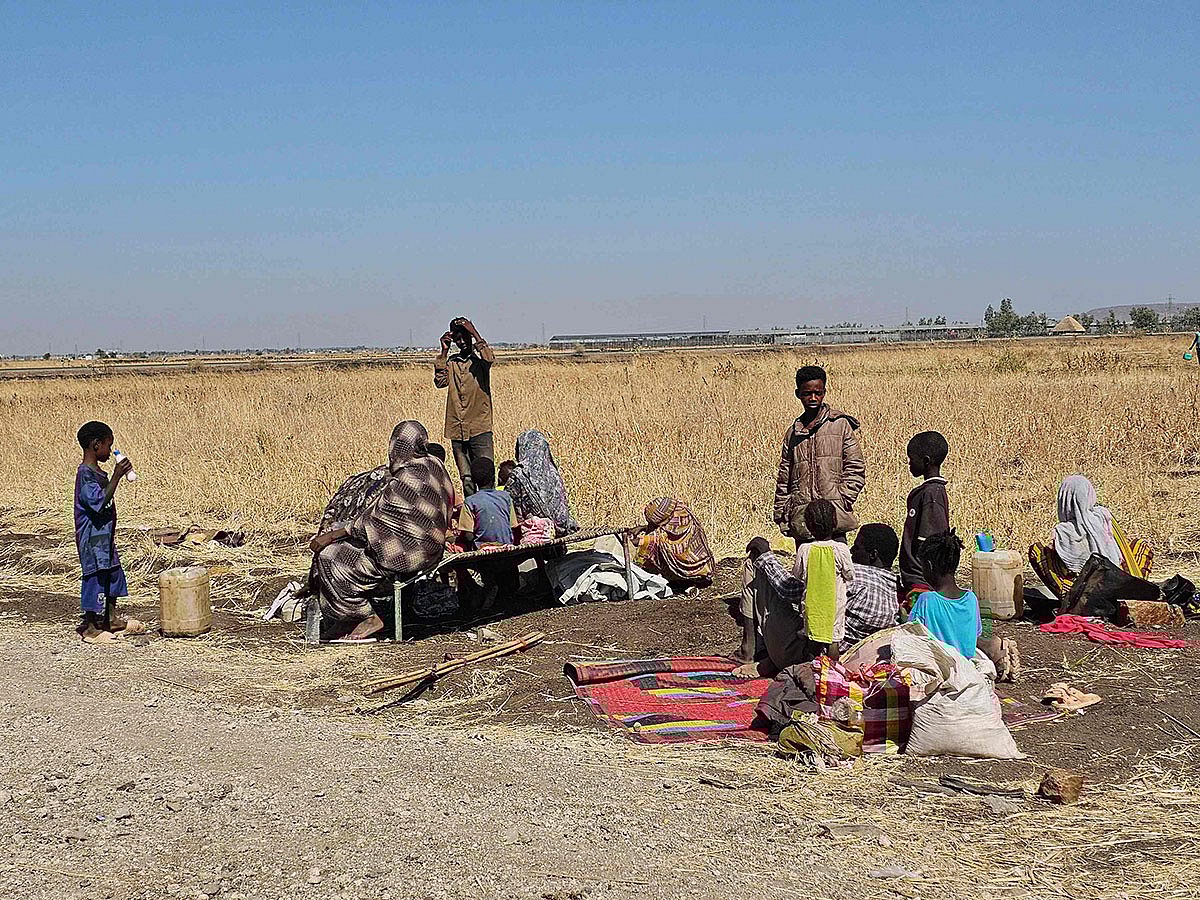
The war is not confined to the battlefield. A parallel media campaign has emerged, driven by the dissemination of hardline ideology across social media platforms. The group’s media discourse promotes violence and extremism while targeting any initiative aimed at de-escalation. Its platforms seek to divert attention from crimes and the gravity of the situation by rejecting all international mediation efforts and issuing sweeping accusations, despite a humanitarian catastrophe that has displaced more than 14 million people, left millions facing acute shortages of food and medicine, fuelled the spread of epidemics, and caused the near-total collapse of healthcare services, basic utilities, and infrastructure.
The Sudanese army itself is increasingly at risk amid internal divisions, governance failure, and its entanglement in a war between Sudanese factions. Previous opportunities to resolve disputes through peaceful means, without imposing such devastating costs on the country and its people, were missed, and the conflict continues to rage. The alignment of military leadership with interests other than those of the state constitutes more than a policy failure; it represents a direct assault on both the state and the army itself. Rather than fulfilling its national role, the army has become a source of public exhaustion, hunger, and mass displacement, forcing millions into uncertainty without a homeland or refuge. Every step taken to prolong the war and justify crimes against the Sudanese people ultimately strikes at the very foundations of the national army, placing it alongside leaders who persist on a path of destruction and self-annihilation.
Ideological moorings
Sudan cannot continue down this path of mobilising civilians into a civil war and committing war crimes in a losing battle to serve the narrow interests of the Muslim Brotherhood and segments of the military leadership. Many senior military and security figures pledged loyalty to the Islamic Movement during the decades of Omar Al Bashir’s rule, and today’s leadership largely reflects that same ideological project. This reality is not confined to the army alone; it extends across state institutions, including the police and intelligence services. Even the choice between the Islamic Movement and the Sudanese people appears to have been decisively settled in favour of extremist groups, evident in the rejection of a ceasefire and the refusal to engage with the Quad plan aimed at launching negotiations to halt the fighting.
The Islamic Movement is effectively running the war in Sudan, even if from behind the façade of military leadership. Yet the future of the country and its people cannot be shaped by the ambitions of extremist groups. The war must come to an end, and Sudan must be allowed to begin a new chapter defined by stability, security, and development. To reach that point, regional actors must take decisive action to stop the catastrophe and prevent extremist factions from controlling the fate of a country that deserves to move from suffering and despair toward hope and progress. At the international level, global powers and UN institutions can open comprehensive investigations into crimes committed in Sudan, which will not expire with time. These include documented war crimes and allegations of chemical weapons use against civilians. The UN Security Council should adopt a series of measures to halt the war, document violations, and ensure accountability by pursuing all perpetrators, with the aim of restoring Sudan as a viable state.
There remains hope in betting on national-minded individuals within the army who are distant from extremist currents, alongside civilian political figures committed to rebuilding Sudan. With regional and international support, they can help pull the country out of cycles of violence and extremism through initiatives aimed at ending the war and saving the Sudanese people from the ongoing tragedy. This path requires the exclusion of all those implicated in killing civilians and committing war crimes, and the removal of extremist groups from the spheres of power and politics so that Sudan can finally embark on a long-awaited journey toward development and recovery.
Khalid Al Fazari is Director of the Marketing Department at TRENDS Research & Advisory
Sign up for the Daily Briefing
Get the latest news and updates straight to your inbox
Network Links
GN StoreDownload our app
© Al Nisr Publishing LLC 2026. All rights reserved.