Trump's return sparks revolution: America first, controversies second
Trump’s second term begins with bold promises, sharp rhetoric, and a global spotlight
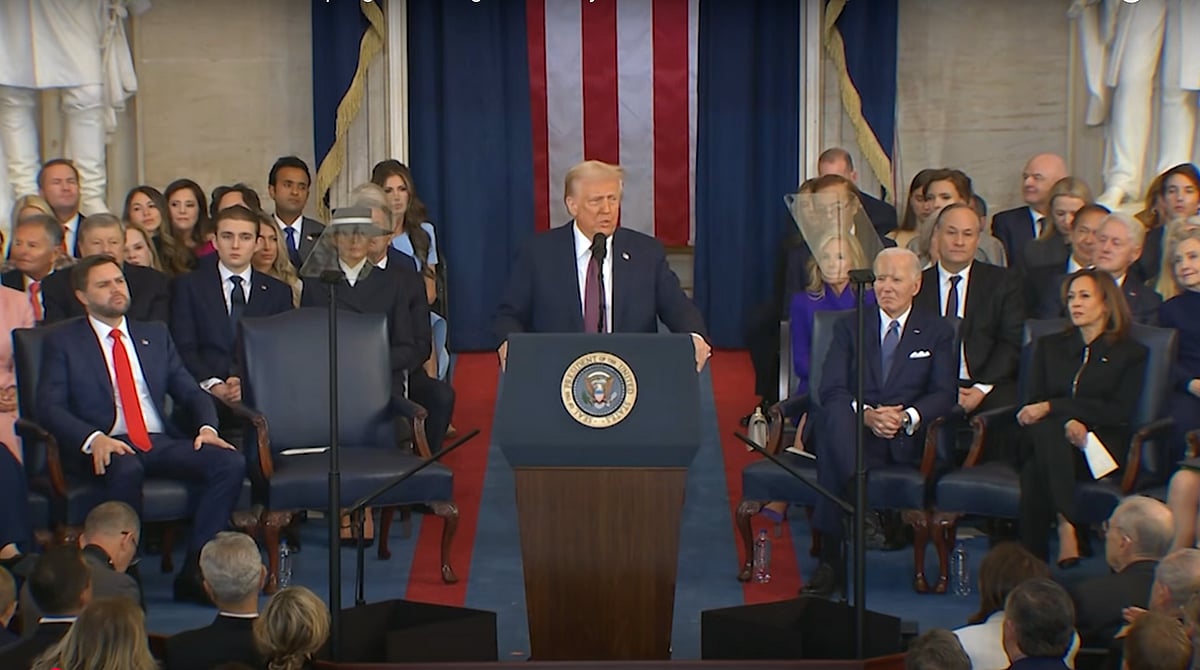
On Jan. 20, 2025, Donald J. Trump was sworn in for a historic second term as the 47th President of the United States. In an inauguration address, which sounded more like a campaign rally, Trump harshly repudiated the outgoing Joe Biden administration even as he heralded a new chapter in American history. His inauguration was not just a ceremonial rite; it was an event laden with symbolism, ambition, and controversy, encapsulating several themes that will define his presidency.
It was a chilly and snow-capped inauguration, shifted indoors both for comfort and security of the new president and the invitees. As Trump strode into the Capitol rotunda, it was a clear that “Fight, Fight, Fight” had been converted to “Win, Win, Win.” Trump said as much in the inaugural ball later in the evening. Elon Musk, a major Trump supporter and the world’s richest man, pumped the air, jumped up and down, whooped and bellowed, candid and unpretentious enough to break into a little dance saying, “This is what victory feels like.”
American exceptionalism
Trump’s address focused on the victories he anticipated for America under his leadership — economic prosperity, border security, and a restored sense of national pride.
He said he would make the US military so strong that it would never have to be used. He called himself a peacemaker and unifier, even if his speech was abrasive and full of jingoistic sloganeering about American exceptionalism.
He promised to take back the Panama Canal and rename the Gulf of Mexico the Gulf of America. He also vowed to stop illegal immigration and impose tariffs on imports joking that instead of the Internal Revenue Service, he would institutionalise an external revenue service.
From confrontation to transformation and from transformation to celebration — that seemed to be the theme of day. Given how onerous, even heroic, his return to power was, Trump was his flamboyant self. Although many would have wished him to be more gracious to outgoing President, Joe Biden, who was bidding goodbye to the nation’s capital after 50 years of distinguished service, which included several years as senator, two terms as Vice President of the Republic, and four years as the 46th US president. But the event, as also the many other activities of this uber busy day, was intended to thank and galvanise his supporters as much as assuming office again.
But it was clear that everyone present — and the millions watching around the world — were witnessing history. Trump’s return to the presidency after a defeat in 2020 paralleled the rare political comeback of Grover Cleveland, marking him as only the second president to serve non-consecutive terms.
The atmosphere was charged with the weight of history, both for Trump’s personal journey and for the nation, which was once again divided on the direction it should take. Some would argue that the presence of former Presidents, international dignitaries, and tech moguls underscored the event’s significance, turning the inauguration into a global spectacle. But not really. It was Trump, Trump, Trump all the way.
In his speech, Trump called his return a “revolution of common sense,” a phrase that encapsulated his critique of the previous administration’s policies. However, this revolution was more than a mere call for practical governance; it was a manifesto for a sweeping change in policy, ethos, and international relations.
Trump’s inaugural address suggested a return to American supremacism, with an emphasis on nationalism, stringent immigration policies, and a clear disdain for what he termed as “woke” culture. This rhetoric was not just about common sense but was a clarion call for a cultural and political shift back to what he portrayed as America’s foundational principles.
Trump rode back to power on the back of the “Make America Great Again” (MAGA) movement. MAGA continues as the ideological anchor for Trump’s policies. But the question remains whether this slogan will translate into reclaiming the US as the world’s leading hegemon and peacekeeper. Trump’s foreign policy in his first term was marked by unpredictability, unilateralism, and shift towards nationalism.
His second term’s focus on “America First” policies, including aggressive trade negotiations and military posturing, suggests an intent to assert US dominance. Critics, however, argue that this could lead to isolationism rather than leadership, potentially destabilising global alliances and peace efforts. Whether MAGA will strengthen or undermine US hegemony is a debate that continues to unfold.
The immediate post-inauguration period was marked by a flurry of executive orders, indicating Trump’s intent for significant and lasting changes. These included reversing policies on immigration, environmental regulations, and international agreements. Such actions suggested a rapid dismantling of his predecessor’s legacy, aiming for a conservative overhaul of government operations.
The breadth and depth of Trump’s executive orders hint at a presidency poised to reshape America’s domestic and foreign policies fundamentally.
Network Links
GN StoreDownload our app
© Al Nisr Publishing LLC 2026. All rights reserved.