Strike on Iran could start in Lebanon
If Hezbollah members are formally accused of former Lebanese prime minister Rafik Hariri's murder, one of Tehran's main allies will be sidelined
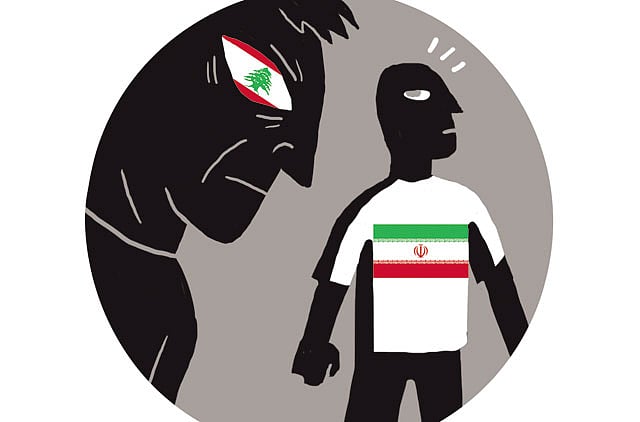
The wars in Iraq and Afghanistan, violence in Pakistan, skirmishes in south-eastern Turkey and even the flaring tension on the Korean peninsula were briefly overshadowed by developments in Lebanon in recent weeks. It seemed as if the crisis between the West and Iran was subsiding, but in fact what is going on in Lebanon is just an extension of the US-Iran conflict.
The issue became apparent thanks to the media, which reported that the UN's Special Tribunal for Lebanon investigating the assassination of former Lebanese prime minister Rafik Hariri would lay the blame on Hezbollah members.
But in fact, it began earlier with a wave of arrests by Lebanese security forces of suspected Mossad agents. Hezbollah, the Lebanese resistance supported by Iran and Syria, played a behind-the-scenes role in identifying the agents and helping the authorities to nab them.
Since one of its senior leaders, Emad Mughniyah, was killed in February 2008 by a car bomb in Damascus, Hezbollah has focused on internal security issues. The month-long war between Israel and Hezbollah in the summer of 2006 also alerted the latter that the Israelis were actively infiltrating its incubating environment — Lebanese society.
The latest attempt to implicate the group in Hariri's assassination, leaving Syria seemingly in the clear, is worth contemplating. Hezbollah Secretary-General Syed Hassan Nasrallah has responded by accusing the Israelis and the West of plotting to defame the resistance.
But it is not clear that his attempt to paint Israel as a more likely suspect in the Hariri killing will succeed. The consequences of Hezbollah members being formally accused of the murder are dire. Regardless of how politicised the tribunal may be, the heat is on Hezbollah. Even the high-profile diplomatic manoeuvring of Saudi Arabia and Syria is meant only to lessen the impact of the UN tribunal's decision, rather than avert the inevitable.
The Israeli siege of Gaza is keeping Hamas in check and Hezbollah's attention is well and truly diverted to internal disputes in Lebanon, weakening Iran's two main allies in the region.
This is especially important if a strike against the Islamic Republic's nuclear facilities is to be launched soon. The country's two allies are a thorn in the side of Israel, as they are succeeding in changing the geopolitical equation in the region as influential non-state actors. The two groups could make life difficult for the Israelis, even if the strike on Iran were an American one.
Isolation
Iran's only alternate ally, Syria, seems to have been neutralised. Damascus has been urged to dissociate itself from Tehran in return for promised incentives and a possible breakthrough in talks towards a peaceful settlement with Israel.
The recent visit of the Saudi King Abdullah Bin Abdul Aziz to Damascus, and his visit, along with President Bashar Al Assad, to Beirut, sent many messages. The most important of these was that the moderate camp is succeeding in putting pressure on Iran.
Another member of the moderate camp, Egypt, is actively involved in facilitating progress towards direct talks between the Israelis and the Palestinians. These political processes — whether they achieve their declared goals or not — are essential to softening the impact of another potential war in the region involving Israel directly or indirectly.
Lebanon is going to be a key player, even if it is relatively removed from any war. Not only is there the issue of Iran's armed ally, Hezbollah, but the divisive Sunni-Shiite struggle is more evident in Lebanon than anywhere else in the region.
One feature of Lebanon makes it easier for the West to intervene in the country: a sizeable Christian population. This distinguishes Lebanon from the rest of the region, where Sunnis and Shiites are already suffering tense relations.
For decades, analysts have said Lebanon is a microcosm of the region. Regional powers use the country as an arena to sort out their conflicts, with a resultant toll on civilian lives. To a degree, Lebanon is the soft underbelly of Iran, as any action against Tehran would start in Beirut. We might discover just how soft that underbelly is once the Special Tribunal for Lebanon announces its findings.
Dr Ahmad Mustafa is a London-based Arab writer.
Sign up for the Daily Briefing
Get the latest news and updates straight to your inbox
Network Links
GN StoreDownload our app
© Al Nisr Publishing LLC 2026. All rights reserved.