Strait of Hormuz: Between noise and the clarity of international law
How law, history and trade define one of the world’s most strategic waterways
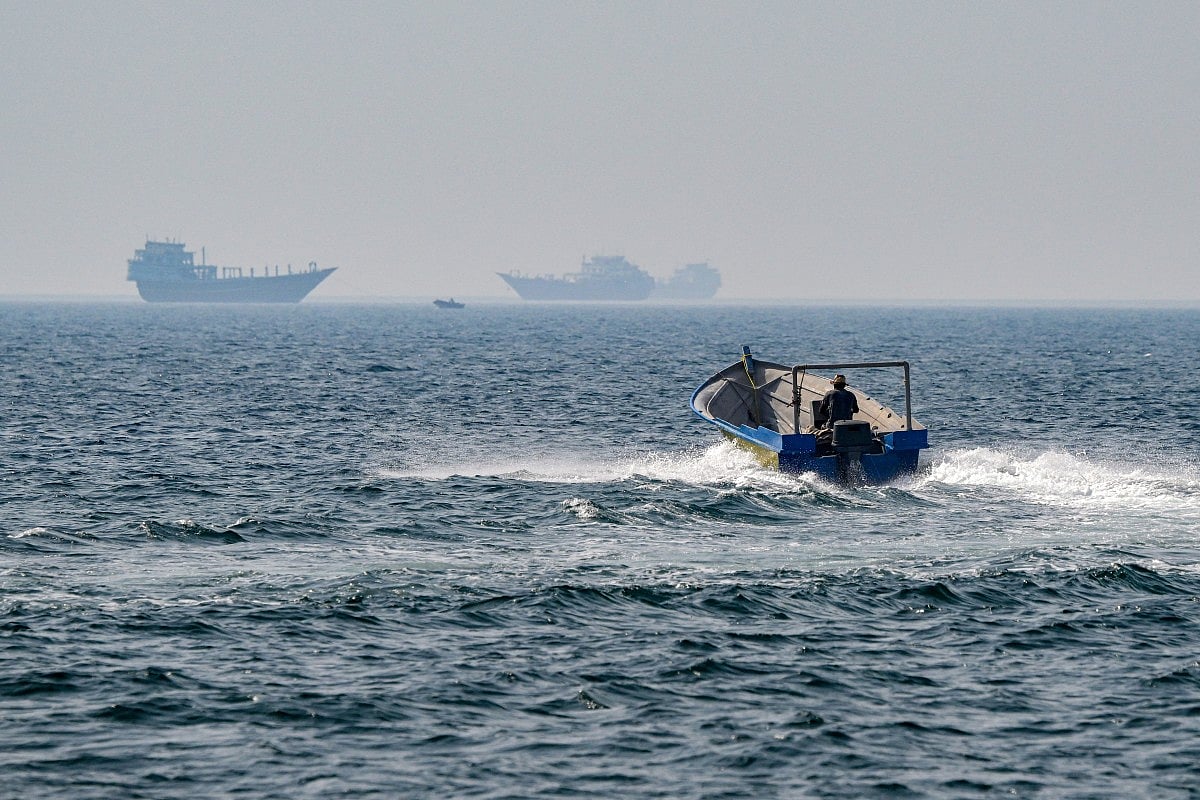
The Strait of Hormuz has once again returned to the centre of regional and international attention, not only because of the renewed media debate surrounding its legal status, but also due to the broader geopolitical tensions shaping discussions around it. A key point of dispute remains the strait itself, particularly in light of the latest developments in Islamabad, where the United States and Iran failed to reach an agreement after extended negotiations. Both sides acknowledged that major disagreements persist, and while talks may continue, no resolution or ceasefire arrangement emerged.
Against this backdrop, the strait has been overwhelmed by a wave of commentary, with interpretations ranging from accurate to highly speculative. Media outlets have circulated comparisons between Hormuz and other straits that differ fundamentally in their legal character — especially those governed by the Montreux Convention, such as the Bosporus and the Dardanelles. As these comparisons gained traction, it became necessary to clarify the essential distinctions and to outline what applies to each strait and what does not. This includes the fact that the 12‑nautical‑mile coastal limit does not apply to the Strait of Hormuz in the way some assume, as the navigational channels lie entirely within the territorial seas of the coastal states, yet remain subject to the regime of transit passage, which supersedes this limitation.
Analytical reading
From this perspective, I found it important to offer an analytical reading grounded in my experience as a former UAE official responsible for the maritime transport portfolio, and informed by the clear principles articulated by the International Maritime Organisation (IMO) regarding freedom of navigation and transit rights in international straits.
The IMO, in its statement issued on March 16, affirmed that any infringement of transit passage in the Strait of Hormuz constitutes a breach of international maritime law. The organisation stressed that the strait is governed by the regime of transit passage, which cannot be suspended or restricted through unilateral measures. It also called for full respect of international navigation rules, the protection of merchant vessels and seafarers, and the avoidance of actions that could endanger maritime safety or disrupt global trade. This position comes at a time when the world’s reliance on strategic waterways is increasing, along with the risks posed by inaccurate interpretations that may shape public understanding of these vital corridors.
Right of transit passage
The Strait of Hormuz is the principal maritime gateway from the Arabian Gulf to the Indian Ocean, carrying nearly one‑fifth of the world’s oil trade — making it indispensable to the global economy. Its narrowest width ranges between 33 and 39 kilometers, while the designated traffic lanes are no more than six kilometers wide. Although these lanes lie within the territorial seas of Iran and Oman, international law grants vessels the right of transit passage — an uninterrupted right that cannot be suspended even in times of tension. This makes Hormuz an international strait by virtue of use and necessity, not by virtue of being outside coastal sovereignty. For this reason, the responsibility for ensuring safe navigation is inherently international, and safeguarding the flow of traffic is a global obligation.
Historically, Arab and Islamic geographers referred to the strait by several names reflecting its commercial role and its connection to major Gulf ports. Among these names were Bab Al Salam, Bab Al Basra, Bab Al Bahr, Bahr Makran, and Bahr Fars. These terms appear in the works of Ibn Khordadbeh, Ibn Hawqal, Al Ya‘qubi, Al Idrisi, and Yaqut Al Hamawi, who described the maritime routes linking India with Mesopotamia. The modern name “Hormuz” is associated with the Kingdom of Hormuz, which flourished between the 10th and 16th centuries. The Portuguese adopted the local name when they occupied the island in 1515, helping to spread it globally through European cartography — though they were not the first to use it.
Specific international convention
In contrast, the Bosporus represents a strait fully controlled by a coastal state under a specific international convention. It links the Black Sea to the Sea of Marmara and is entirely under Turkish sovereignty. The Montreux Convention of 1936 governs the passage of merchant ships, imposes clear restrictions on warships, and grants Turkey extensive powers during wartime or when facing imminent threat. The same applies to the Dardanelles, making both straits legally distinct from Hormuz, which is not governed by any special convention but rather by the general provisions of the UN Convention on the Law of the Sea.
The Strait of Malacca — shared by Malaysia, Indonesia, and Singapore — is one of the busiest maritime corridors in the world and a central artery of Asian trade. Despite its importance, it is not subject to transit passage but to joint management by the littoral states, with security challenges such as piracy shaping its operational environment. Bab Al Mandeb, linking the Red Sea to the Indian Ocean, is another strategic chokepoint for trade between Europe and Asia. Its sensitivity stems more from regional stability than from legal complexity, as it is governed by general principles of international navigation without a dedicated treaty.
Unique position
A comparison of these straits reveals that Hormuz occupies a unique position: a narrow waterway of immense global economic significance, with traffic lanes inside territorial seas yet governed by a legal regime that guarantees freedom of navigation. The Bosporus, the Dardanelles, Malacca, and Bab Al Mandeb each possess their own legal and political characteristics that shape how they are managed and how they function within the international maritime system. These straits, despite their differences, remain pivotal indicators of geopolitical balance and global economic stability — making it essential to return to law and history to understand their present and future, away from the noise of shifting media interpretations.
Dr Abdullah Belhaif Al Nuaimi is former UAE Minister of Climate Change and Professor of Sustainability at the American University of Sharjah
Sign up for the Daily Briefing
Get the latest news and updates straight to your inbox
Network Links
GN StoreDownload our app
© Al Nisr Publishing LLC 2026. All rights reserved.