A decade after the New York terrorist attacks catapulted the world in to an unprecedented phase in recent history, dominated by often harsh military and security policies, Pakistanis will broadly remember events of the past 10 years with a mix of guarded optimism and widely-held scepticism.
Pakistan’s centrality to events of the previous decade were highlighted just days before today’s anniversary marking 10 years since the September 11 attacks. Following an alert in the US on the possibility of new terrorist plans meant to target major American cities, US officials noted that the threat emanated from Pakistan.
Though this is not the first time a prominent terrorist threat outside Pakistan was linked to the South Asian country, the timing of this latest event was a powerful reminder of Pakistan’s centrality to the challenges faced by the global security environment. To many Pakistanis, this latest threat showed that they are never too far from being caught in a major and powerful controversy related to terrorism on a global scale.
Often however, those seeking to point out Pakistan’s links to global terror miss out the powerful reality of the erosion that has taken place within the country during the past decade, with far reaching consequences for the future.
By comparison to a decade ago, Pakistan’s economic and security related outlook remains far more challenging than ever before. After the September 11 attacks, as the country devoted its meagre resources to the need for beefing up its internal security apparatus, the issue of tackling pressing human concerns was dealt a further blow.
Though statistical evidence remains largely in question, at least a third of Pakistan’s population today lives in extreme poverty — -a proportion at least comparable, if not more than the number of impoverished Pakistanis from a decade ago.
Consequently, areas that have remained in deep neglect during this time ranged from the state’s educational system to public sector to health care. Going by the proliferation of privately-run clinics, hospitals and educational institutions across Pakistan in the past decade, it is evident that private providers of such services found more space to exploit the people.
Weakened civil service
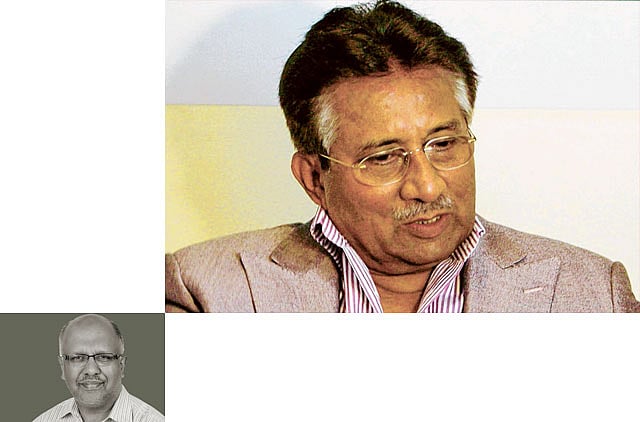
At the same time, while worsening lawlessness caused by terrorist violence grabbed the headlines within and outside Pakistan, a parallel and in some respects more potentially damaging breakdown went largely unnoticed. Following an ill-advised decision by the country’s former military ruler, General Pervez Musharraf, to dismantle a carefully laid-down civil service management structure across the districts, the country’s already notorious police became even more reckless. Consequently, the past decade has been well recorded for overseeing an unprecedented rise in the level of criminality involving police personnel than ever before.
While Musharraf’s decision to weaken Pakistan’s civil service in the first place was hugely controversial, he successfully pressed ahead with his choice, in part due to the overwhelming US-led international support to his otherwise controversial military regime. At the same time, Pakistan’s political class — already a disappointment for the country, failed in the past decade to rise to the occasion in defending the rights of Pakistanis.
Ahead of today’s anniversary, Pakistan’s politicians — ruling and opposition, continued to squabble over a slice of the political pie.
In spite of the security related turmoil surrounding the country, Pakistan’s rapidly evolving media continues to be among the most promising features of the country’s journey in to the 21st century.
Long accustomed to succumbing to official controls under a succession of regimes, notably military ones, Pakistan’s media today has learnt to defy the odds more than ever before. It is an outcome of a journey that began from a few national newspapers at the time of Pakistan’s creation in 1947 and has grown to a stage where privately run TV channels are now accessible even in the poorest of homes.
Equally impressive in the past decade has been the growth and consolidation of Pakistan’s civil society, notably the community of its lawyers who successfully oversaw the return of the chief justice of Pakistan’s supreme court, just two years after his unceremonious removal by Musharraf in 2007.
These cases may not necessarily negate the challenges faced by Pakistan, a decade after it was thrown in the front line of states participating in the global war on terror. But at the very least, the progressive aspects of Pakistan deserve to be celebrated as an important step to an equally progressive future.
Farhan Bokhari is a Pakistan-based commentator who writes on political and economic matters.
Sign up for the Daily Briefing
Get the latest news and updates straight to your inbox
Network Links
GN StoreDownload our app
© Al Nisr Publishing LLC 2026. All rights reserved.