Nuclear revival or renewable mirage? Why Bataan’s $1-billion fix beats the solar-wind-hydroelectric battery tax
The Philippines' renewable power push seen cutting power rates by 24% in 2029
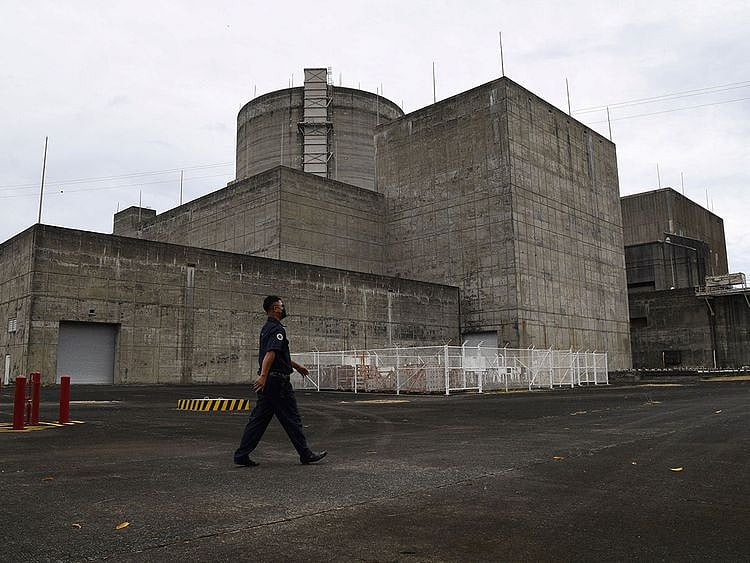
The Philippines stands at an energy crossroads.
For nearly four decades, the Bataan Nuclear Power Plant (BNPP) — a 620-megawatt facility built at a staggering $2.3 billion — has sat idle, costing taxpayers roughly $1 million annually in upkeep while producing zero electricity.
Yet today, with South Korea offering to assess revival for just $1–1.2 billion, the plant represents not a relic of Marcos-era excess but a rare second chance at affordable, dispatchable power.
The history is infamous: launched in 1976 amid the oil crisis, construction ballooned amid kickback allegations before Chernobyl and political upheaval sealed its fate in 1986.
Sibling plants still working
Successive governments paid Php64.7 billion to retire the debt by 2007, yet the BNPP's Westinghouse design mirrors operational twins still running safely in South Korea, Slovenia, and Brazil.
Philippine Nuclear Research Institute (PNRI) experts deem reactivation technically feasible and safe.
The real debate, however, is cost — specifically, nuclear versus a solar-wind-hydro-batteries portfolio.
Proponents of renewables rightly celebrate plunging levelised costs of electricity (LCOE).
In 2024, global onshore wind hit $0.034/kWh and solar PV $0.043/kWh, with battery storage installation costs collapsing 93% since 2010 to $192/kWh, as per Irena.
Hybrid solar-plus-storage projects in Australia have achieved LCOE as low as $0.051/kWh.
On paper, renewables win.
But system costs tell a different story.
Renewables are intermittent. Solar produces nothing at night; wind is variable.
To deliver firm, 24/7 baseload equivalent to BNPP’s reliable output, the Philippines — an archipelagic nation with typhoon risks and peak evening demand — must overbuild capacity three- to fourfold and layer on expensive storage.
Batteries cost tens of millions
Four-hour batteries already add tens of millions per project, and are no match to the reliability of baseline power provided by nuclear energy.
With batteries alone, scaling to multi-day resilience to boost grid stability balloons expenses dramatically.
Recent Philippine analyses show that while spot prices dipped to Php4.14/kWh in early 2025 thanks to added renewables, full-system integration (transmission, backup gas peakers, and storage) keeps consumer tariffs among Southeast Asia’s highest, according to a Reuters report.
Contrast this with BNPP reactivation: At $1–1.2 billion for 620 MW of proven baseload capacity (90%+ capacity factor), the effective capital cost per megawatt is a fraction of new nuclear builds or equivalent firm renewable capacity.
Operating costs are low and predictable — no fuel-price volatility like imported coal, which still dominates 47% of the mix.
Global advanced nuclear LCOE hovers around $0.11/kWh for new plants, but refurbishing an existing asset slashes that figure sharply, Forbes reported.
Korea Hydro & Nuclear Power’s ongoing feasibility study will quantify exact economics, but preliminary 2008–2017 assessments pegged revival far cheaper than building equivalent coal capacity.
Cost of safety, waste storage
Critics invoke safety and waste, yet the plant’s design has withstood decades of scrutiny and natural disasters.
Public support is surging: a 2024 survey showed +66 net approval for Bataan specifically.
It's also true: Establishing a regulatory body and developing storage infrastructure (for nuclear waste) requires billions of dollars, warns Greenpeace.
"Not in my backyard" sentiments also make finding a location for waste disposal politically difficult while Identifying a secure geological site free from seismic risk is challenging.
High vulnerability to disasters (e.g., Fukushima) makes safe storage paramount.
Meanwhile, the country’s coal dependence drives high prices and emissions, while pure-renewables pathways demand billions of dollars energy storage investment.
This comes in the form of pumped-storage hydropower, known as long-duration battery system, or grid-scale batteries.
Under the country's PPP law, more investors are making a bet on the Philippines renewable energy drive.
Reviving BNPP is not anti-renewable
It complements them.
Nuclear provides the steady backbone renewables need, called baseline reliable energy, freeing solar and wind for daytime peaks without forcing ratepayers to subsidise oversized batteries or backup fossil plants.
The $1 billion price tag buys energy security, lower long-term tariffs, and decarbonisation faster than waiting for perfect renewable-firming solutions.
Philippine leaders have already greenlit nuclear in the energy mix.
Not a question of "if", but "how quickly"
The question is no longer “if” but “how quickly.”
Bataan Nuclear Power Plant is ready-made infrastructure.
Ignoring it in favour of an "all-renewables" bet marks an unrealistic, impractical energy security strategy in a country with industrial ambitions that require a reliable baseline power source currently provided by coal and gas.
Moreover, it risks repeating the very energy poverty the original plant was meant to solve — only this time with far higher hidden costs.
The switch should be flipped.
Sign up for the Daily Briefing
Get the latest news and updates straight to your inbox
Network Links
GN StoreDownload our app
© Al Nisr Publishing LLC 2026. All rights reserved.