Iran war’s ripple effect: A growing threat to global food systems
Fertiliser shocks and rising costs are reshaping agriculture worldwide
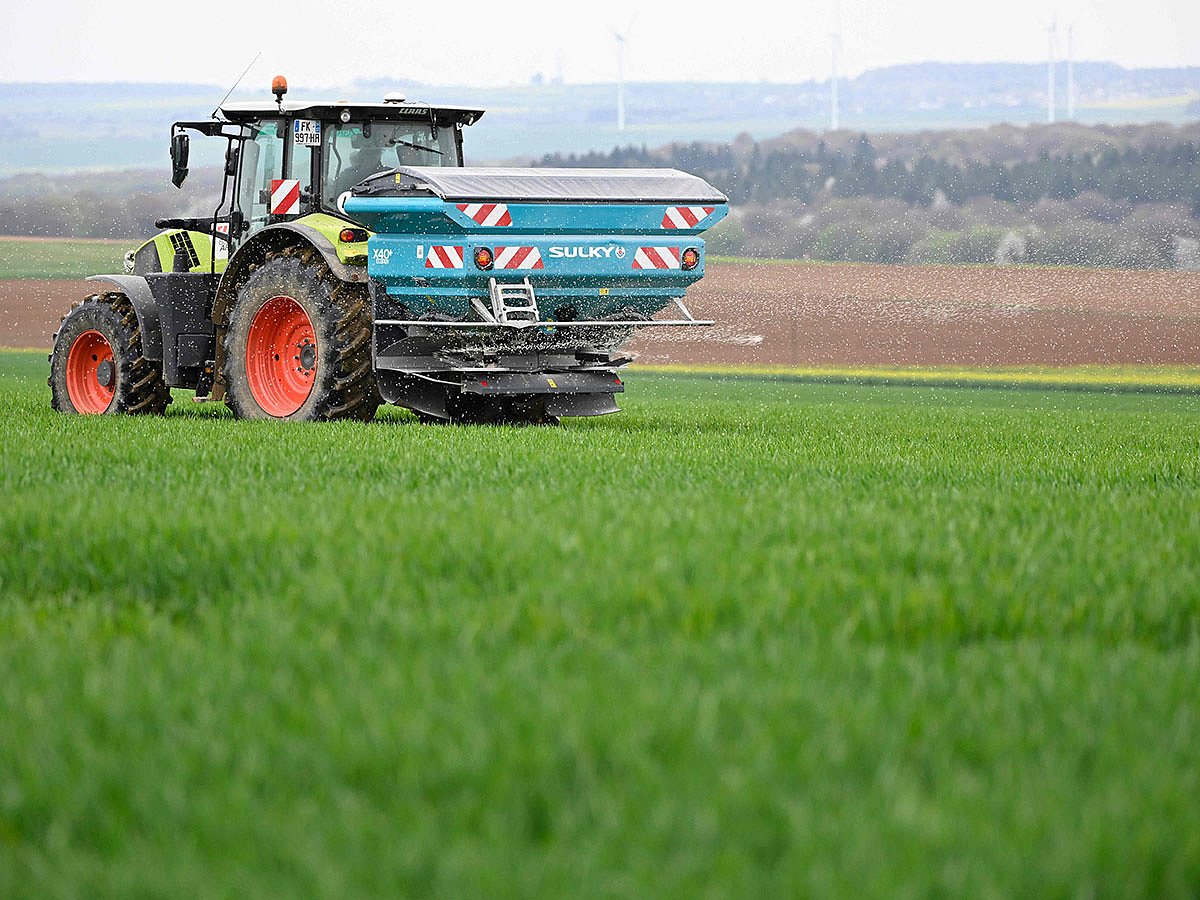
The war in the Arabian Gulf is already being felt far beyond the region, reflected in rising fertiliser prices in rural India and in the shifting planting decisions of farmers across Africa and well beyond.
For those working on the front-lines of dryland agriculture, including scientists at the International Crops Research Institute for the Semi-Arid Tropics (ICRISAT), these impacts are unfolding in real time.
What began as a disruption to energy corridors has rapidly cascaded through fertiliser markets, shipping routes and farm economies, driving up production costs, restricting access to inputs and heightening food security risks, particularly for the most vulnerable across Asia, Africa and beyond.
At this critical moment, it is important to recognise the leadership of the Indian Council of Agricultural Research as a close partner of ICRISAT in commissioning a study on short term, medium term, and long-term strategies for India’s agricultural development in the context of the West Asia crisis.
Implications across regions
While the analysis focuses on India, the implications and lessons are highly relevant across other regions facing similar vulnerabilities, particularly in Africa where exposure to imported inputs and external shocks remains acute.
This creates an important opportunity for ICRISAT and its partners to extend these insights and adapt them to diverse agro-ecological and socio-economic contexts.
Disruptions have already reduced shipments dramatically, pushing energy prices higher and tightening fertiliser availability. At the same time, shipping constraints and rising freight and insurance costs are slowing the movement of essential inputs and food commodities.
For countries such as India, which remains heavily dependent on imports for key farm inputs and edible oils, the exposure is significant. Potash is almost entirely imported, around 90 percent of fertiliser raw materials come from abroad, and edible oil dependence remains above 50 percent. Similar vulnerabilities are seen in fertiliser import dependent regions such as Kenya, Malawi, and Niger, where the consequences are immediate.
Higher costs reduce margins, while uncertainty around supply affects planting decisions.
Stabilising access to critical inputs
In the near term, stabilising access to critical inputs remains essential. Protecting upcoming cropping seasons requires coordinated measures to ensure fertiliser availability, manage price spikes, and support farmers in maintaining productive capacity.
Without such efforts, reductions in fertiliser use could translate into lower yields and tighter food supplies later in the year, reinforcing upward pressure on food prices, with subsistence farmers facing the greatest risk as declining productivity directly affects both their incomes and household food security.
But this crisis also points to a deeper issue in that global agriculture still depends far too heavily on external inputs and a handful of concentrated supply chains. Building resilience requires a shift toward systems that are more diversified, resource efficient, and locally grounded, an area where ICRISAT’s innovations and long-standing partnerships are well positioned to support countries in accelerating this transition.
Crop diversification
Crop diversification offers a clear and immediate pathway. Expanding pulses, oilseeds and millets can reduce dependence on imported fertilisers and energy, particularly in input-intensive crops like wheat and rice, while strengthening nutrition and farm incomes. These crops require fewer external inputs and support more resilient production systems. Pulses contribute to soil fertility through biological nitrogen fixation, lowering the need for synthetic inputs. Oilseeds play a critical role in reducing import dependence and stabilising food prices, particularly in countries where edible oil imports remain high. Importantly, these crops support a transition toward more balanced production systems that are better aligned with both environmental conditions and economic realities.
Scaling this transition would benefit from stronger policy support. Expanding market incentives for farmers to grow low-input, nutritious crops such as pulses and oilseeds would increase adoption and lower costs over time.
At the same time, improving the efficiency of input use remains equally important. The current disruption to fertiliser markets reinforces the need to move from volume-based application to precision-based management.
ICRISAT’s work in Ethiopia demonstrates how targeted fertiliser advisory systems, built on soil data and digital tools, can guide farmers toward more efficient nutrient use. These approaches help maintain productivity while reducing costs and environmental impact.
Precision nutrient management
Scaling precision nutrient management across regions facing fertiliser constraints can significantly reduce overall demand while sustaining yields. This offers an opportunity to produce more with fewer external inputs.
The energy dimension of the crisis is also reshaping agriculture. Rising fuel costs are increasing expenses across irrigation, transport, storage, and processing. ICRISAT’s experience in bioethanol production from sorghum provides one pathway forward.
Through the development of high biomass and high sugar sorghum varieties, and the promotion of sweet sorghum as a viable ethanol feedstock, dryland crops can support both food and energy systems while strengthening farmer incomes.
Sorghum is a climate resilient crop that performs well in dryland conditions and requires relatively low external inputs. It can support food, feed, and energy systems simultaneously, creating opportunities for rural economies while contributing to energy security.
Solar powered irrigation
Complementary approaches such as solar powered irrigation, renewable energy for cold chains, and more efficient rural logistics can further reduce dependence on fossil fuels and strengthen system resilience.
Beyond production, strengthening agro-industrial capacity is equally important. Building up local processing, storage, and value addition for crops like oilseeds can help reduce exposure to external shocks while creating new opportunities for farmers and businesses. Stronger local value chains ensure that gains in production translate into real economic resilience.
Across all these areas, innovation remains central. Work on climate resilient crop varieties, digital advisory systems, and integrated farming approaches offers practical solutions that can be deployed at scale.
These innovations support farmers in managing risk, optimising resources, and adapting to rapidly changing conditions.
Collaboration across countries
Partnerships are equally important. Collaboration across countries, including through platforms such as the ICRISAT Centre of Excellence for South South Cooperation in Agriculture, ISSCA, enables the sharing of knowledge and the scaling of practical solutions. ISSCA provides a platform for advancing cooperation across the Global South. It is designed to address precisely these kinds of challenges, enabling innovations developed in similar agroecological contexts to be adapted and scaled efficiently across regions, particularly in Africa where many countries rely heavily on imported fertilisers and are highly sensitive to price increases.
The current crisis also underscores the importance of data, market monitoring, and early warning systems. Timely information enables governments and farmers to respond proactively to changing conditions, manage risks, and make informed decisions in uncertain environments.
The road ahead
Looking ahead, aligning short term actions with long term strategies is essential. Immediate efforts to stabilise input access and protect farmers must be complemented by medium term investments in diversification and reduced import dependence. Over time, agriculture must evolve toward systems that are less energy intensive, less dependent on external inputs, and more resilient to international shocks.
The global food system is entering a period where geopolitical shocks, climate pressures, and market volatility are increasingly interconnected. Against this backdrop resilience becomes a foundational principle for agricultural development. The science, innovation, and experience developed across semi-arid regions offers a clear pathway forward. By strengthening crop diversity, improving input efficiency, and integrating energy and agriculture, it is possible to build systems that are both productive and resilient.
If we act on what we already know, agriculture, and especially dryland agriculture can move beyond vulnerability and become a source of stability in an increasingly uncertain world.
Dr Himanshu Pathak is Director General of the International Crops Research Institute for the Semi-Arid Tropics
Sign up for the Daily Briefing
Get the latest news and updates straight to your inbox
Network Links
GN StoreDownload our app
© Al Nisr Publishing LLC 2026. All rights reserved.