Eid Al Etihad: A reflection of the UAE’s evolving national identity
How unity, tolerance and ambition shape a nation that blends heritage with vision
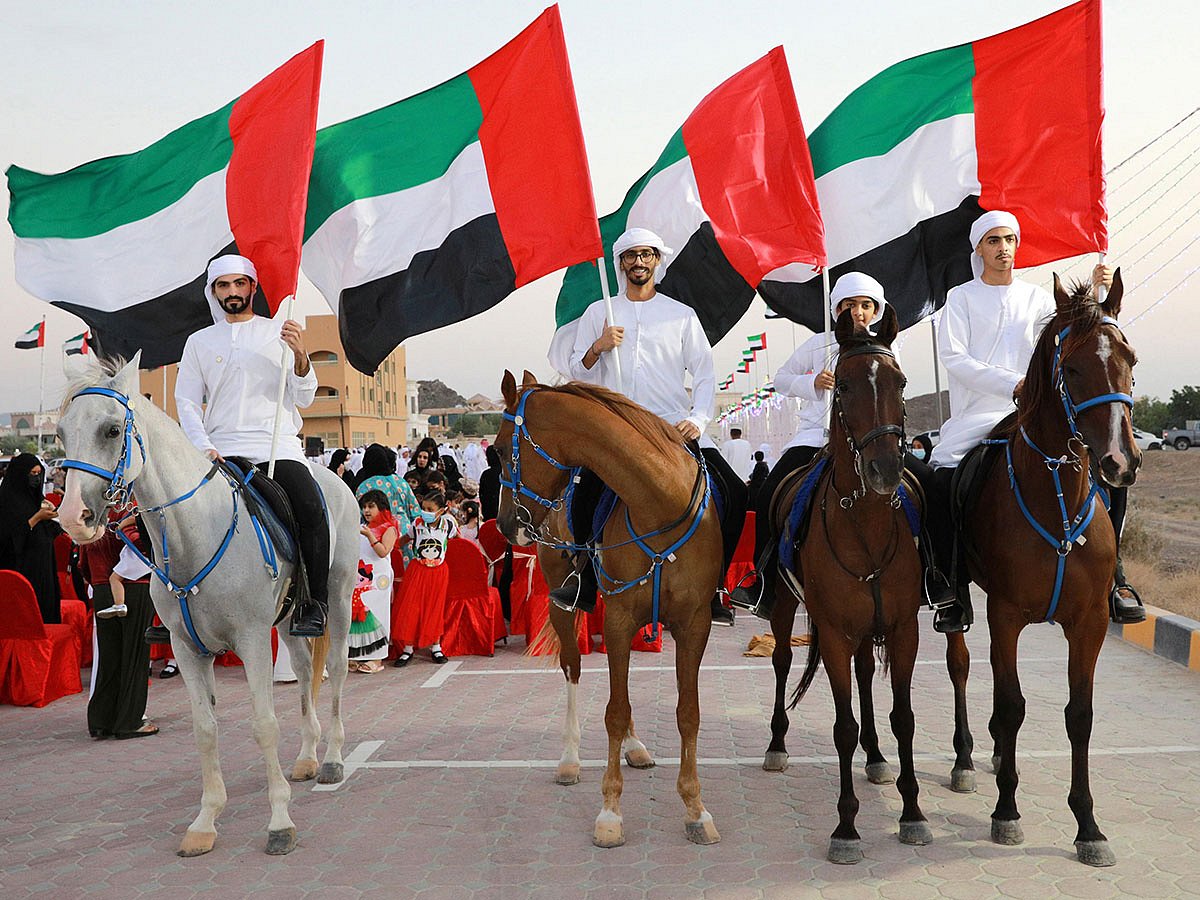
Every year on December 2, the United Arab Emirates marks Eid Al Etihad, its National Day, a moment that transcends commemoration. For Emiratis, it is not simply a historical anniversary as it is a living expression of national identity, unity, and purpose. While every country celebrates a national day, few do so with the same blend of cultural pride, inclusivity, and forward-looking confidence that the UAE projects. National Day in the Emirates is unique precisely because it captures a story still being written, one of nation-building, modernity, and social transformation.
A Union born of vision, not circumstance
The UAE is one of the few modern states whose national identity did not emerge from war, revolution, or political rupture. Instead, the Union was built through consensus, negotiation, and leadership foresight. The founding fathers, led by the late Sheikh Zayed bin Sultan Al Nahyan, imagined a federation grounded in cooperation and shared destiny at a time when such an idea was far from inevitable. This makes National Day not just a remembrance of 1971, but a celebration of a political culture that values stability, unity, and pragmatic statecraft. These qualities continue to define the UAE’s domestic and foreign policies today.
Tolerance and coexistence as cornerstones of identity
A defining feature of the UAE’s national identity is its commitment to tolerance, an element formally enshrined in national policy and reflected in everyday life. While many countries speak of coexistence, the UAE operationalises it. Mosques, churches, temples, synagogues, and gurdwaras stand alongside one another. Interfaith initiatives, dialogue centres, and a declared Year of Tolerance demonstrate that religious coexistence is not symbolic as it is structural. For Emiratis, tolerance is not simply a moral stance but a strategic one. In a country where expatriates vastly outnumber citizens, coexistence is a precondition for national cohesion. National Day, therefore, becomes an annual reminder that diversity is not a threat to the nation, but an anchor of its strength.
A multicultural society with an Emirati core
The UAE’s demographic reality is unmatched: more than 200 nationalities live, study, worship, and work within its borders. It is one of the most diverse societies per capita in the world. Unlike other global hubs, the UAE has maintained a clear and confident Emirati cultural core. National Day celebrations illustrate this balance vividly. Traditional Al Ayala dances, camel festivals, and heritage villages coexist with drone light shows, skyscraper illuminations, and public performances. This blending of worlds demonstrates that in the UAE, modernity does not erase tradition. It elevates it.
Emirati identity has therefore evolved into a hybrid, rooted in Bedouin values, maritime heritage, and Islamic principles, but comfortable with globalism, technology, and cosmopolitan lifestyles.
Modernity meets tradition — not in conflict, but in dialogue
Many societies frame modernity and tradition as opposing forces. The UAE does the opposite: it brings them into conversation. Architectural styles, social norms, and even fashion showcase this interplay. Majlis culture coexists with world-class universities; falconry is preserved while AI research labs expand; traditional dress remains iconic even as global luxury brands open flagship stores.
National Day captures this duality. Celebrations are both nostalgic and futuristic, such as heritage performances alongside advanced pyrotechnics, traditional food markets next to space-themed exhibitions. The message is clear: the UAE’s path to modernity does not require shedding its identity, but reinterpreting it for the future.
Family, women and national identity — A vision for 2026 and beyond
The UAE’s leadership has designated 2026 as the Year of the Family, underscoring how central families are to the country’s social fabric. In Emirati culture, the family is not merely a private institution as it is a foundation of national cohesion, moral values, and intergenerational continuity. National Day, with its emphasis on unity and belonging, reinforces this connection.
Family gatherings, public celebrations, and shared national rituals strengthen the bonds between generations, allowing grandparents, parents, and children to collectively remember the country’s past and imagine its future. The Year of the Family highlights these values at a time when the UAE is preparing for its next developmental phase, recognising that strong families are essential to a resilient society.
This national emphasis also aligns with the UAE’s long-standing commitment to women’s empowerment and gender inclusion. Emirati women today occupy leading roles in government, business, diplomacy, science, and the arts. Their success stories, celebrated every Emirati Women’s Day, are increasingly embedded into the country’s identity narrative. The government’s push to promote women’s leadership reflects the belief that national progress is a shared project and that gender equality strengthens, not dilutes, cultural authenticity.
The mandate for 50 per cent representation in the Federal National Council, alongside laws ensuring equal pay and protections against domestic violence, reflects a model of modernity firmly rooted in Islamic values of justice and equality. The Emirati woman, whether a minister shaping policy, an astronaut representing the nation in space, or an entrepreneur redefining industries, symbolises the UAE’s successful negotiation between tradition and contemporary necessity.
National Day therefore becomes a moment to acknowledge that the UAE’s identity is shaped not only by its founding fathers, but also by its families and the women who have driven forward its social and economic transformation.
National Day as a social glue in a diverse population
In a society that is majority expatriate, National Day plays a crucial integrative role. The celebrations invite all residents, citizens and non-citizens alike, to participate, cultivating a sense of shared attachment. For many expatriates, National Day is often the moment when they feel most connected to the country that has become their home.
This inclusive approach distinguishes the UAE from many other nations. It reinforces the idea that national identity is not defined solely by ancestry, but also by contribution, respect, and belonging.
A nation built on ambition and possibility
Beyond culture and coexistence, National Day embodies the UAE’s ethos of ambition. Each year, the country celebrates new achievements, satellites launched, economic milestones reached, strategic partnerships strengthened, and innovations introduced.
The symbolism is powerful: the union is not static. It is dynamic. National identity in the UAE is tied not only to the past, but to an expectation of constant progress.
In many ways, National Day is a mirror reflecting what the UAE stands for: unity, tolerance, diversity, innovation, family cohesion, and gender inclusion. It reminds the world that Emirati national identity is not insular or defensive, but open, adaptable, and outward-looking.
In a region often marked by division and volatility, the UAE’s National Day stands as a symbol of unity, coexistence, and aspiration, a testament to a nation that has built its identity not on conflict, but on vision.
- Dr Kristian Alexander is a Senior Fellow at the Rabdan Security and Defence Institute (RSDI), Abu Dhabi, UAE
Network Links
GN StoreDownload our app
© Al Nisr Publishing LLC 2026. All rights reserved.