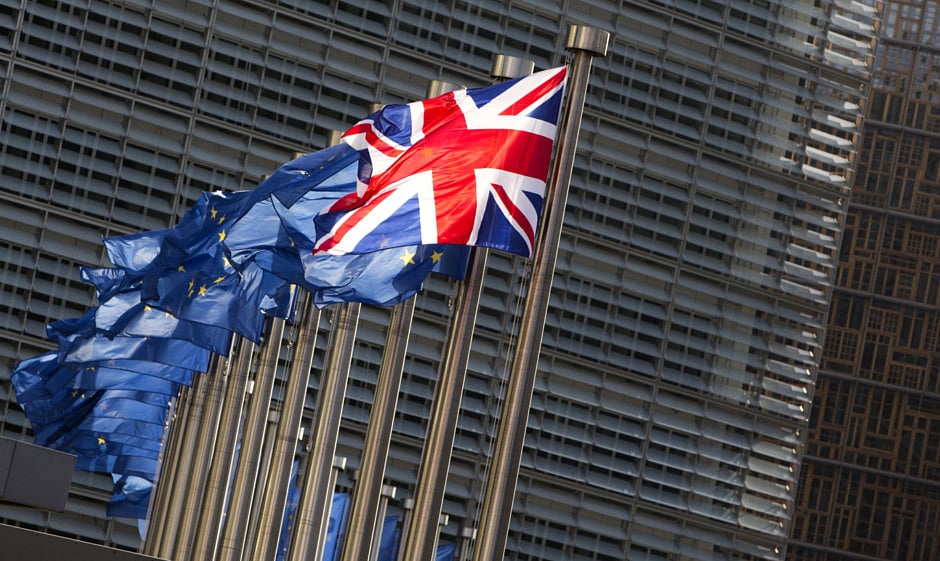
The crisis in Spain over Catalonia’s bid for independence is about to come to a head, with a stand-off between Barcelona and Madrid threatening to tear the country apart. The imposition of direct rule by the central government of Prime Minister Mariano Rajoy could precipitate a declaration of independence by Catalonia as early as tomorrow. Three weeks ago, a referendum deemed illegal by Madrid showed 90 per cent in favour of secession on a turnout of 43 per cent. Were the Catalans to declare independence, it would be the first time an European Union (EU) state has lost part of its territory and Spain would be the first Eurozone member to crack apart. The financial consequences of losing its richest province are impossible to calculate, which is why Madrid is determined to stop it.
There is a school of thought that the potential fragmentation of Europe spells doom for the EU and the Catalans are being egged on by those who would like to see it collapse. Yet the opposite may be true. For potential statelets such as Catalonia, the EU offers an overarching form of governance able to accommodate their distinct cultural and linguistic characteristics outside of an artificially constructed nation state. Herein lies the secessionists’ paradox. They want to break away from what they regard as an alien form of governance yet stay in the EU. Brussels, in turn, seeks to obstruct these separatist movements under a doctrine set out by Romano Prodi, former president of the European Commission. This asserts, though without any legal basis, that a region breaking away from an EU member will automatically be ejected from the club and have to reapply for membership, a protracted process that could take years. In the meantime, the pariah state would be cut off from the rest of the EU, unable to trade easily and forced to use a different currency. This is why Madrid is calling Catalonia’s bluff: It holds all the cards and the impact on the new country’s economy of leaving the EU without agreement would be huge, even if it does generate much of Spain’s wealth.
For those who believe in the efficacy of the nation state these are difficult issues.
Last week, in Italy, two former independent states, Lombardy and the Veneto, held referendums to press for greater autonomy from Rome. Both are run by the Northern League, which objects to subsidising the poorer south. Will Italy still be in one piece 30 years from now?
Arguably, the existence of the EU as a default form of supra-national governance encourages secession movements. The Prodi doctrine is aimed at countering them, but history is against it. For centuries much of continental Europe functioned under imperial suzerainty, either through the Holy Roman Empire centred on Germany, Austro-Hungary, Russia or the Ottomans. Living in a country such as Britain, whose borders have been pretty well set for 800 years, it is often hard to appreciate the fluidity of European statehood, though recent events should remind us. Thirty years ago, the old European Economic Council (EEC) comprised just 12 member-states — Spain and Portugal, both dictatorships until the mid-1970s, had just joined. Today it numbers 28 (soon to be 27), a direct result of the implosion of the old Communist empire centred on the Soviet Union. Its unravelling freed the eastern bloc nations, formerly satellites of Moscow, to go their own way. It also triggered the dismantling of Yugoslavia and the recreation through conflict of the old territories that had once been under the Ottomans or Austro-Hungary.
— The Telegraph Group Limited, London, 2017
Philip Johnston is assistant editor and leader writer at the Daily Telegraph.
Sign up for the Daily Briefing
Get the latest news and updates straight to your inbox
Network Links
GN StoreDownload our app
© Al Nisr Publishing LLC 2026. All rights reserved.