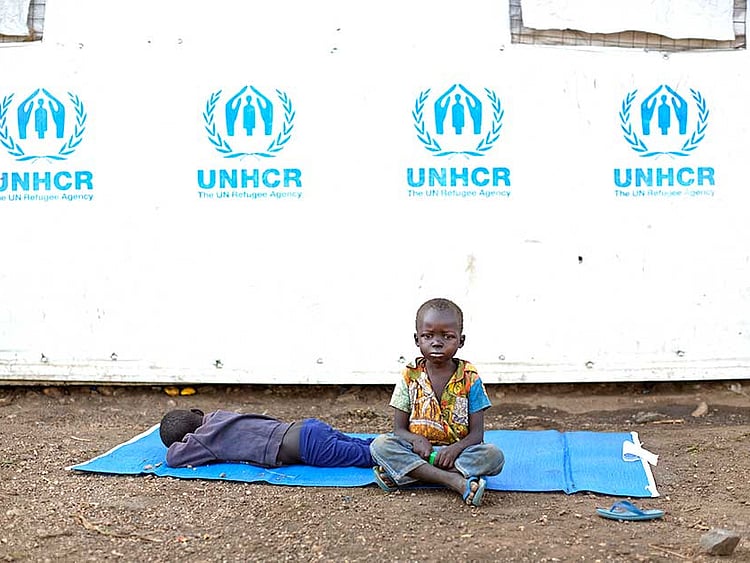
The European refugee crisis has deluded many voters into believing that most refugees are coming to rich countries. They are not — 84 per cent are in low- or middle-income nations. Tanzania is one such country; it hosts over 350,000 refugees mostly from Burundi and the Democratic Republic of the Congo and has had a long-standing commitment to offering sanctuary to persecuted people, despite being among the poorest 30 countries in the world.
In contrast to other countries in the region such as Kenya, Tanzania’s reputation for hosting has been generally positive; it pioneered rural self-reliance programmes for refugees under its founding president, Julius Nyerere, and offered naturalisation to tens of thousands of Burundians under President Jakaya Kikwete from 2005 to 2015. Recently, though, it announced its withdrawal from the so-called Comprehensive Refugee Response Framework (CRRF), a centrepiece of the United Nations’ current reform plans for the refugee system.
After months of discussions, Tanzanian President John Magufuli rejected a bill on the compact. The apparent sticking point was that the country would have to borrow money from the World Bank in order to support greater opportunities for refugees. As part of the bank’s annual lending window for poor countries, known as IDA18, Tanzania was offered $100 million (Dh367.3 million), split between a loan and a grant. The idea that a country like Tanzania should have to borrow, even at preferential rates, to host refugees on behalf of the international community was roundly derided by Magufuli. The government has been clear that it supports refugees but rejected the plan on principle because it wants rich countries to pay Tanzania rather than forcing it to borrow.
UN officials in Geneva and New York perceive the Tanzanian decision as an attempt by a nationalist leader to elicit more funding. But it is about much more than money. It is clear to me, having recently spoken with government officials and leaders of non-governmental organisations, that Tanzania is a country committed to supporting refugees but which feels that international lenders and the United Nations have consistently let it down. The government worries about the security implications of small arms coming to the camps from Burundi and Congo, environmental degradation around the camps, and competition for resources. Above all, what stands out is a sense of historical injustice. Tanzania, having consistently upheld its end of the bargain, has been disappointed by donor states not delivering on their funding commitments.
Tanzania may be a small country, but its reaction has wider ramifications for the global refugee system. Western leaders are especially focused on finding solutions for refugees in havens like Tanzania that are close to conflict zones. And yet, if donors are not even prepared to adequately fund them, there is a real risk that other host countries may follow suit.
Tanzania has been hosting refugees continuously since 1959. During the anti-colonial liberation wars of the 1960s and 1970s,
Today, less than 40 per cent of the humanitarian budget for refugees in Tanzania is being met. Local concerns from district and regional commissioners in the border regions feature prominently on the radar of the government. In regions such as Kigoma, they have consistently expressed anxiety about the destabilising effects of small arms and environmental degradation.
In this context, and against the backdrop of history, it is understandable that the request to borrow money to implement a plan agreed far away in New York and largely delivered as a fait accompli feels like another bad deal.
A new approach will require systemic improvements to the refugee system — beginning with more engaged humanitarian diplomacy, better political analysis to understand local and national interests, and more creative financing models.
The World Bank’s role in responding to refugee crises should be welcomed. But asking Tanzania to borrow in order to assist refugees is a mistake. Debt forgiveness would be a better way to support host states, especially given that structural adjustment programmes and the accumulation of debt underlay Tanzania’s shift toward more restrictive refugee policies in the 1990s.
Elsewhere, partnerships have been built with major host countries based on mutual respect. In Jordan, for example, a combination of trade concessions from the European Union and loans and grants from the World Bank and bilateral donors led Jordanian politicians to make it easier for Syrian refugees to work.
If the rich world wants countries adjacent to conflict zones to continue hosting refugees, it needs to begin by recognising that African politicians face the same constraints as their European or North American counterparts and that they cannot bear the financial burden of accepting refugees alone.
— Washington Post
Alexander Betts is a professor of forced migration and international affairs at the University of Oxford.
Sign up for the Daily Briefing
Get the latest news and updates straight to your inbox
Network Links
GN StoreDownload our app
© Al Nisr Publishing LLC 2026. All rights reserved.