Global trade’s lifelines: 6 shipping lanes that keep the world economy moving
Critical sea lanes that shape global trade, oil and gas flows across the planet
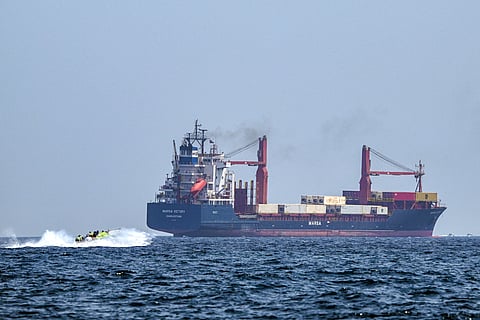
Global shipping lanes are the lifelines of international commerce.
They carry vast amounts of goods, energy, and raw materials.
Disruptions in one can cascade worldwide, affecting energy security, inflation, and supply chains.


The Strait of Hormuz, which handles roughly one-fifth of the world’s oil trade valued at about $1.7 billion daily, makes it one of the most strategically important shipping lanes on the planet.
It's not the world’s only trade chokepoint.
There are a number of critical waterways that handle immense traffic and are the busiest energy routes -- any disruption has a knock-on effect for global energy markets.
Global oil trade chokepoints
Here's a breakdown of the primary oil chokepoints, their current geopolitical risks (as of early March 2026), and potential impacts if blocked or "choked" due to conflict, accidents, or environmental issues.
| Shipping Lane | Location | Significance | Daily Oil Transit (bpd) & Value | Consequences if ‘Closed’ |
|---|---|---|---|---|
| Strait of Malacca | Between Malaysia and Indonesia, linking the Indian and Pacific Oceans. | Vital artery for global energy and trade flows, especially for Asia. It handles ~29% of world maritime oil trade and is a key route for LNG and containers | ~23.2-23.7 million bpd. Daily value: ~$1.86-1.90B | Affects Asian economies. Could trigger global supply chain chaos, higher fuel prices, and inflation. Rerouting around Indonesia adds weeks and costs. Environmental risks from spills in a biodiverse area. |
| Strait of Hormuz | Between Iran and Oman, connecting the Persian Gulf to the Arabian Sea. | Critical passageway for global oil transport from Middle East producers like Saudi Arabia, UAE, Iraq. Accounts for ~20% of world oil consumption. | ~20.9 million bpd. Daily value: ~$1.67B | Oil prices could surge to $100-150/bbl or higher. Loss of 15-20% world supply, with Asia (China, India) hit hardest. Rerouting limited (pipelines handle only ~5-7 million bpd). Heightened tensions, insurance spikes. |
| Suez Canal | In Egypt, linking the Mediterranean and Red Seas. | Shortens East-West voyages, vital for Europe-Asia trade. Handles ~10% of global seaborne oil and 8% LNG. | ~4.9 million bpd (including SUMED pipeline). Daily value: ~$392M | Echoing the 2021 Ever Given blockage: $9-10B daily trade losses, delays in goods/oil (up to weeks via Cape of Good Hope). Inflation in energy/commodities, supply shortages in Europe/Asia. Increased shipping rates, port congestion. |
| Panama Canal | Panama, connecting the Atlantic and Pacific Oceans. | Man-made canal vital for American and global trade, especially US East-West coasts. Handles mostly refined products and containers. | ~2.1-2.3 million bpd (mostly products). Daily value: ~$168-184M | Longer routes around S. America add 10-20 days and costs, disrupting US grain/LNG exports and Asian imports. Supply chain bottlenecks, higher freight rates (20-30% capacity loss). Economic hits to Americas, with potential $270B annual cargo value at risk. |
| Bab Al-Mandeb Strait | Red Sea to Gulf of Aden (near Yemen) | Links to Suez Canal. Faces Iran-backed Houthi threats, with attacks on vessels. Prior Houthi actions (2023-2025) already disrupted flows. | 4-5 million bpd oil and significant LNG (8-12% seaborne trade) Daily value: $339M to $372M | Rerouting (around Cape of Good Hope adds 10-14 days), spiking freight/insurance costs and delaying Asia-Europe trade. Compounds Suez issues; energy/commodity inflation |
| Bosphorus Strait | Turkey, connects the Black Sea to the Mediterranean (part of Turkish Straits). | World's narrowest international strait, key for Black Sea oil exports from Russia, Kazakhstan, Azerbaijan. | ~3.3-3.7 million bpd Daily value: ~$264-296M | Disruption to Russian/Kazakh oil flows (0.5-3 million bpd affected), spiking European energy prices. Rerouting limited. Geopolitical fallout; could escalate NATO-Russia tensions if prolonged. Environmental hazards in densely populated Istanbul area |
Currently, commercial shipping through the strategic Strait of Hormuz has nearly ground to a halt amid escalating tensions, according to new data from the Joint Maritime Information Center (JMIC).
The monitoring body reported that vessel traffic through the vital oil chokepoint plunged from a typical average of around 138 ships per day to just two vessels in the 24 hours leading up to Thursday (March 5, 2025).
Neither of the two ships that passed through the strait were oil tankers.
It highlights the risks facing commercial shipping in one of the world’s most critical energy corridors.
Strait of Hormuz not 'closed'
There's no formal declaration that the Strait of Hormuz is "closed".
However, threats, security warnings, and insurance concerns have effectively slowed shipping to a trickle.
“This represents a near-total temporary pause in routine commercial traffic,” the JMIC reiterated, underscoring how conflict-related risks are already disrupting global trade routes.
Analysts have debated whether it is technically accurate to say the strait is “closed.”
The chokeh on the Strait of Hormuz amid the on-going war is closely watched by energy traders, insurers, and governments amid supply energy shocks. Oil prices have gone through the roof in the last few days.
These lanes underscore the fragility of global interconnectedness and the world's near-total dependence on oil as the fuel that runs the planet.


