Amid tanker squeeze in Hormuz, oil prices spike as Iran–US war chokes global supply, markets on edge
Oil prices continue to show strong gains on day and month as US-Israel-Iran enters Day 5
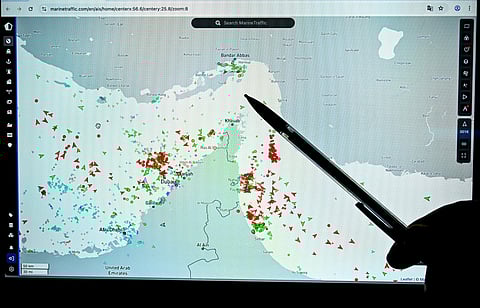
Amid the ongoing Strait of Hormuz tanker squeeze, oil prices continue to inch higher as global crude markets are currently buffeted by a full-scale geopolitical conflict involving the United States, Israel, and Iran.
As news of the US sinking of an Iranian warship emerged, tankers remain stranded for the fifth day due to threats from Iran.
As of the latest session, West Texas Intermediate (WTI) crude oil is trading around $76.56, with Brent near $83.19.
Both showed strong gains on the day and month with +2.54% and +20.70% for generic crude, and +2.20% and +22.57% for Brent respectively.
Over the past year, benchmarks have climbed 15.59% (Crude) and 20.08% (Brent), reflecting decidedly bullish sentiment.
Other energy products like Heating Oil (+54.54% YoY) and Gasoline (+21.89% YoY) are also significantly up, while Natural Gas remains deeply negative (-31.04% YoY), highlighting differentiated demand fundamentals across energy markets.
Coal is moderately up on the year (+27.67%) despite short-term weakness (–3.7% day).
Urals oil and Ethanol exhibit mixed performance, but overall crude benchmarks dominate gains.
Iran–US war impact
US and allied strikes on Iranian military and infrastructure targets have elicited Iranian retaliation, including disruptions to tanker traffic and attacks near the Strait of Hormuz, a chokepoint for roughly 20–30% of global seaborne oil.
Risk premium
This has triggered a significant geopolitical risk premium in oil prices as traders price in potential supply shocks and shipping disruptions.
Recent reports show Brent and WTI reaching multi-month highs, near or above $80 per barrel, with some analysts even warning that a persistent blockade could push crude toward $100–$150 in a worst-case scenario.
Oil flows through Hormuz have been partially halted, insurance costs for tankers have spiked, and major producers like Iraq have cut exports due to logistical issues arising from the conflict.
However, there are early signs of possible diplomatic overtures between Iran and US intermediaries, which have temporarily capped price gains.
Price volatility
Energy markets remain exceptionally volatile, dominated by war risk, shipping insecurity, and potential supply bottlenecks.
Oil’s near-term trajectory will heavily depend on the duration and escalation of the conflict and whether diplomatic channels ease the supply threat.


