Beyond the horizon: Artemis II and the Middle East’s expanding stake in space
New era of collaboration, competition and commerce reshapes global space race
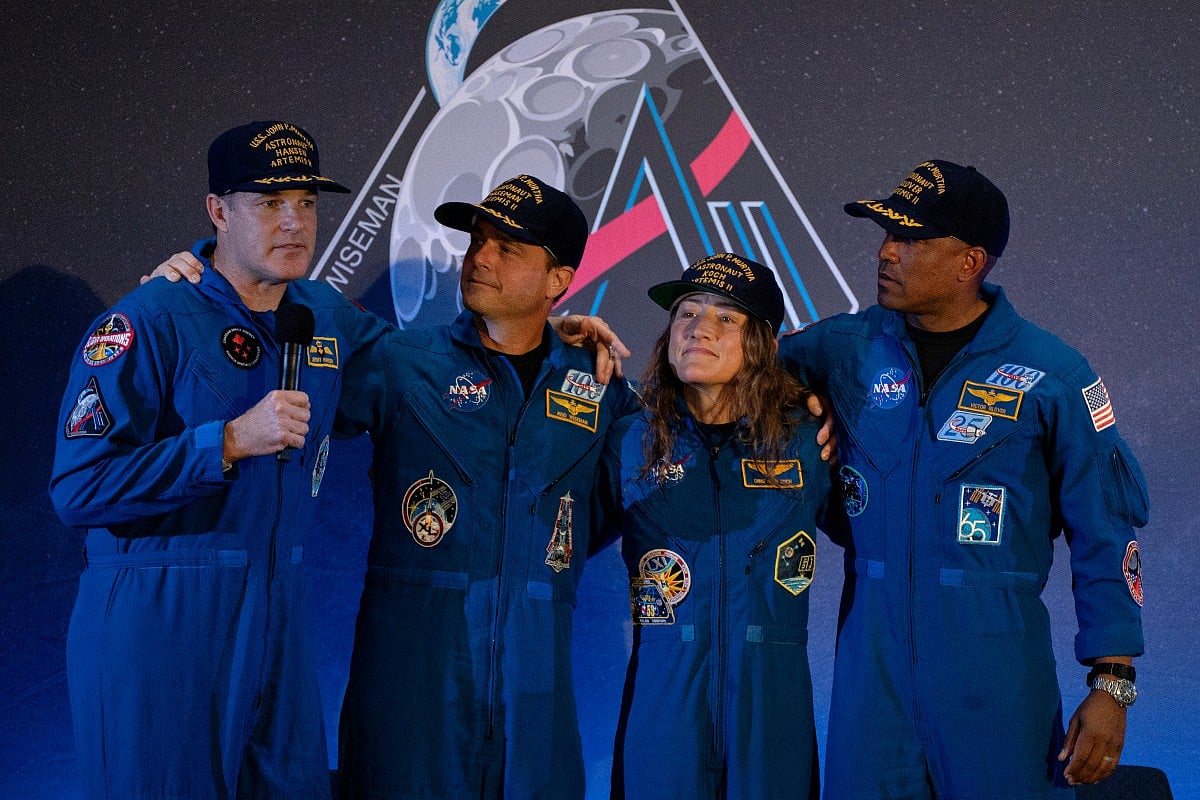
There are moments in history when progress stops being incremental and instead redraws the map of what is possible. Artemis II sits squarely in that tradition. Its successful splashdown does not simply mark humanity’s return to deep space; it signals a profound shift in how exploration is organised, who participates, and where value is created.
This is no longer the era of a single flag planted in distant soil. It is the emergence of space as a functioning economic system.
Among the crew, Victor Glover and Christina Koch embody a quiet but meaningful evolution. Their presence reflects not symbolic inclusion but structural change: the widening of the talent pool that powers exploration. Capability, once drawn from narrow pipelines, is now sourced from a broader, more representative base. And as any entrepreneur understands, broader input strengthens outcomes. Diversity, in this context, is not narrative embellishment. It is an operational advantage.
Critique of imbalance
To understand how far we have come, it helps to recall Gil Scott-Heron and his searing 1970 work Whitey on the Moon. It was never a rejection of exploration, but a critique of imbalance. The rockets rose, but many were left behind. That tension still lingers, but the structure of the enterprise has fundamentally changed.
The Apollo missions were state-driven, defined by geopolitical urgency and executed within closed systems. Artemis, led by NASA, operates differently. It is a coalition: governments, private firms, venture-backed startups, and international partners working within frameworks like the Artemis Accords. More than 60 nations have signed on, transforming space from a theatre of competition into a platform for collaboration and commerce.
When I first explored the commercialisation of space and the Middle East’s role in it in these pages in 2022, the argument was that space was no longer the preserve of superpowers alone. Gulf News published that earlier piece at a moment when the region’s ambitions were becoming visible but not yet fully realised. What has changed since is not the direction of travel, but its pace.
The Middle East is no longer positioning itself for participation. It is executing.
From ambition to sustained capability
The UAE Space Agency has moved from ambition to sustained capability, building on the success of the Emirates Mars Mission and an expanding astronaut corps. Mohammed bin Rashid Space Centre continues to deepen its role in human spaceflight, while Sultan Al Neyadi’s extended mission aboard the International Space Station demonstrated not just the region’s presence but also its operational credibility.
Saudi Arabia, through the Saudi Space Agency, has accelerated its own trajectory, combining strategic investment with renewed human spaceflight. Across the Gulf, sovereign ambition is now paired with institutional capability, regulatory frameworks, and a growing private sector ecosystem.
This matters because enterprise changes incentives.
When space becomes an economic domain rather than a symbolic one, participation expands. Supply chains emerge. Intellectual property gains value. Startups find footholds. The frontier begins to reward not only engineering excellence, but entrepreneurial imagination.
We are already seeing the contours of what comes next. Private firms such as SpaceX and Blue Origin are redefining launch economics. Concepts such as orbital data centres and commercial space stations, including modular “orbital reef” platforms, are moving from the drawing board to prototype. Space-based manufacturing, enabled by microgravity, is opening entirely new industrial categories.
For Middle Eastern economies seeking diversification beyond hydrocarbons, this is not peripheral. It is central. Space offers a high-value, knowledge-intensive sector aligned with long-term national transformation agendas.
Technologies for earth
And the benefits do not remain in orbit.
Technologies developed for space cascade back to Earth. Water recycling systems inform sustainability solutions in arid climates. Advanced materials reshape construction. Satellite data enhances agriculture, logistics, and climate resilience. In a region defined by environmental constraints, these spillovers are immediate and consequential.
Yet the question that haunted the Apollo era still lingers in a new form. Who benefits? Who participates? Who is visible in the story?
Artemis II does not resolve this tension, but it reframes it. The enterprise is broader, more distributed, and more permeable than before. Regions once considered peripheral are now active contributors. The Middle East is not observing this transformation. It is helping to shape it.
Competition and collaboration
And like any emerging market, space will be defined by competition as much as collaboration. Nations and firms are racing to establish standards, secure strategic positions, and capture early-mover advantages. The parallels with artificial intelligence are unmistakable. In both domains, capability compounds quickly, and early decisions echo for decades.
The enduring question, then, is not whether humanity will extend its reach further into space. That is already underway. The question is whether the enterprise we are building will deliver broadly shared value.
Will it generate industries that uplift economies beyond traditional centres of power?
Will it create opportunities that reach into new regions and new populations?
Will it ensure that progress is not simply upward, but outward?
The Moon remains what it has always been: a distant challenge. But the story we are now writing about the journey toward it is different. It is no longer a tale of isolated triumph, but of interconnected systems, shared ambition, and expanding participation.
From Houston to Dubai, from Riyadh to orbit, the horizon is no longer something we observe.
It is something we are building.
Dr John Mullins is Associate Professor of Management Practice in Marketing and Entrepreneurship, London Business School
Sign up for the Daily Briefing
Get the latest news and updates straight to your inbox
Network Links
GN StoreDownload our app
© Al Nisr Publishing LLC 2026. All rights reserved.