A century of quiet excellence: The extraordinary life of Pakistan’s Syed Babar Ali
Industrialist's greatest contribution remains institutions and opportunities he created
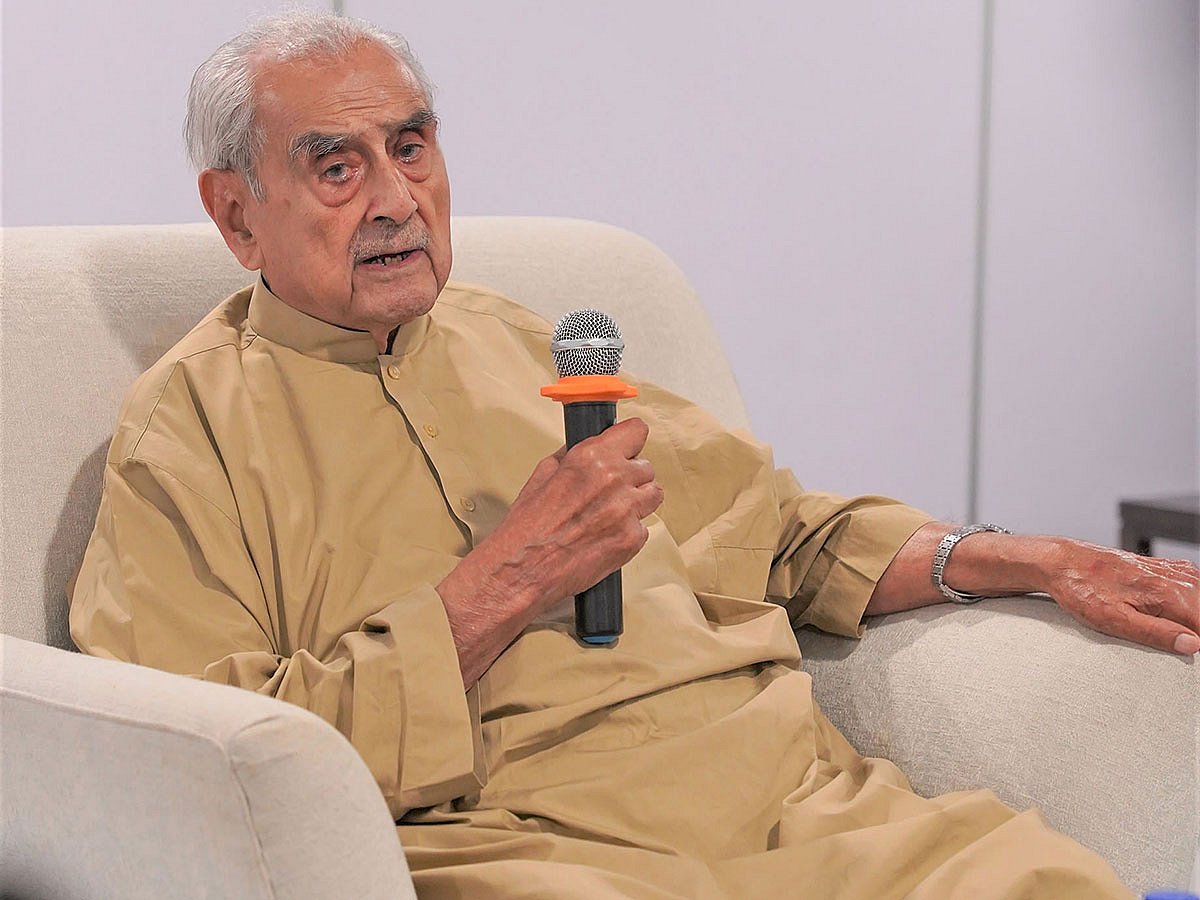
Every nation draws strength from the men and women who build enduring institutions and create opportunities for generations to come. Few Pakistanis have done so more quietly – or more successfully – than Syed Babar Ali, who turned 100 on June 30, 2026.
Industrialist, philanthropist, educationist and founder of the Lahore University of Management Sciences (LUMS), among several other institutions, he has spent a lifetime opening doors for others. Thousands of young Pakistanis – many from modest backgrounds – have gone on to excel in Pakistan and abroad because one man believed that the country’s greatest resource was neither its geography nor its minerals, but its human talent. His greatest legacy is not the companies he built but the generations he enabled. In 2020 he was elected member of American Academy of Arts and Sciences in the category of Business, Corporate, and Philanthropic Leadership, – only the second Pakistani after the Nobel laureate Abdus Salam.
Syed Babar Ali was born in Lahore on June 30, 1926, into one of the most distinguished Muslim families of undivided Punjab. His father, Sir Syed Maratib Ali, was one of the most successful entrepreneurs of British India, while his mother’s family – the renowned Fakir family of Lahore, held top positions in the kingdom of Maharaja Ranjit Singh.
He was the youngest among four brothers and five sisters. His eldest brother, Syed Amjad Ali, was Pakistan’s Finance Minister, Ambassador to the United States and Permanent Representative to the United Nations. Another brother, Syed Wajid Ali, for whom I sensed Babar Sahib had a distinct veneration, became a towering figure in Pakistan’s industrial, cultural and sporting life, serving for over a quarter-century as President of the Pakistan Olympic Association. Under his stewardship Pakistan remained a respected sporting nation, particularly in hockey and athletics. To many of my generation, his trademark sherwani, pagri and imposing moustache made him one of Pakistan’s most recognisable public figures. Bobby Kooka, Air India’s Commercial Director before partition, was so enamoured by his personality that he based the airline’s Maharaja logo on his authentic appearance.
Family connections
The family’s connections extended across the political spectrum of undivided India. Their home welcomed personalities who shaped the subcontinent’s destiny, a privilege that later gave Syed Babar Ali an extraordinary perspective on history.
As a student of history and politics, I found in him a living archive. There was scarcely a major personality of pre-Partition India whom he or his family had not known personally. He invariably added dimensions unavailable in public records.
He once told me that Quaid-i-Azam was so emotionally devastated by the communal carnage accompanying Partition that he persuaded ‘Bhai Wajid’ to accompany him to Lahore, when he first visited the Walton refugee camp situated near the family’s lands. Babar Sahib even showed me photographs of that historic visit.
What distinguishes Syed Babar Ali is not merely what he achieved but how he achieved it.
Quiet service
In an age when publicity often exceeds accomplishment, he has always preferred quiet service. Packages Limited became a model of corporate excellence. LUMS transformed higher education in Pakistan. His belief that Pakistan deserved institutions of global quality never wavered, even when many doubted that such ambitions were realistic. His philosophy has remained remarkably simple: invest in people, maintain uncompromising ethics, and think in decades rather than election cycles.
His autobiography, Learning from Others, reflects that same humility. Rather than celebrating himself, it generously credits teachers, colleagues and friends who shaped his thinking. Yet those who know him well cannot help feeling that many fascinating stories remain untold – not because he has forgotten them, but because his instinct has always been to protect reputations rather than diminish them.
My own association with Babar Sahib began during my tenure as Pakistan’s High Commissioner to Singapore between 2004 and 2008. It has since grown into one of the most valued and rewarding relationships of my life. Every visit to Lahore has been marked by his warmth and generosity.
Our conversations often ended with my urging him to record these priceless memories. If writing seemed burdensome, I suggested an oral history project. Years later, smiling patiently at my persistence, he remarked: “You need someone to spar with you. Come to Lahore for a few months. I shall arrange the recording.”
Regrettably, I could not come to my hometown for such extended periods. Perhaps my repeated encouragement contributed, in some small measure, to the publication of Learning from Others. It remains a valuable memoir, though I still tease him that it is not quite the book I had hoped he would write.
Nationalisation era
Among the stories that left a lasting impression on me was his account of the nationalisation era. After several of family’s companies were nationalised, Prime Minister Zulfikar Ali Bhutto invited him to head the National Fertiliser Corporation (NFC). Concerned about the future of the newly established Packages Limited, he sought ‘Bhai Wajid’s advice who simply told him, “If you want to save Packages, accept it.”
He did – and for five years served as the chairman of NFC. He once told me that during his entire tenure he never received a single telephone call from Zulfikar Ali Bhutto or his government seeking favours, recommendations or political interference. Instead, the government entrusted him with substantial resources to modernise the corporation. That speaks well not only of the government’s confidence but also of the unquestioned integrity that Babar Sahib brought to public office.
Subsequent governments repeatedly offered him prestigious positions. More often than not, he politely declined. His true calling was never power. It is service.
There are many successful businessmen in Pakistan. There are fewer institution builders. Fewer still devote their success to creating opportunities for others.
Syed Babar Ali belongs to that rarest category. His enduring lesson is that greatness requires character. Long after political headlines have faded, the students he educated, the institutions he built and the values he exemplified will continue to shape Pakistan.
Syed Babar Ali personifies that highest form of patriotism.
Sajjad Ashraf served as an adjunct professor at the Lee Kuan Yew School of Public Policy, National University of Singapore from 2009 to 2017. He was a member of Pakistan Foreign Service from 1973 to 2008 and served as ambassador to several countries.
Sign up for the Daily Briefing
Get the latest news and updates straight to your inbox
Network Links
GN StoreDownload our app
© Al Nisr Publishing LLC 2026. All rights reserved.