Zohran Mamdani and Rama Duwaji wedding
From Bollywood bangers to viral reels: How Zohran Mamdani and Abdul El-Sayed turned pop culture into political power
From policy wonks to influencers, their digital strategy reshapes the left
Last updated:
4 MIN READ
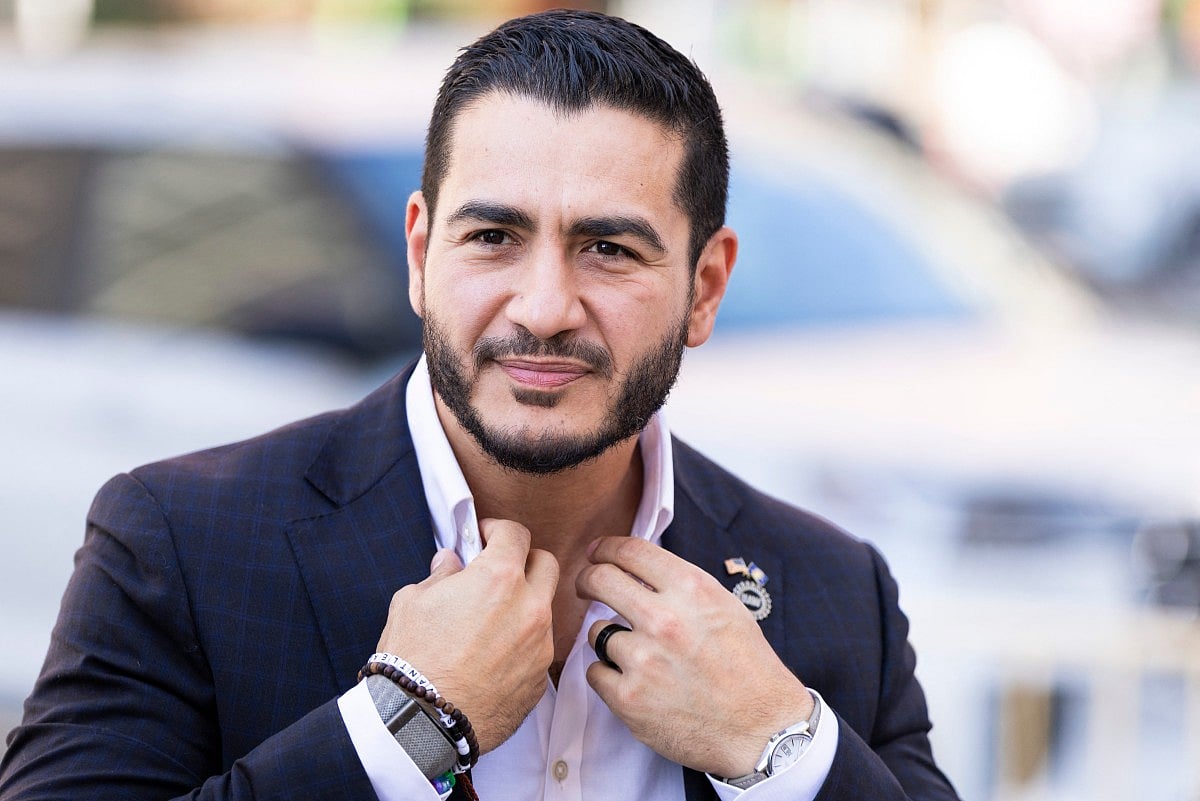
Michigan Democratic Senate primary winner Abdul El-Sayed arrives to a press conference in front of the Spirit of Detroit statue on August 05, 2026 in Detroit, Michigan.
AFP-FINN GOMEZ
Dubai: Not too long ago, politicians fought for votes with rousing speeches, newspaper interviews and carefully choreographed campaign rallies. Today, they're just as likely to drop a Reel with a trending soundtrack, collaborate with content creators or walk off stage to a Bollywood banger.
Safe to say, politics has officially entered its pop culture era.
And if anyone embodies this shift, it's New York City Mayor Zohran Mamdani and Michigan Senate candidate Abdul El-Sayed. Neither treats social media as a digital bulletin board for press releases. Instead, they use it the way millions do every day: as a space for humour, music, memes and authentic storytelling. And it seems to be working.
Mamdani, in particular, has rewritten the rulebook for political branding. After his historic election victory, he walked off stage to the iconic Bollywood anthem Dhoom Machale, instantly creating a viral moment that resonated far beyond traditional political circles. Throughout his campaign, he has embraced his South Asian identity through music, sharing playlists featuring classics like Shah Rukh Khan's atop-train dance hit Chaiyya Chaiyya alongside Punjabi fusion tracks, turning songs into subtle yet powerful markers of representation, identity and belonging.
Meanwhile, El-Sayed has also tapped into the same cultural pulse, but in his own way. One of his recent Instagram Reels featured him alongside two content creators, set to Fat Papi's viral track Freaked Out.
It didn't resemble a polished campaign advertisement. It looked like something that naturally belonged on a Gen Z feed. It was fast-paced, self-aware and culturally fluent.
That is the point. Neither Mamdani nor El-Sayed seems afraid of looking a little goofy, playful or self-deprecating if it helps people engage. In an era when many politicians still speak in carefully crafted soundbites, they're comfortable speaking in memes, trending audio and internet humour.
Let's not forget that social media is a brutal arena where faceless trolls thrive and attention spans are painfully short. Winning that battle requires more than good policy. It requires a big personality. In this attention economy, charisma isn't just an asset. It's political currency.
The paradigm shift reflects a much bigger transformation in political communication.
Politicians are no longer just competing against one another for attention. They're competing with Netflix trailers, football highlights, beauty tutorials, K-pop edits, food influencers and viral Shawk-the-hawk clips from Gulf News. But these two rising political heavyweights seem to be rewriting the campaign playbook.
The goal isn't simply to inform. It's to stop the scroll. And music has become one of the most powerful tools in that arsenal. A carefully chosen soundtrack instantly communicates emotion, identity and cultural relevance in a way that a campaign slogan rarely can. A Bollywood anthem tells one story and a viral rap track tells another. Both create an emotional shortcut that helps politicians connect with audiences before they've even spoken a word.
El-Sayed even turns a rock-climbing session into a political metaphor. As he scales the wall, he asks, "Do we want politics that's rigged by special interests?" It's clever visual storytelling, suggesting that changing politics, much like climbing, requires grit, persistence and the willingness to tackle difficult challenges.
His social media savvy extends beyond trendy Reels and viral soundtracks. Even his introductory carousel reads less like a conventional political biography and more like the opening slides of a creator introducing himself to new followers.
"Hi, I'm Dr Abdul El-Sayed. I am running to represent Michigan in the US Senate," one slide reads. The next introduces him as a "girl dad" to his two daughters, Emmalee and Serena, with their faces thoughtfully covered by smiling emojis to protect their privacy. Another slide is devoted to his wife of two decades, Sarah, whom he describes as "the best of us", accompanied by a warm photograph of the couple embracing. Rather than projecting a carefully manicured political image, the carousel leans into authenticity, presenting El-Sayed first as a husband, father and the son of Egyptian immigrants before introducing him as a Senate candidate. It's a subtle but telling reminder that in today's social media landscape, personality often travels further than policy.
Democratic Senate candidate Abdul El-Sayed after a radio appearance on Dr. Horace Sheffield's GOTV Community Rally on August 01, 2026 in Detroit, Michigan.
It's also a strategy borrowed straight from influencer culture.
For years, brands have relied on trending audio and creator collaborations to make products feel relatable. Now politicians are doing the same, packaging policy within the aesthetics of internet culture rather than expecting audiences to seek it out.
The result is a generation of political leaders who behave less like traditional candidates and more like creators. They're not just asking voters to believe in them. They're inviting them to follow, like, comment and share.
Of course, there are risks. Viral moments shouldn't replace meaningful conversations about healthcare, housing or the economy. A catchy soundtrack cannot compensate for weak policy. But dismissing this trend as superficial misses the point entirely.
For younger voters raised on TikTok, Instagram Reels and YouTube Shorts, pop culture isn't a distraction from politics. It's increasingly the language through which politics reaches them.
Today's elections may still be won at the ballot box, but the battle for attention is being fought on the For You Page.
Because in 2026, before politicians can earn your vote, they first have to earn something even harder to get: your attention. And if that means borrowing a Bollywood soundtrack, hopping on a viral Reel or embracing their inner content creator, then welcome to the new campaign trail.
Network Links
GN StoreAbout Gulf NewsTerms & ConditionsReach by GNSitemapContact usPrivacy PolicyGN FocusHave your sayWork with usAdvertise with usGulf News epaperPrinting Services
Download our app
© Al Nisr Publishing LLC 2026. All rights reserved.