The Philippines has numerous dams including 15 run-of-the-river systems. Altogether, these megastructures produce 1.19 gigawatts (GW) of electricity, while helping irrigate farmlands. With at least 20 hydropower projects in the pipeline, this unprecendented move has potential to generate up to 12.74 GW, according to the Department of Energy data.
Could 18 strategic dams help solve Philippines' flooding? The ₱180-billion question
Are multipurpose dams the key to solving the Philippines' water, food, power challenges?
Last updated:
6 MIN READ
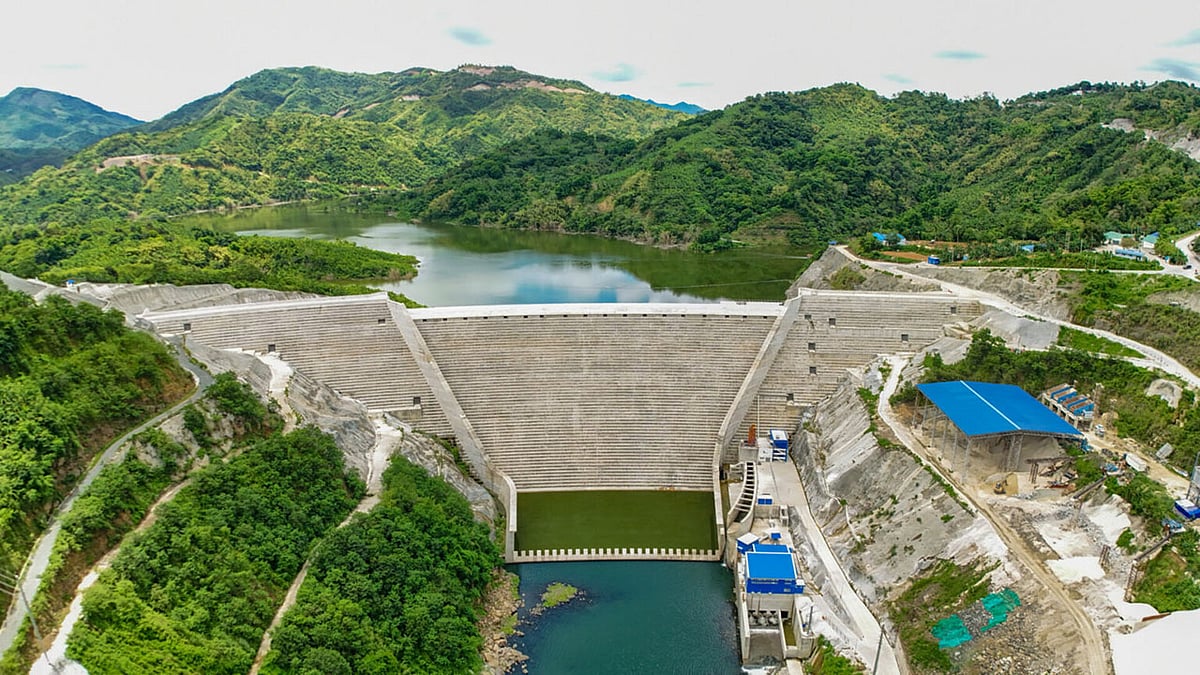
A view of the Upper Wawa Dam operated by Manila-based Prime Infra Capital. The dam is located in Barangay San Rafael, Rodriguez (formerly Montalban), Rizal Province, Philippines.
PrimeInfra
MANILA — Could the Philippines turn its floodwater problem into a multi-billion water, food and long-term energy opportunity?
National Irrigation Administration (NIA) Administrator Eddie Guillen has argued that building dams across the country’s 18 major river basins could simultaneously boost flood control, water security, irrigation and hydropower.
The arithmetic is striking: at an assumed ₱10 billion (US$159 million) per dam, 18 dams would cost about ₱180 billion (US$2.87 billion), or roughly ₱36 billion ($574 million) annually over five years.
But the ₱10-billion figure should be treated as an initial assumption, not a national cost estimate.
The abundance of natural water falls makes the Philippines an ideal place to harness water power, especially pumped-hydroelectric power, which it has pioneered in South-east Asia, say experts.
The Agus-Pulangi Hydropower Complex is a good example of man harnessing nature and turning a weakness into a multi-generational opportunity.
The facility was first energised in 1953, under the watch of President Elpidio Quirino. Today, the clean energy infrastructure on the southern island of Mindanao is aging. But it still works.
Its six plants sit along the Agus River in Lanao del Sur and Lanao del Norte as water flows from Lake Lanao and drops down to Maria Cristina Falls.
The complex — which accounts for nearly half of Mindanao's power electricity— is currently limited to generating around 600 to 700 megawatts (MW) out of its original 1,000 MW design capacity.
It needs a major upgrade, and is up for auction in a 25-year concession.
To bring it back to full scale, the state-run Power Sector Assets and Liabilities Management Corp (PSALM) is utilising the build-repair-operate-maintain-transfer (BROMPT/Public-Private Partnership) format.
A number of corporate consortiums have submitted unsolicited bids to win the right to manage the overhaul, with contract execution planned for April 2027.
In this tropical setting, harnessing this gift of nature has proven its long-term value.
Another example: the Caliraya-Botocan-Kalayaan pumped storage hydropower plant, South-east Asia's oldest such facility.
First energised in 1983, it generates both electricity for consumers (nearly 797MW), irrigation for nearby farms, fishponds and massive cash infusion to the government (via 25-year concession payments by private operators).
The biggest challenge with additional proposed "mega-dams" in the Philippines: permitting.
The reason: pushback from environmentalists, "civil society" and nearby communities.
Cases where pushback shaped the debate
Kaliwa Dam (Sierra Madre): Civil society coalitions argue it violates environmental laws and free-prior-and-informed-consent (FPIC), threatens one of the country’s largest remaining rainforests, and endangers downstream residents with flood risk; they advocate watershed protection and rehabilitation as alternatives.
Cordillera dams (historical and ongoing): Decades of resistance since the 1970s grew into a broader movement for Indigenous land rights, with experts warning that abrupt river alterations can choke water flows and increase flash-flood hazards during typhoon seasons.
Maton Pumped-Storage (Apayao, 2026): A proposed 2,000-MW “water battery” faces pushback over habitat loss, impacts on freshwater fish, and potential effects on Isnag ancestral domains —illustrating how even grid-stabilising projects must address ecological and Indigenous concerns.
In a significant way, environmentalist pushback acts as a necessary check.
They could help improve project design, enforce legal rights, tackle long-term risks, and keep the door open for less damaging, more climate-resilient water and energy solutions.
The Philippines operates around 15 run-of-the-river (ROR) hydropower systems out of roughly 30 total operating hydroelectric plants, contributing a smaller share (around 566 MW) of the country's total installed hydropower capacity.
Why dams make sense
But why do dams make real sense in the Philippines?
One: well-planned-and-executed dam projects offer more long-term benefits than risks.
In short: better mastery, instead of regular ravaging, by nature.
The Philippines has 421 principal rivers and 18 major river basins, managed by the National Water Resources Board.
The Asian nation currently has 21 "major" and "large" operational dams (there is no single category defined specifically as "mega dam").
Major and longest rivers
Cagayan River: The longest river in the country, located in Northern Luzon, spanning about 505 kilometers.
Mindanao River (Rio Grande de Mindanao): The largest river system in Mindanao.
Agusan River: A major river in eastern Mindanao.
Pampanga River: A vital waterway flowing through Central Luzon.
Pasig River: A historically and commercially vital river connecting Laguna de Bay to Manila Bay through Metro Manila.
Remarkably, it is also home to over 1,500 estimated waterfalls spread across the islands (though there is no exact official count).
Reservoir of life
A strategically-located reservoir can store water during heavy rains, potentially reducing downstream "flood peaks", then release it during dry periods for irrigation and water supply.
It can also generate electricity.
Jalaur illustrates the multipurpose model: the project is designed to greatly expand irrigation (by about 9,500 hectares) while benefiting roughly 25,000 farmers and providing additional water and hydropower.
The economic case should, therefore, consider more than construction cost and future environmental damage, usually catastrophised.
Benefits could include avoided flood damage, additional farm production, water supply (especially during El Nino months) and electricity.
Costs must include construction, land acquisition, resettlement, environmental mitigation, operation, maintenance and sediment management.
A view of Angat Reservoir and Dam in Angat River, San Lorenzo, Norzagaray, Bulacan, near the Philippine capital Manila.
3 major counterpoints matter
First, dams cannot stop every flood.
They cannot capture rainfall falling outside their catchment, including intense rainfall directly over cities. Coastal flooding, storm surge and inadequate urban drainage require different solutions.
Second, reservoirs change rivers.
Recent Philippine research highlights the importance of sediment, river "morphology" and ecosystem impacts (on fish and native communities).
Poorly managed watersheds can also fill reservoirs with sediment and reduce their useful life.
Third, 18 dams should not mean 18 identical projects.
The country's river basins differ enormously in rainfall, geology, population, agriculture and water demand.
Some may justify large reservoirs; others may benefit more from wetlands, floodplains, smaller storage projects, reforestation or improved drainage.
So, could dams help solve Philippine flooding?
Yes.
But “solve flooding” everywhere in the country may be pushing it.
Dams can be powerful infrastructure when a basin has:
a suitable dam site;
sufficient inflows;
adequate reservoir capacity;
economically valuable irrigation demand;
credible flood-control benefits;
manageable environmental and social impacts;
sustainable watershed management;
sound reservoir-operation rules; and
a positive economic case -- after all costs are included.
The Jalaur experience shows why the concept is attractive: one water project can combine irrigation, food production, water supply, hydropower, watershed management and flood mitigation.
Notably, if a reservoir has substantial deposits of clean sand or gravel (as sediment or "silt"), dredging can potentially turn a disposal problem into a source of aggregate. For concrete, however, simply taking wet reservoir sediment and putting it into a concrete mixer would not be appropriate. It may need screening, washing, dewatering and grading.
The bigger idea
The strongest strategy may therefore be “dams + nature + data.”
Strategic reservoirs could be combined with watershed rehabilitation, floodplain restoration, river management, drainage improvements, land-use enforcement and real-time rainfall and reservoir monitoring.
Recent Philippine studies support this integrated approach rather than relying on a single type of infrastructure.
The question, then, is not simply “18 dams or no dams?”
It is: Where can each 100 pesos — or $1.59 — of public investment produce the greatest combined return in flood protection, food, water and energy?
If the government can answer that basin by basin, the ₱180-billion proposal becomes more than a slogan.
It becomes an economic and engineering proposition that can be tested.
Sign up for the Daily Briefing
Get the latest news and updates straight to your inbox
Network Links
GN StoreAbout Gulf NewsTerms & ConditionsReach by GNSitemapContact usPrivacy PolicyGN FocusHave your sayWork with usAdvertise with usGulf News epaperPrinting Services
Download our app
© Al Nisr Publishing LLC 2026. All rights reserved.