Why the Philippines keeps flooding: Palace cites decades of failures
Palace points to long-term planning gaps as storms expose fragile systems
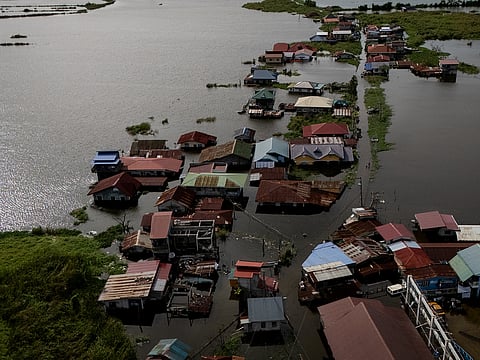
Dubai: The Philippines’ continuing struggle with severe flooding cannot be blamed solely on President Ferdinand Marcos Jr.’s administration, according to Malacañang, pointing to decades of shortcomings in planning and flood-control implementation.
Palace press officer Claire Castro has noted that experts estimate that proper planning and infrastructure measures needed to manage flooding have not been fully implemented for about 40 years.
Get updated faster and for FREE: Download the Gulf News app now - simply click here.
Palace rejects blame game
Castro has bared that the government does not want to focus on assigning responsibility to one administration or individual official.
“We do not want to point fingers at who is at fault or who is responsible for doing the work because the problem was not caused by something that happened only recently or within the past three years,” explained Castro in Filipino during a Palace briefing.
She has mentioned that the flooding problem had developed over a longer period, with shortcomings in flood management and urban planning accumulating over successive administrations.
Inherited unresolved problems
Castro has pointed out that Marcos inherited what she described as accumulated problems, including alleged negligence and ghost projects from previous administrations, as reported by the Philippine News Agency.
“The President now has to clean up the shortcomings left by previous administrations,” shared Castro.
The Palace’s position is that the current administration is dealing with a legacy of problems rather than an issue created during Marcos’ term alone.
Focus on flood prevention
Castro has made the statement after being asked why flooding remains severe in Pampanga and Bulacan provinces despite the long-standing presence of local political families in areas affected by flooding.
She has rejected calls to focus on specific local officials and emphasised that the immediate priority should be measures that can reduce flooding.
The government has added that addressing the problem requires action at the local level.
Local governments have responsibility
While the Palace has highlighted national and historical shortcomings, Castro stressed that local governments also have a responsibility to enforce flood mitigation measures.
This means efforts to reduce flood risks cannot rest solely with the national government. Local authorities must also ensure that measures intended to limit flooding are implemented in their areas.
The debate has come as the Philippines continues to grapple with recurring flooding, reflecting the challenge of dealing with infrastructure and planning problems that have accumulated over decades.
For the Marcos administration, the message is that fixing the country’s flood problems will require addressing those long-standing shortcomings rather than simply determining which past government should be blamed.