Universal messages
I was inspired by my fellow diplomats who were pursuing other interests while still maintaining their hectic schedule and commitments.
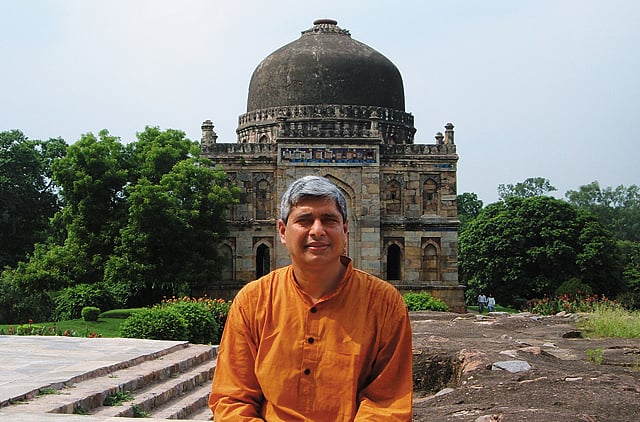
I wrote my first book in two months [when I was living in the UK] - while my wife, who is an artist, and sons were on holiday in India. The solitude was truly conducive to writing. My next book is entitled Six Suspects and has already been bought to be made into a film. I'm currently working on my third novel which is set in Europe.
When writing, intuition drives me to create a certain structure that will make the book compatible to readers' preferences.General readers' interests and tastes keep changing - it's something that has been going on for generations. As a writer, I have to use my intuition and writing skills to capture and hold the reader's attention with practical, structural planning in terms of character development and plot. In the end, it has to be a readable product. Writers use logic [when crafting a story], the same way scientists use it when researching a scientific subject. However, in the case of fiction writers, they have a bit more freedom [with certain elements] to be creative. Literature has an element of mystery to it.
Books are still generally perceived as vehicles of knowledge.
But books are limiting when it comes to visual vividness whereas cinema, which can depict an image pictorially, requires less imaginative power.
[Although the setting was a slum], I feel Danny Boyle created something very beautiful from my book when making Slumdog Millionaire. The film celebrates the spirit of human triumph against all odds.
I get great joy conjuring characterisations [and creating a fictional world] yet have the satisfaction of living in my own real world.
In a way, my diplomatic career has fuelled ideas for my literary works. Stepping away from the [world] of diplomacy was a great way to connect with my emotions and translate them into characters that can come alive through words. When I write, I don't bring my diplomatic side to the table. But that doesn't mean I become a different person when I pick up the pen; the [author and the diplomat] are merely different aspects of my personality.
Today, publishing is an area that involves a lot of research.
At the same time, I have to consider its commercial viability. A publishing house keeps track of readers' preferences, audience demographics, marketing approaches and literary trends. I cannot deny that I have received great joy from the commercial success of my books.
My first book Q&A was translated into more than 30 languages. I am pleased - it shows that although the book is set in India and deals with Indian issues, its message is [fairly universal] and can be [appreciated] by people of different dialects from any part of the world.
These days when I write or propose an idea for another novel set in my home country, my publishers continuously remind me that only five per cent of my audience is based in India. They tell me to keep the international audience in mind when constructing plots. I find that writing in a universally relatable language is quite challenging.
Creativity is a force that transcends any medium. I find writing to be extremely satisfying but film-making offers a different branch of creativity to be explored, because it employs a multidimensional approach.
Also, in film-making, creativity extends beyond your personal vision as you have specialised team members in several departments involved in the process. Films are a larger-than-life canvas and creative treatment involves fantasy, technique, production, artistic sensibilities and human ego. Creative writing is certainly an admirable skill in its own right demanding a command over language, but I think films give the creator more liberty.
Even with the advent of technology, books and the printed word will never die. Every child should be more tuned in to the power of words. Books carry with them dreams and have a lasting impression on children. I think it is vital for a child to start reading from as early an age as possible.
Book festivals and public readings can have a remarkable impact on children and I am thrilled when I see the long lines of people queuing up to buy a book and getting it signed by the respective author.
Books open up the imagination and fuel the thought processes which help a child to write essays and letters. Truly, there is great joy to be had in discovering language.
Many countries all over the world have started organising book fairs and festivals and the coming together of authors from around the world presents an ideal forum for the exchange of ideas; it keeps the wheels of creativity well oiled.
A well-educated nation makes a huge difference to global society. Children are the building blocks of a nation and so education is at the core.
Reading online or having a preference for e-books is an indication of how things have changed but the basics of reading them still begin with ABC.
Sign up for the Daily Briefing
Get the latest news and updates straight to your inbox
Network Links
GN StoreDownload our app
© Al Nisr Publishing LLC 2026. All rights reserved.