A second chance at life: How this Emirati helps juvenile offenders turn their lives around
She helped juvenile offenders reintegrate in society, reduced reoffending rates to zero
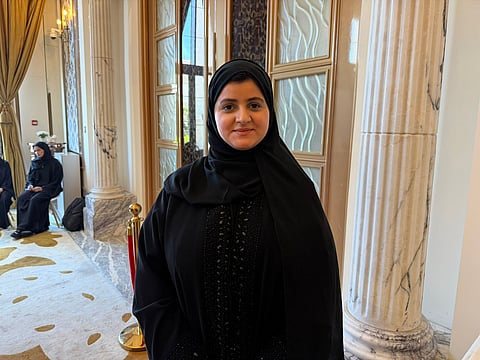
Dubai: Every young person deserves a second chance. It is a belief that has guided Aisha Al Banna throughout her work with juvenile offenders and one that has helped transform dozens of lives.
The 30-year-old Emirati rehabilitation specialist from the Community Development Authority's (CDA) Soun Centre for Care and Rehabilitation has been recently recognised in the Young Employee category, presented by the Dubai Quality Group, for her contributions to helping young offenders successfully reintegrate into society.
Her impact has been significant. Through five specialised rehabilitation programmes that include more than 300 training hours, Al Banna has reduced recidivism or the tendency to reoffend from 12 percent to zero. The programmes have also achieved a 100 percent integration rate among beneficiaries.
But for Al Banna, the numbers tell only part of the story.
Get updated faster and for FREE: Download the Gulf News app now - simply click here.
Looking beyond the offence
Working closely with juvenile offenders and their families, Al Banna has realised that lasting rehabilitation requires more than correcting behaviour.
“The idea came from our commitment to helping Emirati juvenile offenders successfully reintegrate into society and preventing reoffending,” Al Banna told Gulf News.
Through direct engagement with beneficiaries, she has identified a need for a more comprehensive approach, one that combines behavioural support, empowerment, and continuous follow-up even after rehabilitation programmes end.
This has led to the creation of five specialised programmes designed to support young people at different stages of their rehabilitation journey.
A programme close to her heart
Among the initiatives she has developed, one remains especially meaningful.
“One of the programmes that I really love and am attached to is teaching the juveniles how to write and read,” exclaimed Al Banna.
For her, literacy is not simply an educational skill but a tool that can unlock confidence, ambition, and opportunity.
“The first word in our religion says ‘read.’ I want to give them the passion to do something new in their life and encourage them to be more ambitious.”
The programme has aimed to help young people discover new possibilities for themselves and develop the confidence needed to pursue them.
Rehabilitation as a family effort
Al Banna believes one of the main reasons behind the programmes' success has been the active involvement of families. Rather than focusing solely on the individual, the rehabilitation process has brought together beneficiaries, their families, and support networks to create a stronger foundation for long-term change.
The five programmes have centred on behaviour modification, life skills development, family support, social reintegration, and post-rehabilitation follow-up.
To ensure consistency and sustainability, Al Banna has also created four operational guides and delivered more than 300 hours of training.
Holistic approach
According to Al Banna, rehabilitation cannot follow a one-size-fits-all model.
“We focus on the specific needs of each beneficiary, involve families in the rehabilitation process, and provide continuous support throughout their journey,” explained Al Banna.
This personalised approach has allowed young people to receive support tailored to their circumstances while ensuring they continue to receive guidance after completing rehabilitation programmes.
The results have been encouraging, with repeat offences eliminated among programme participants.
Inspired by the UAE
Al Banna has credited her family and the UAE's leadership for inspiring her commitment to community service.
“My family encouraged me to keep going and give my best for my country. I'm grateful that I'm from the UAE. Our leadership gives us all the opportunities and this motivates us to keep learning and to help the community,” shared Al Banna.
She hopes her journey will encourage other young Emiratis to believe in their potential and contribute to society.
“Our leadership gives us a lot of opportunities, so keep learning and believe in your abilities. You are an important part of the community and you can make a difference.”
Building brighter futures
Looking back on the success of the programmes, Al Banna has noted that the key lesson is to understand the real needs of beneficiaries and continue supporting them long after formal rehabilitation ends.
“Focus on understanding the real needs of beneficiaries and building programmes around measurable outcomes,” said Al Banna.
In addition, she has highlighted the importance of research, innovation, and collaboration with families and community partners.
“Sustainable rehabilitation is achieved when support continues beyond the programme itself.”
For Al Banna, every young person who finds a new direction in life is proof that rehabilitation is about more than correcting mistakes. It is about restoring confidence, creating opportunities, and helping young people believe in a better future.