UAE National Day, drawn in henna: How an Ajman artist celebrates Emirati heritage through art
Fathima Afsal from Ajman shares her love for henna and Emirati heritage
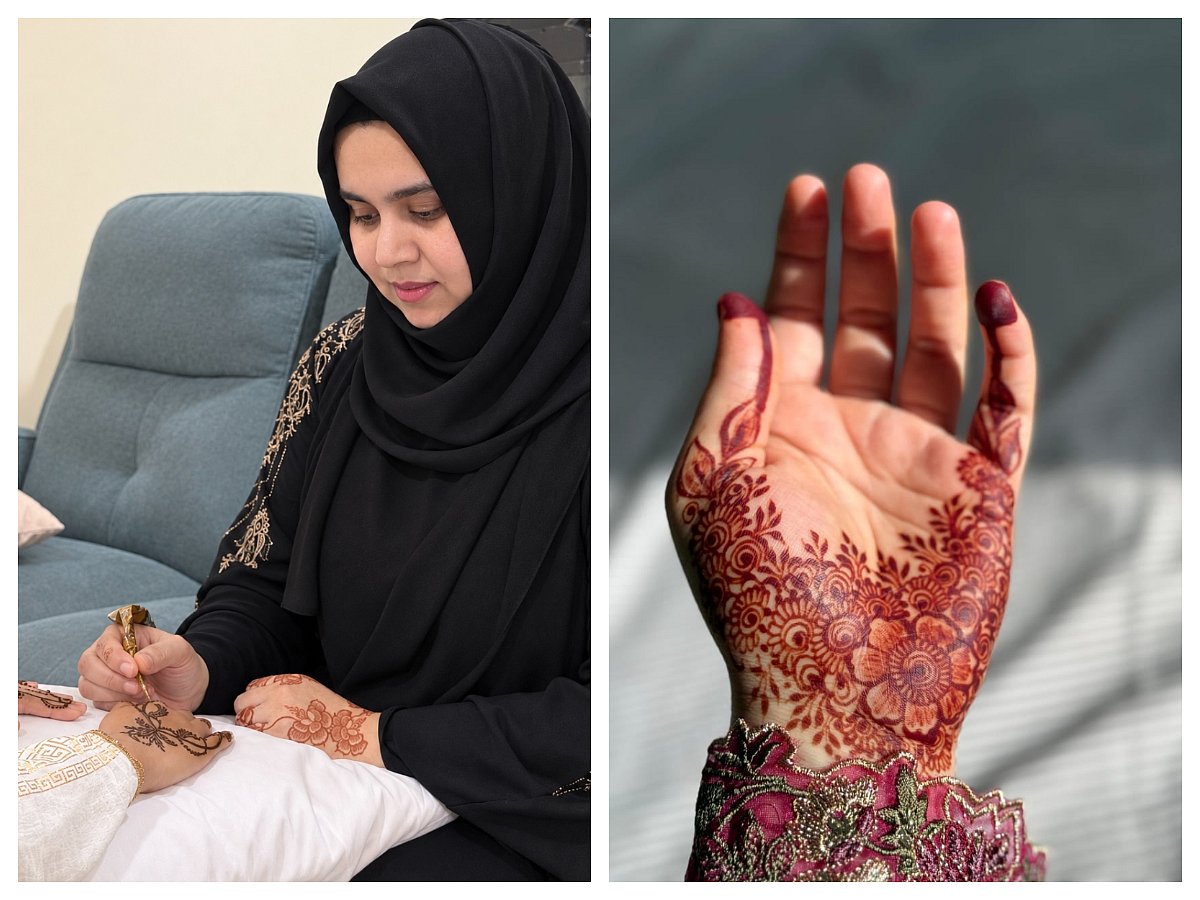
Every year as December approaches, the flag begins to appear everywhere in the Emirates: on balconies and car windows, on the facades of towers, on the lampposts that line the coastal roads. And for many, it appears on their hands, in the curve of a wrist, along the length of a finger.
Fathima Afsal has been a henna artist for more than nine years. She works from Ajman, while her clientele stretches down the coast into Dubai. In the weeks before Eid Al Etihad, the UAE's National Day, her calendar fills with women who want to carry the celebration on their palms.
This year she has built a collection around the holiday, not a catalogue so much as a vocabulary of symbols, motifs and techniques she draws from and recombines for each client.
"As a henna artist living and working in the UAE, I feel a special connection to the country's celebrations, especially Eid Al Etihad," she said. "Over the years, I have had the opportunity to work with many Emirati clients, which has helped me understand their preferences and appreciation for elegant, meaningful henna designs."
More than ornament
Henna is among the oldest adornments in the region, a paste of crushed leaves that stains the skin a deep russet and is traditionally applied for weddings, Eid and other moments worth marking. Its impermanence is part of its meaning: a design blooms over a day or two, then fades over the weeks that follow.
For Afsal, it's a natural way to take part in a national celebration. "I wanted to create designs that reflect the pride, unity and beautiful spirit of the UAE while giving my clients something special to wear during the National Day celebrations," she said. "For me, henna is not just body art; it is also a beautiful way to be part of the celebrations and express appreciation for the country's culture."
A vocabulary of symbols
Her designs draw on an iconography most residents of the Emirates would recognise at a glance: the flag, the architecture, the geometry of art.
She explains, "I draw inspiration from the UAE flag, traditional Emirati architecture, geometric patterns and elements associated with the country's heritage.The UAE flag represents unity, strength and national pride. Traditional geometric patterns reflect the beauty of Islamic art and regional architecture, while floral elements add a graceful touch to the designs."
What clients ask for tends to depend on the setting. At events, where she may decorate a long line of hands in an afternoon, the flag dominates. "For event bookings, UAE flag designs are particularly popular, as they represent national pride and unity," she said.
Private clients, particularly Emirati women, often want something more layered. "For individual clients, especially Emirati women, the preference is often for elegant 3D-style henna designs incorporating elements inspired by the UAE's heritage, such as palm trees, falcons and other traditional symbols," she said. "I blend these elements with floral patterns and delicate detailing to create designs that are both contemporary and culturally meaningful."
The falcon and the date palm are fitting choices. Both are woven deep into Emirati identity, the falcon as a symbol of the desert's old traditions of patience, the palm as the tree that sustained life in the region.
Yet Afsal resists the temptation to crowd every inch of skin with meaning. "I try to bring these inspirations together through delicate details rather than making every design too elaborate," she said. "My aim is to make each design meaningful while keeping it beautiful and wearable."
Old techniques but with a new touch
The craft beneath the designs is traditional. Afsal works in the Arabic style of henna, known for its bold, flowing florals and generous negative space, and she layers contemporary elements on top. "My approach is to combine traditional Arabic henna techniques with contemporary design elements while keeping the UAE's cultural identity in focus," she said.
During the National Day season, she said, many of her Emirati clients return to a familiar form. "Many of my Emirati clients prefer traditional Gassa-style designs incorporating floral patterns, palm trees, UAE flag-inspired shapes, geometric patterns and delicate dots," she said. "I blend these elements to create designs that reflect Emirati heritage while maintaining an elegant, modern look."
The season itself shapes the work. National Day falls in the heart of the Emirates' cooler months, when weddings crowd the calendar, and a long holiday weekend gives clients the time and the reason to commit to something more ambitious.
"Most clients prefer shorter, minimal designs, but some also opt for longer and more detailed patterns, especially with the extended National Day weekend and the ongoing wedding season," she said. "I customise each design according to the client's preference and the occasion."
Five minutes, or far longer
Afsar doesn't want to put a number on the designs she has in her collection. "This collection is not limited to a fixed number of designs," she said. "I create and customise different patterns based on the occasion and my clients' preferences."
The time each one takes varies just as widely. A small flag on the back of a hand can be finished almost before a client has settled into her chair; a falcon rising over a grove of palms, framed in petals, asks for considerably more patience.
"Smaller and simpler designs generally take around 5 minutes to complete," she said, "while more detailed 3D designs incorporating elements such as palm trees, falcons and floral patterns take longer, depending on the complexity and detailing."
Worn for a day, remembered longer
By the time the fireworks have faded and the flags come down from the balconies, the henna will have begun to fade too, lightening from deep brown to amber to a faint trace on the skin. That, in a way, is the point. It is a celebration meant to be worn for a season, not forever.
"My aim is to celebrate the UAE's identity while creating henna art that my clients love to wear during the National Day celebrations," Afsal said.
Network Links
GN StoreDownload our app
© Al Nisr Publishing LLC 2026. All rights reserved.