Rishika Paul (second from the left) and her family at the Giraffe feeding station.
From Al Maha to Pogi the baboon: First look inside Dubai Safari Park's eighth season
How to plan a day at Dubai Safari Park, from the desert safari to lunch in Al Wadi
Last updated:
5 MIN READ
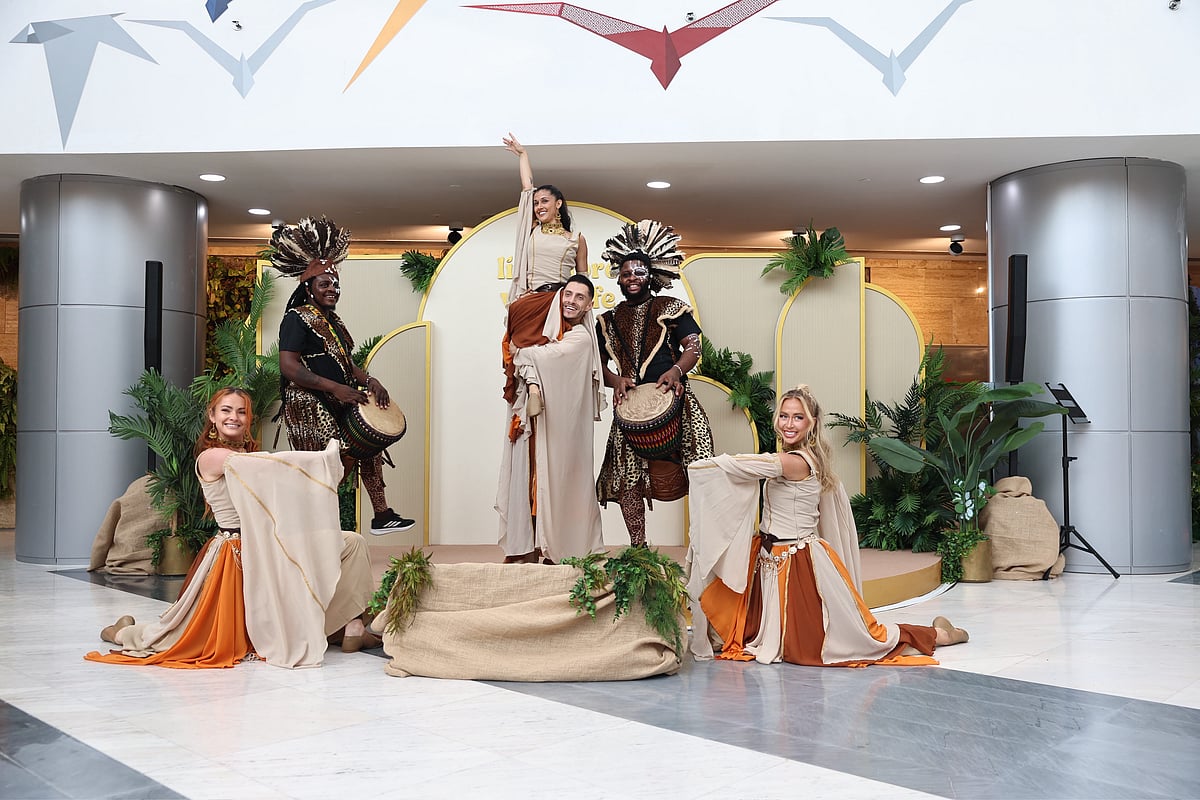
Dubai Safari Park is back for its eighth season.
Gulf News/Ahmad Alotbi
Dubai: Dubai Safari Park is back for its eighth season. It reopens on October 12 with a new theme and a week of family activities, and it is home to more than 3,000 animals from around 300 species across 119 hectares in Al Warqa.
The Season 8 theme, "Live More Wild Life", focuses on conservation and on bringing visitors closer to the animals.
Rishika Paul, from India, visited with her husband, mother and sister. She didn't mind that some animals stayed out of sight.
"The fact that we didn't see some animals because they just didn't choose to come out, that's the real safari experience," she said.
What's new this season
The park is holding its first "Wildest Opening Week" from October 12 to 18, timed with the school mid-term break. At the Little Explorers' Base Camp, children can try face painting, temporary tattoos, clay modelling, arts and crafts, lawn games and safari-themed inflatables.
New this season is the Royal Safari Experience, a four-hour private tour for groups of up to 10, created for travel trade partners. The live presentations Birds Kingdom, Echoes of the Wild and Birds of Prey return, along with premium experiences including King of Safari and Dine in the Wild.
The park now belongs to both the World Association of Zoos and Aquariums and the European Association of Zoos and Aquaria.
Giraffes at the feeding station.
First-timers at the park
Rasha Abu Hamzeh, from Lebanon, was visiting with her two children for the first time. Her nine-year-old daughter wants to be a vet. The chimpanzees were the family's favourite, but the animal they most wanted to see was the lion.
Paul had her eye on something taller.
"For me, it was a giraffe. It was our first time seeing giraffes and zebras, and actually lions as well," she said.
Rasha Abu Hamzeh (second from the right) and her family meeting Digit the only Gorilla at the park.
She left having learnt more than she expected. "We learn so much about how they actually are, the conservation processes they're doing here, and they send more than 300 animals back into the wild, which is amazing."
Asked to sum up the day, she struggled for words. "It's like seeing these animals that are close, it's a crazy experience."
Zebra
Getting around
The park has six zones: African Village, Asian Village, Explorer Village, Arabian Desert, Kids Farm and Al Wadi.
Kids Farm, with its goats, ponies and tortoises, sits just past the entrance. The zones are spread out, so plan your route. Air-conditioned trains and shuttle buses link the main areas.
Tortoise in Kids Farm
Arabian Desert: who to look out for
The 15-minute Arabian Desert Safari is included with every ticket. It drives through dunes modelled on the region's own desert.
Arabian oryx: Known as Al Maha in Arabic, it was hunted to extinction in the wild by 1972, then brought back through captive breeding. In 2011, it became the first species to move from "extinct in the wild" to "vulnerable". Guides said it can sense rain from far away and go around two months without drinking, getting moisture from the plants it eats.
Ostrich: The world's largest bird can't fly, and it uses its wings for balance. It can run at around 70km/h, and a single kick can kill a lion.
Scimitar-horned oryx: It was declared extinct in the wild in 2000, then reintroduced to Chad through a programme led by Abu Dhabi's Environment Agency. In 2023, it was moved up to endangered.
Addax: This is one of the rarest antelopes on the planet. Its coat turns almost white in summer to reflect the heat.
Scimitar-horned oryx in the Arabian Desert
African Village: who to look out for
Elephants: Zulu leads the park's African bush elephants as the matriarch, Ghinga is the youngest and Tambo is also in the herd. One of them is expecting, and elephant pregnancies last around 22 months, the longest of any mammal.
Check their tusks too. Elephants favour one tusk, and it wears down shorter, which shows whether an elephant is "right-tusked" or "left-tusked".
Elephants at the African Village
White lions: The lionesses here come from South Africa. Their pale coats come from leucism, a genetic mutation that, unlike albinism, leaves colour in their eyes and noses. The males live in Explorer Village. Guides said white lions were once known in parts of Africa as messengers of the gods.
Chimpanzees and Digit: Chimpanzees share about 98 per cent of their DNA with humans and use tools. Nearby, look out for Digit, the park's only male gorilla.
Spotted hyenas: Their clans are run by females, who are larger than the males.
The aviary: It is the largest aviary in the UAE, with around 300 birds from 37 species. They include blue-and-yellow macaws, lovebirds and pelicans.
Black Swans in the aviary
On the Explorer Safari: who to look out for
This guided bus tour runs through open habitats representing Africa and Asia. It is booked through the Safari Bundle.
Hippos: They are herbivores, but their bite is the second strongest in the animal kingdom after the crocodile's. They are blamed for an estimated 500 human deaths a year.
Hippo
They can sleep underwater, rising to breathe without waking. Their skin also produces a reddish fluid that works as a natural sunscreen.
Hamadryas baboons: A troop of more than 100 is led by an alpha male called Pogi. The species was considered sacred in ancient Egypt.
The mixed habitat: Zebras, wildebeest, impala, springbok and mouflon share this space because they eat a similar diet. Impala give birth within the same few weeks, so there are more calves than predators can catch. Springbok, the national animal of South Africa, can reach around 90km/h.
Where to eat
Outside food isn't allowed, except baby food and water.
Asian Village: pad thai, ramen, butter chicken and mango sticky rice.
African Village: burgers, pizza and tacos at FB Eatery, Taco Taco and Safari Broasted.
Elephant Café: meals from Dh20 to Dh55.
Kids Café at Kids Farm: fresh fruit from Dh20.
Al Wadi: quieter spots overlooking the streams.
Arabian Oryx
Tickets
The Safari Park Pass costs Dh50 for anyone aged three and above. It includes:
All six zones
The Arabian Desert Safari
Live presentations
Workshops
A complimentary animal encounter
Free parking
The Safari Bundle adds the Explorer Safari and unlimited shuttle train access.
When: From October 12, 2026; Wildest Opening Week runs October 12 to 18
Where: Dubai Safari Park, Al Warqa 5, Al Aweer Road, diagonally opposite Dragon Mart
Price: Safari Park Pass Dh50 per person (ages three and above)
Network Links
GN StoreAbout Gulf NewsTerms & ConditionsReach by GNSitemapContact usPrivacy PolicyGN FocusHave your sayWork with usAdvertise with usGulf News epaperPrinting Services
Download our app
© Al Nisr Publishing LLC 2026. All rights reserved.