Can teeth grinding or gum disease trigger migraines? UAE dentists explain the surprising link
Stress, sleep disturbances and other health conditions may contribute to poor oral health
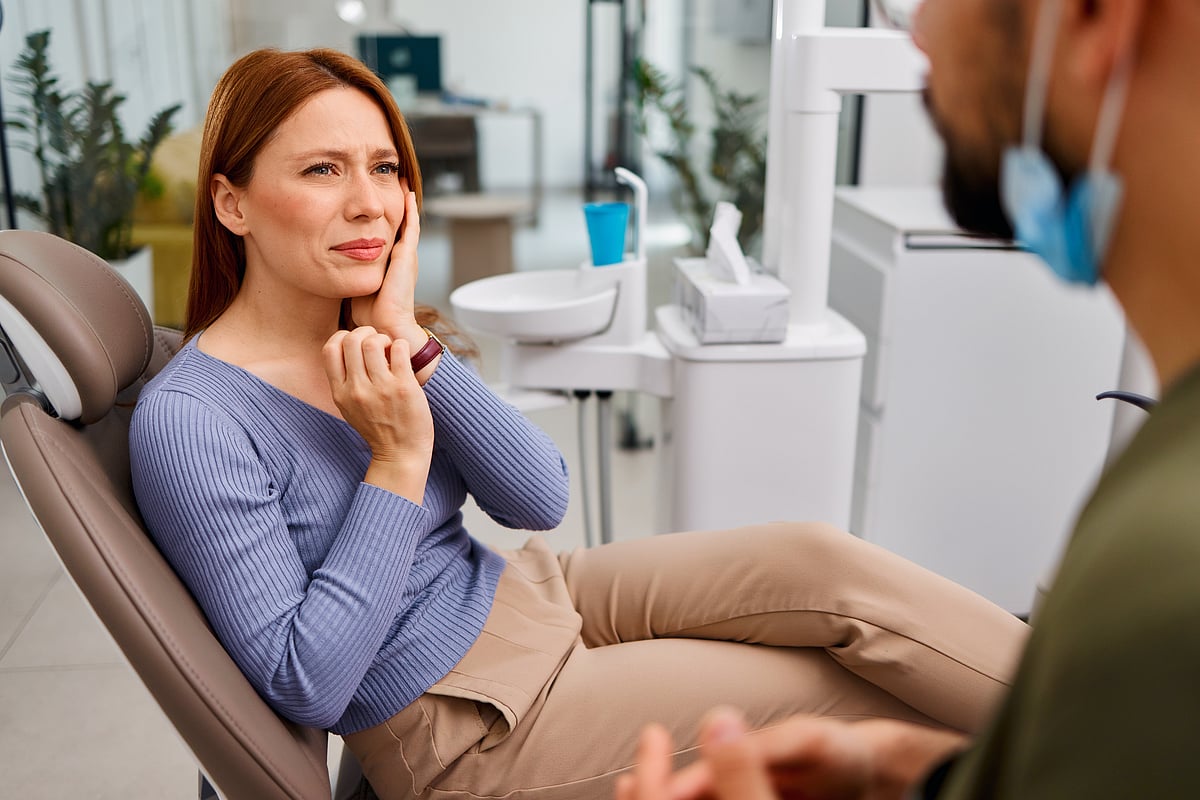
You wake with a dull ache pressing at your temples. Maybe your jaw feels tight; maybe it doesn’t. You swallow a painkiller, drink some water and get on with the day. If you think about the cause at all, you blame a short night, too much screen time or the week ahead. Your teeth are unlikely to make the list of suspects.
Yet a growing body of research is pulling the mouth into the conversation about headaches. And, it is pulling it into the conversation about migraine, the throbbing, often debilitating condition that can sideline people for hours or even days.
A part of the interest lies in what lives there. “The human mouth contains hundreds of bacterial species, many of which are beneficial or harmless when the oral microbiome is balanced,” says Dr. Parveen Dehal, a dental surgeon. The trouble starts when that balance tips. He notes that plaque accumulation and harmful bacterial growth can contribute to gum disease and inflammation.
That raised an obvious question for researchers: Do the bacterial communities in the mouths of migraine sufferers look different? Dr. Nima Sabzchamanara, a general dentist at RAK Hospital, points to recent work suggesting they might. “A 2025 study of 165 participants found differences in oral bacteria between people with migraine and healthy controls,” he says. “Some bacterial patterns were associated with headache frequency.”
It is a tantalising finding, and Sabzchamanara is quick to temper it. The bacteria may influence pathways involved in migraine, he says, “But causation has not been established.” They could be helping to drive attacks, reflecting something else happening in the body, or simply standing by. Working out which is one of the more curious puzzles in headache science.
A chemical bridge
The leading theory runs through a molecule that has long fascinated migraine researchers: nitric oxide.
“Higher amounts of nitric oxide in the blood may be a key factor in causing migraines, tension headaches, and cluster headaches,” says Dr. Husham Adnan Hameed Hameed, a GP dentist at Medcare Dentofaces in Dubai.
Nitric oxide is involved in processes linked to headache disorders, including the regulation of blood vessels. Hameed points to the role of oral bacteria in the body's processing of dietary nitrates. These bacteria can convert nitrates into nitrites, which can contribute to nitric oxide production through further processes in the body. However, the relationship between this pathway and migraine is complex, and it does not establish that oral bacteria trigger attacks.
Dehal sees nitric oxide as one of several possible threads. The molecule, he says, is involved in blood-vessel regulation and migraine biology.
Inflammation is another candidate: “Gum disease can trigger inflammatory responses that may overlap with biological pathways involved in migraine.” And the two conditions may simply share common enemies. “Stress, sleep disturbances, smoking and other health conditions may contribute to both poor oral health and headaches,” he says.
The firmest numbers so far concern gum disease itself. Hameed cites a 2025 systematic review and meta-analysis published in the European Journal of Neurology. The researchers reviewed eight studies and pooled data from six, finding a statistically significant association between periodontitis and migraine. The initial analysis estimated 1.8 times the odds of migraine among people with periodontitis compared with those without it. After adjusting for possible publication bias, the estimate fell to 1.42. The findings suggest a link between the two conditions, but they do not establish that gum disease causes migraine or that treating it prevents attacks.
Where the link is clearer
Some dental problems don’t stay in the mouth. An infected tooth, inflamed gums or an overworked jaw can all produce pain that registers well beyond it, in the temples, the forehead and around the eyes.
The body’s wiring explains why. According to Hameed, “The trigeminal nerve creates a direct connection between the teeth, jaw, facial structures, and head.” That connection allows inflammation or pressure from an infection to send pain radiating into the temples, forehead and sinuses. Dehal draws a sharp line between this and the more speculative science. “Unlike the proposed link between oral bacteria and migraine, dental infections can be a more direct source of head and facial pain."
The warning signs are worth knowing.
throbbing pain when chewing or biting
sensitivity to hot, cold or sweet foods
red or bleeding gums
persistent bad breath
a pimple-like bump on the gum near a sore tooth
Then there are the grinders. Bruxism, the habitual clenching and grinding of the teeth, strains the jaw muscles, and disorders of the jaw joint are linked to certain types of headache. “Symptoms may include morning headaches, jaw soreness, tooth wear, clicking or locking of the jaw, and pain when chewing,” Dehal explains.
Hameed suggests paying attention to how you feel at the start of the day. “Notice if your jaw feels exhausted, tense, or strained when you wake up,” he says. And look at the pattern behind the pain: “Consider whether you experience temple pain following stressful periods, long drives, or prolonged mental focus.”
Dehal has seen how tangled these threads can become. “I have a patient who experiences frequent migraines alongside significant stress and shoulder muscle tension,” he notes. In cases like this, it may be worth exploring whether jaw clenching or tension in the surrounding muscles could be contributing to their headaches.
Still, he cautions that the evidence linking bruxism directly to migraine remains mixed.
Tooth or migraine?
For anyone living with recurring headaches, the practical question is how to tell one from the other. Sabzchamanara offers a clinician’s rule of thumb: “Dental-related pain is more likely when examination identifies a problem and pain is reproduced by pressure on the affected tooth or jaw movement.”
Migraine has its own signature. “Migraine commonly involves nausea, light or sound sensitivity and activity-related worsening,” he says.
Timing is another clue. A headache that is worst on waking and eases as the day goes on can suggest grinding rather than migraine, especially alongside worn or flattened tooth edges.
But no one should play detective alone. A single symptom cannot reliably distinguish dental pain from migraine or other types of headaches. Migraine can cause facial pain, and dental problems and migraine can exist side by side in the same person. “Symptoms can overlap, so clinical assessment is essential,” Sabzchamanara says.
Dehal’s practical first step is low-tech: a headache diary. For each episode, note:
when it starts and how long it lasts
how bad it gets and where the pain sits
any other symptoms
how you slept
any tooth or jaw discomfort
The diary turns a vague complaint into a pattern a dentist or doctor can actually read.
Can a toothbrush stop a migraine?
If gum disease is linked to migraine, could better brushing mean fewer attacks? The evidence does not yet provide a clear answer.
“Yes, improving oral hygiene can help in reducing headaches and migraine,” says Hameed. However, the research he cites shows an association between gum disease and migraine, rather than establishing that better oral hygiene or gum treatment prevents attacks.
Sabzchamanara draws a distinction between treating dental problems and preventing migraine. “Good oral hygiene prevents and manages dental disease, and treating a confirmed dental cause may relieve associated headaches,” he says. “However, there is insufficient evidence that treating gum disease or changing oral bacteria directly reduces migraine frequency.”
Settling the question, Dehal says, would take well-designed clinical trials. They would need to track headache frequency, severity, medication use and long-term outcomes after gum treatment. Until then, nobody should swap one form of care for another. “Oral health interventions should complement, not replace, evidence-based headache care,” he says.
That doesn’t make the daily routine irrelevant. “The aim is not to eliminate oral bacteria, but to maintain a healthy oral environment and prevent plaque accumulation and gum disease,” Dehal explains. The basics are familiar, but easy to skimp on:
Brush for two minutes twice a day with fluoride toothpaste and a soft-bristled brush.
Clean between the teeth daily with floss or interdental brushes.
Cut back on sugary snacks and drinks.
Drink water.
Keep up regular check-ups.
Hameed adds gently scraping the tongue and easing off refined sugar and caffeine.
Dehal cautions against treating mouthwash as a shortcut to better oral health. “Antiseptic mouthwash is not a substitute for brushing and interdental cleaning,” he adds.
Some antiseptic rinses are intended for specific uses or limited periods, so it's best to follow dental advice on when and how to use them. Supplements and products marketed to modify the oral microbiome as a way to prevent migraine, she adds, lack sufficient evidence to support such claims.
For now, the established benefit of these measures is better oral health, not proven migraine prevention. “These measures support oral health; migraine prevention has not been demonstrated,” Sabzchamanara says. Keeping a headache diary can help people identify patterns in their own symptoms. Dehal describes a patient who has noticed that stress, alcohol and certain foods sometimes seem to precede attacks, although the pattern is inconsistent, as he notes.
Dentist, doctor, or both?
Figuring out whom to see first can shave weeks off the guesswork. Sabzchamanara explains, the dental clues are usually hard to miss: A nagging toothache, gums that are swollen or bleed when brushed, a suspected infection, an aching jaw or the telltale wear of nighttime grinding. Any of these, he says, belongs in the dentist’s chair.
When the headaches themselves are the main problem, the calculation shifts. Hameed draws the line at headaches that happen more than twice a week, worsen over time, resist standard treatments, or come with symptoms like vision changes, confusion, or weakness. At that point, he says, it’s time to see a neurologist.
And sometimes the dentist’s verdict is the clue. A clean bill of dental health doesn’t end the search; it points the problem elsewhere. If the teeth and gums can’t explain the pain, the next appointment should be with a doctor.
Some symptoms require more urgent attention. “Facial swelling accompanied by fever or rapidly worsening pain requires urgent assessment, while difficulty breathing or swallowing requires emergency care,” Dehal explains.
A sudden, exceptionally severe headache, or a headache accompanied by new weakness, confusion, fever with a stiff neck or other sudden neurological symptoms, may also signal a medical emergency. Do not wait for a routine appointment in these cases.
So the next time that familiar ache settles in at your temples, it may be worth thinking beyond the usual suspects. The bacteria on your teeth are unlikely to be the whole story, and they may turn out to be no part of it at all.
Network Links
GN StoreDownload our app
© Al Nisr Publishing LLC 2026. All rights reserved.