Honoree Idris Elba accepts the TIFF Tribute Award in Impact Media onstage during the TIFF Tribute Awards during the 2025 Toronto International Film Festival at The Fairmont Royal York Hotel on September 07, 2025 in Toronto, Ontario.
BRIDGE Summit: Idris Elba on empowering creators across Africa, AI, and rewriting narratives
From digital access to global platforms, Elba outlines a roadmap for real creative change
Last updated:
5 MIN READ
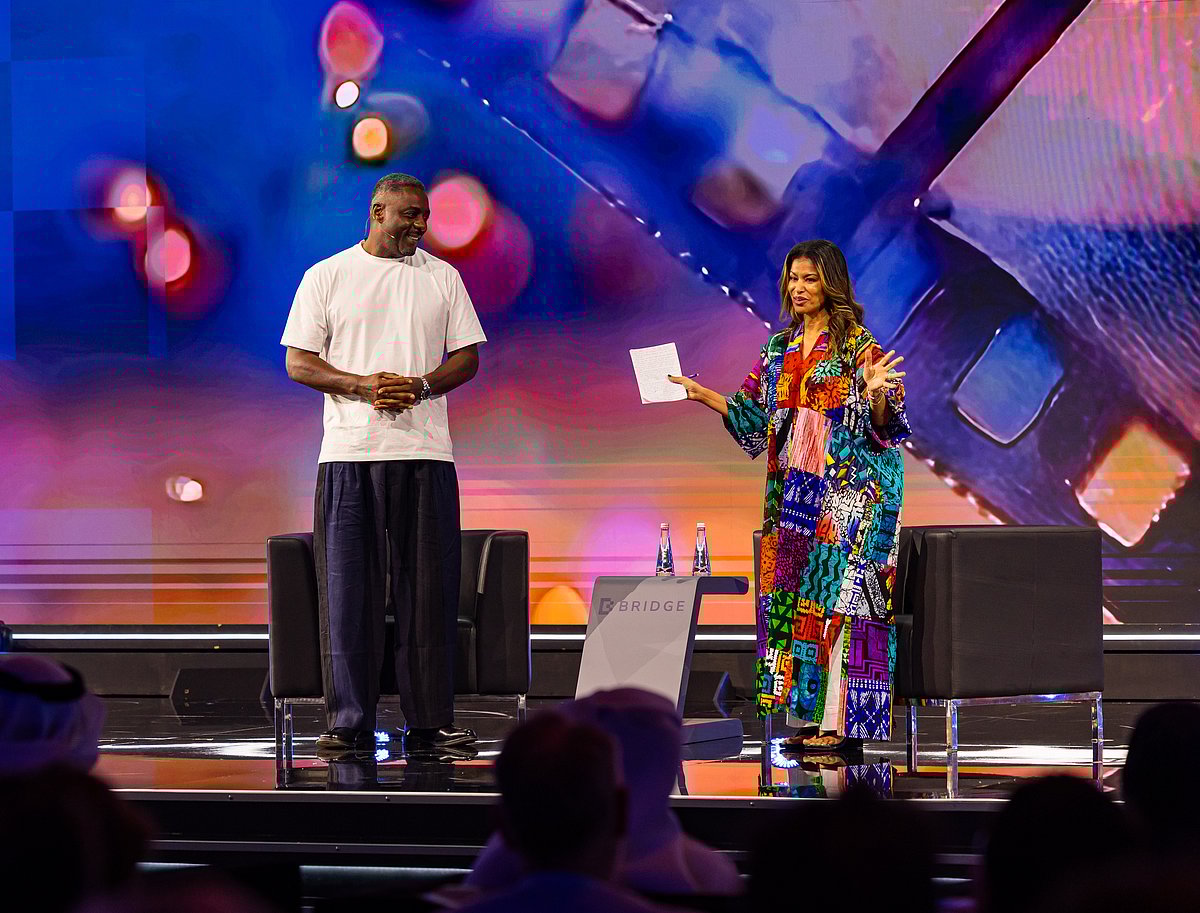
Elba created Akunna, a platform named after his own middle name.
Gulf News/ Salamat Husain
Dubai: Idris Elba has played just about everyone — presidents, detectives, drug dealers, even superheroes. But no matter the role, he still sees himself the same way: as a bridge between worlds.
In a panel on 'Democratising the Role of the Creator in a Global Content World', at the BRIDGE Summit 2025, with Dr. Julie Gichuru as the moderator, President and CEO, Africa leadership and Dialogue Institute, Elba spoke about all about media and content creators and everything in between.
Born in London to parents from Ghana and Sierra Leone, Elba has watched how stories shape the way people see each other. Now, as the entertainment world changes faster than ever, he's focused on one big mission: Changing how the world sees Africa and its creativity.
Sitting in a room with policymakers, creators, and executives, Elba talks about this identity with the kind of calm that only comes from living many lives at once. "I've always seen myself as a bridge," he says. "A bridge between my heritage, the stories I tell, and the people who consume them. Storytelling is entertainment, yes. But it's also education, perspective, and connection."
Giving creators a real shot
The best thing about the digital age: Anyone can share their story. A child in a village can upload something today and reach millions tomorrow. That's revolutionary. But there's a problem. Many African creators who go viral can't actually get paid. Banking restrictions and digital barriers lock them out of their own success.
The promise of access remains uneven. Infrastructure, financing, distribution, ownership. The building blocks of a healthy creative economy lag behind in many regions, particularly in Africa.
That's why Elba created Akunna, a platform named after his own middle name. "I was born on a Wednesday. Wednesday has always been lucky for me," he laughs. The platform is built to solve real, practical problems. The biggest one? Getting paid.
Its main feature is the Akunna Wallet, designed to help creators actually receive their earnings when traditional banking systems fail them.
"It doesn't make your story better," Elba says. "But if your story is good, you actually see value from it. That's how we democratize creation."
Africa's secret weapon: Leapfrogging
Elba believes Africa has something other content markets don't: the ability to skip old systems and build something entirely new. Stop comparing Africa to established content nations, he says. Instead, recognize its unique advantage. The ability to leapfrog.
He points to Afrobeats as proof. A genre that started in small studios, often with outdated equipment, that now dominates global charts.
"Instinct plus access created something unstoppable," he says.
He sees that same energy everywhere across the continent. Young people launching startups from laptops. Animators creating worlds no one has imagined. Filmmakers rewriting tired Western narratives about Africa.
"There are so many stories that haven't been touched," he says. "Imagine what African gaming could be. Imagine what African fantasy could look like."
For Elba, not having decades of old infrastructure isn't a weakness. It's space. A blank canvas for new systems, new frameworks, and new ways of building creative economies.
Communication: The framework that holds everything together
In a world drowning in information, Elba says the real challenge isn't getting attention. It's earning trust.
"We're at a moment of acceleration and fracture," he says. "People don't know what to believe. Communication is everything."
From misinformation to deepfakes, the challenge isn't just about who gets to speak anymore. It's about how audiences can tell truth from noise.
That's where good policy comes in. Elba is direct about its importance. "Many people don't understand what good policy can do. If you want a healthy creative ecosystem, you need infrastructure, distribution, protection. All of it. Look at Korea. Their global success wasn't an accident. It was planned."
His criticism is sharp when it comes to Africa. Some countries don't even have a film policy.
"How can a young person tell their story if the system around them doesn't value it?" he asks.
AI isn't the enemy
When people worry that AI will steal creative jobs, Elba stays calm. "We have actual intelligence," he says. "That is more powerful than artificial intelligence."
Yes, AI can spread misinformation and distort narratives. Especially about Africa, which has suffered decades of misrepresentation. But Elba rejects fear-based thinking.
"It's a tool. The printing press was a tool. A camera was a tool. We need to educate people about what AI is and what it isn't. We shouldn't be afraid of it."
Will jobs change? Absolutely. But Elba believes the core of creativity, instinct, human experience, emotion, cannot be automated.
"What we need are frameworks. Frameworks that guide how AI is used, how creators are protected, and how stories remain authentic."
Rewriting the narrative
At the heart of Elba’s mission is a simple but powerful belief: the world’s understanding of Africa has long been shaped by misinformation — and it’s time to rewrite that narrative.
"Africa is at the centre of the world," he says. "It has contributed so much, yet its stories have been disconnected from global narratives. If we get communication right, if we make the right choices now, we can rebuild how Africa is seen."
He imagines a future where African stories thrive on every screen. Where creators get paid fairly. Where policies actually support growth. Where Africa's creative industries stand alongside the world's biggest.
"We need acceptance," he adds. "We accept American stories because they come polished. But when someone from an African village tells their story, do we value it the same? That's the shift we need."
A bridge into the future
Elba's final message is a call to action. Not just for creators, but for governments, institutions, and audiences everywhere.
"Advocacy is good. Conversation is good. But it must turn into action," he says. "I'm hopeful. If we build the right bridges, we'll see more understanding, more connection, and a world where Africa stands strong in the global creative narrative."
Idris Elba has spent his life being a bridge. Now he wants everyone else to start building too.
Areeba Hashmi is a trainee at Gulf News.
BRIDGE Summit 2025: What you need to know
Organised by the UAE National Media Office, the BRIDGE Summit 2025 is a global media, content and entertainment event taking place at the Abu Dhabi National Exhibition Centre (ADNEC) from December 8 to 10, 2025. The summit will bring together more than 60,000 participants — including creators, producers, journalists, artists, investors and policymakers — along with over 400 international speakers and around 300 exhibitors. Across three days, attendees will join more than 300 sessions, including over 200+ panel discussions, 50+ workshops and interactive events covering seven content tracks: media, creator economy, music, gaming, technology, marketing and visual storytelling. The summit aims to shape the global media landscape by fostering collaboration, supporting creative talent and enabling new business deals, investments and partnerships across the entertainment and content industries.
Sign up for the Daily Briefing
Get the latest news and updates straight to your inbox
Network Links
GN StoreAbout Gulf NewsTerms & ConditionsReach by GNSitemapContact usPrivacy PolicyGN FocusHave your sayWork with usAdvertise with usGulf News epaperPrinting Services
Download our app
© Al Nisr Publishing LLC 2026. All rights reserved.