Why STEM talent is lost years before graduation
Addressing STEM talent shortages requires stronger support from early education
Dr Mae Al Mansoori,
Director, R&D Talent Enablement, Advanced Technology Research Council (ATRC)
The countries that lead in artificial intelligence, biotechnology, advanced manufacturing and climate technology will not be the ones that graduate the most engineers and computer scientists. They will be the ones that keep young people engaged in science and mathematics from an early age, support them through critical transition points, and give them pathways into research and industry.
In the UAE, the need is already visible in the labour market: 76 per cent of employers report difficulty finding the talent they need, with AI capabilities among the hardest skills to source.
As we approach the end of the academic year, the real STEM (science, technology, engineering and mathematics) challenge becomes pronounced once again.
Too often, the debate begins too late. When employers say they cannot find enough researchers, engineers or technical specialists, the reflex is to call for more university graduates. That matters, but it misses the bigger issue. By the time talent shortages show up in the labour market, much of the attrition has already happened years earlier.
Some students lose confidence in mathematics and science before they reach higher education. Others enter STEM degrees but switch fields before graduating. Many who finish a technical discipline never enter a STEM career at all. The problem is not how many students start the journey, but how many remain on it.
The UAE is investing ambitiously in advanced industry, AI, R&D, and an intelligence-based economy. Those ambitions will depend not on infrastructure and funding alone, but on whether the country can build and sustain a domestic pipeline of scientific and technical talent. That requires us to think about STEM as a continuum, not a single intervention.
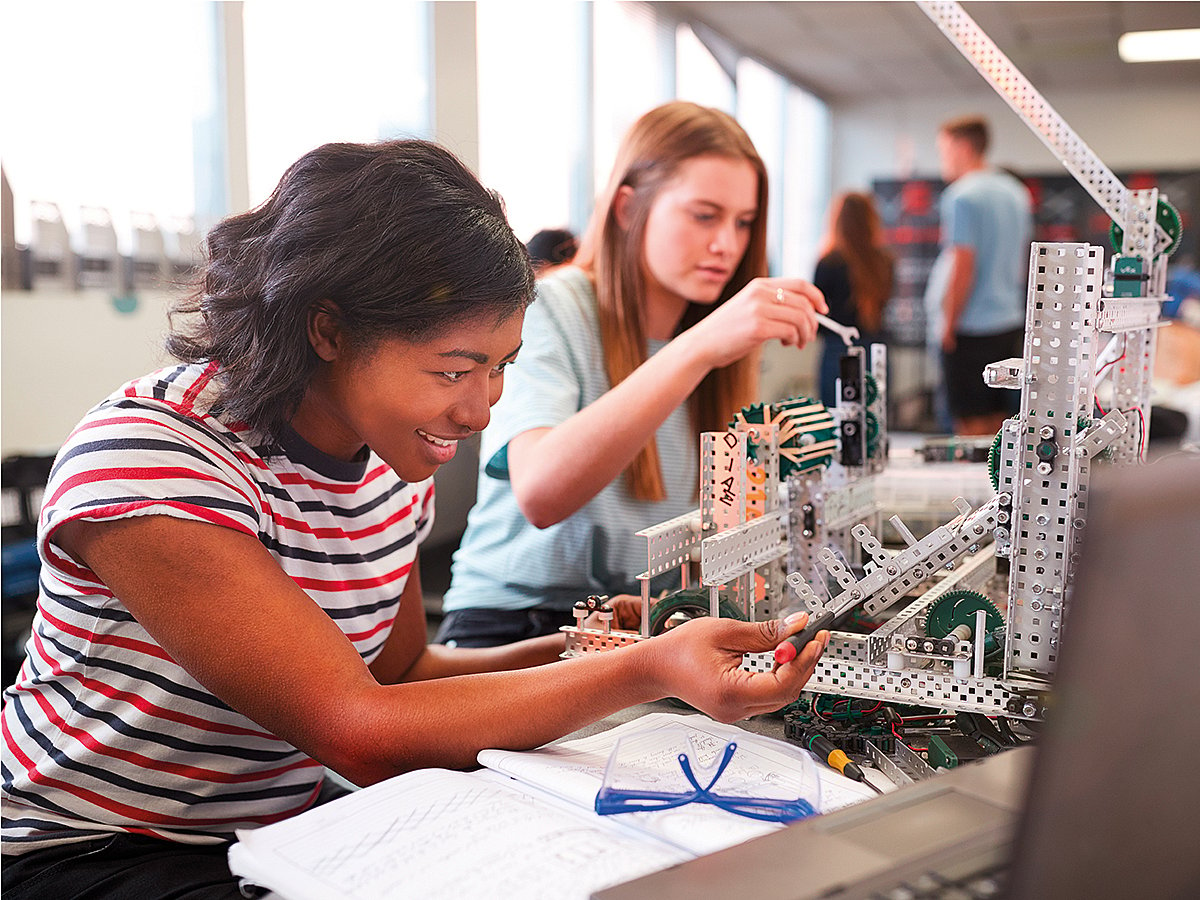
The first break in the pipeline often comes early. Classroom instruction rarely sustains interest in science. Young people are more likely to pursue technical fields when STEM feels tangible. Abu Dhabi’s Advanced Technology Research Council’s (ATRC) own programmes reflect this. Some start in early childhood, including KidZania, an innovation lab offering STEM activities for children as young as 2, and Advanced Technology Hubs from age 7. ATRC has already exposed more than 30,000 students to advanced technology through various initiatives. Science fairs, coding clubs, robotics competitions, and hands-on research experiences do more than enrich learning; they help students see themselves in STEM. But early engagement alone is not enough. Another major drop-off occurs during university, when students encounter academic pressure, limited mentoring, or uncertainty about their future careers. And graduation is not the finish line. A STEM degree does not automatically make someone part of the innovation economy. Too many graduates still leave without a strong understanding of how their skills connect to industry, research institutes or emerging technology sectors.
If the UAE wants to strengthen its STEM pipeline, it must pay closer attention to all three stages: early engagement, university retention, and the transition into employment.
The country has already begun investing in this broader ecosystem, which is encouraging. But STEM talent cannot be built on university enrolment targets alone. If we want a stronger innovation economy tomorrow, we must stop thinking about STEM shortages as a problem that begins at graduation. It begins much earlier, from childhood curiosity, and that is exactly where the solution must start.
Network Links
GN StoreDownload our app
© Al Nisr Publishing LLC 2026. All rights reserved.