UAE hospitals lead with tech-driven, precision-focused healthcare
AI, robotics and digital platforms are changing how care is delivered and experienced
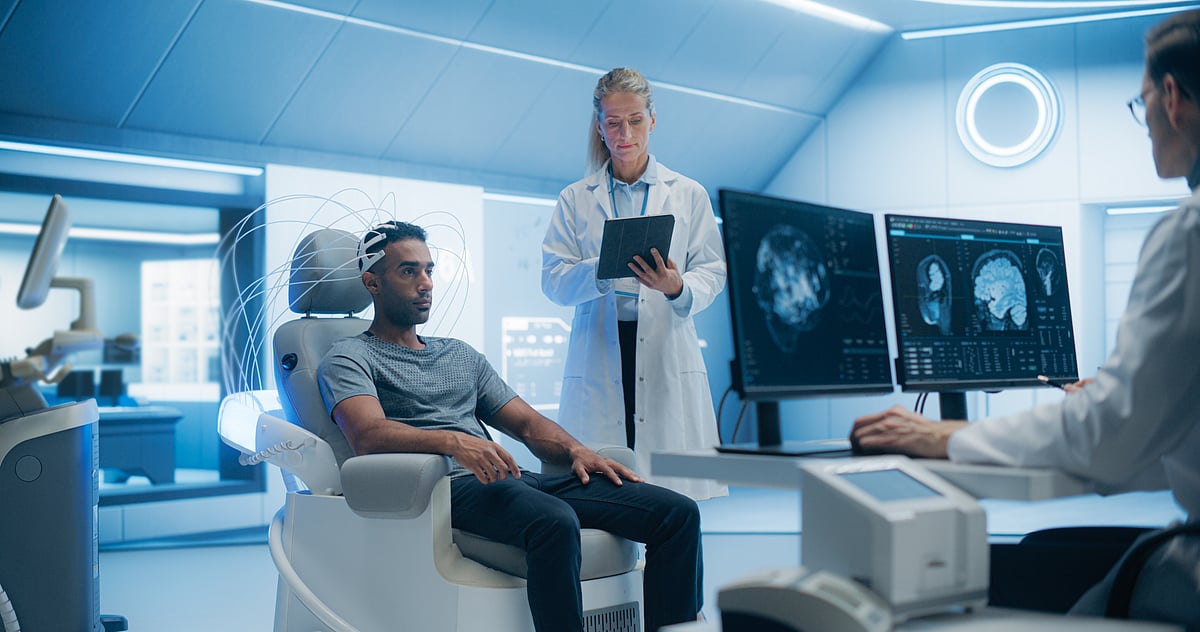
Healthcare is moving towards precise, targeted care driven by data, technology and earlier intervention. Instead of a largely reactive, standardised approach, emerging models focus on early risk detection, personalised treatment plans and care delivered where patients need it most.
Preventative tools help people track risks before illness develops, while advances in genomics and analytics improve treatment accuracy. AI supports clinical decision-making and eases routine tasks. At the same time, care is moving closer to people through telehealth, community awareness and remote procedures that make access faster and more convenient.
In the UAE, hospitals have already put many of these changes into practice. From AI-assisted diagnostics to digitally enabled patient pathways, they are delivering some of the most advanced, innovation-led care models.
Driving access and experience
Technology has become a core driver of change across healthcare delivery. AI, robotics and connected digital platforms improve speed, accuracy and efficiency across the care journey, from diagnosis and treatment to follow-up and recovery. The focus extends beyond outcomes to how patients experience care.
For Aster Hospitals and Clinics, technology plays a central role across clinical services and patient engagement.
“AI-enabled diagnostic tools like SmylAI, our preliminary dental assessment solution at Aster Clinics; digital patient engagement platforms such as the MyAster App for end-to-end healthcare access; and specialised centres like the PMR - Advanced Neuro-Robotic Rehabilitation Centre at Aster Royal Al Raffah Hospital, Muscat, demonstrate our commitment to accessible, technology-enhanced care,” says Dr Sherbaz Bichu, CEO, Aster Hospitals and Clinics, UAE, Oman, and Bahrain.
“In addition, robotic assisted orthopaedic surgeries at Aster Hospital, Mankhool, UAE, are just a few examples of how we are leveraging technology to enhance our services,” he adds.
From reactive to proactive
Artificial intelligence increasingly shapes how care is delivered, helping healthcare providers move from reactive treatment to earlier, more proactive intervention.
For Thumbay Group, AI and digital systems reshape clinical workflows and patient engagement.
“Our goal has always been to ensure that every innovation we adopt directly enhances accuracy, efficiency, and the overall patient journey. In 2025, our continued investment in cutting-edge systems is allowing us to deliver care that is not only advanced but also deeply human-centric,” says Akbar Moideen Thumbay, Vice-President, Thumbay Healthcare Division.
Doctors integrating technology into medical care see the clinical impact first-hand. Dr Zaki Almallah, Staff Physician, Urology, Integrated Surgical Institute, Cleveland Clinic Abu Dhabi, explains how digital tools and advanced systems are embedded across the patient journey.
“At Cleveland Clinic Abu Dhabi, technology is an enabler of world-class care. Every patient interaction, from diagnosis to recovery, innovation is integrated and intentional, combining artificial intelligence, robotics, and digital tools to enhance both clinical precision and patient experience,” says Dr Almallah.
The impact of AI is already visible in time-sensitive and complex conditions, where speed and accuracy are critical.
“AI-driven technologies help us make faster, more accurate decisions, from stroke imaging that cuts diagnosis time from hours to minutes, or advanced cancer detection that reduces the risk of late-stage diagnoses,” says Dr Almallah.
Thumbay adds that predictive tools allow clinicians to intervene earlier. “AI-driven diagnostics have become a cornerstone of clinical operations. By integrating machine learning tools into radiology, pathology, and predictive analytics, we are able to identify early signals of disease with remarkable precision. This enables our clinicians to make faster, more informed decisions, significantly improving survival rates in complex cases and reducing the margin of error in routine diagnostics.”
Robotics and digital platforms extending care
Surgical care continues to evolve as robotic systems gain wider adoption across specialties, improving precision and recovery times.
“Our robotic capabilities are increasingly utilised across surgical specialities for greater precision, less trauma, and shorter recovery times, transforming procedures that once required extensive hospital stays into safer, faster interventions,” says Dr Almallah.
Meanwhile, advanced digital platforms support patients before, during and after clinical visits.
“Today’s patients expect transparency, convenience, and continuity, and our platforms are designed to provide exactly that. Through secure mobile applications and online portals, patients can access their medical histories, laboratory reports, prescriptions, and follow-up instructions with ease,” says Thumbay.
This seamless digital ecosystem enhances trust, strengthens compliance, and empowers patients to take an active role in their health. “Patients can communicate with their care teams, schedule appointments, attend teleconsultations, and receive health education in their preferred language,” he explains.
A similar approach guides care continuity at Cleveland Clinic Abu Dhabi. “From teleconsultations and remote monitoring to personalised education tools, we’re empowering patients to take a more active role in their care journey, supported by data, connectivity, and compassionate guidance,” says Dr Almallah. ■
Network Links
GN StoreDownload our app
© Al Nisr Publishing LLC 2026. All rights reserved.