National Bank of Pakistan: Powering Pakistan’s financial future
Growing diaspora boosts remittances, supporting Pakistan’s economy
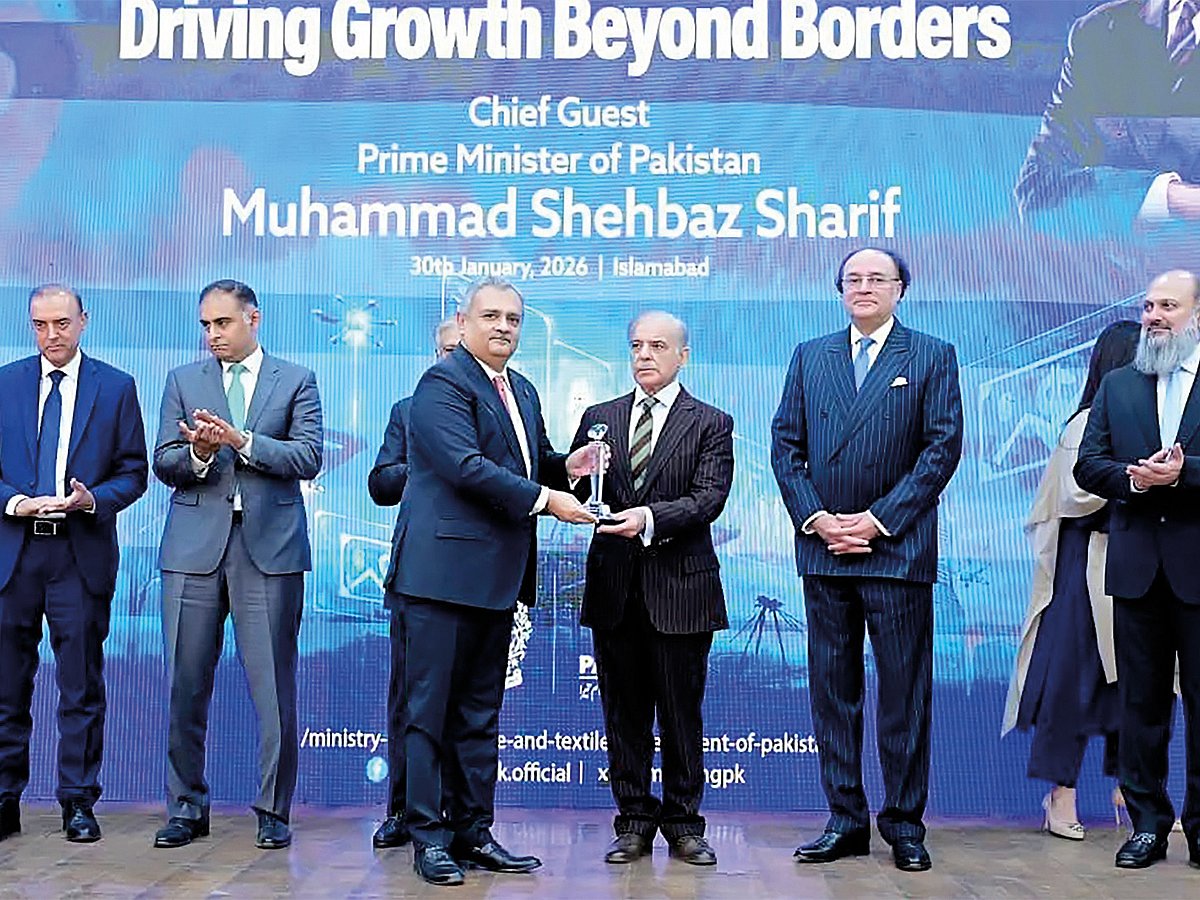
The National Bank of Pakistan is emerging from its legacy state role to drive investment, digital transformation and financial stability against the backdrop of Pakistan’s broader economic evolution.
As Pakistan looks to deepen financial inclusion and attract fresh foreign capital, the National Bank of Pakistan (NBP) is reshaping its role both at home and on the international stage. With the country’s diaspora growing, especially in the GCC region, remittances are playing an increasingly important part in supporting the national economy.
Here, President and CEO Rehmat Ali Hasnie shares his vision for transforming NBP into a people’s bank while creating new opportunities for international investors, including those from the UAE.
How would you like NBP to be perceived?
As a listed company, we are perceived as the government’s bank, which we proudly remain, since the government is our majority shareholder. We perform essential roles such as representing the State Bank of Pakistan (SBP) – the central bank – in smaller cities and handling government payments and receipts nationwide.
While we value that role, our aim is to engineer a fundamental shift from government bank to the “Bank of the People.” Over the past two years, our strategy has centred on this repositioning.
What strategic improvements are you prioritising?
Primarily, the upgrading of our IT systems; NBP strives to ensure digital access to the majority of Pakistan and our customers worldwide. We have invested heavily in technology, with state-of-the-art systems and a modern digital app for individuals and businesses alike, while also improving physical infrastructure. A quarter of our 1,500 local branches have already been modernised to provide a supportive and welcoming experience. Alongside this, customer focus remains key, as does continually improving service quality. Our efforts in this regard have been confirmed through external surveys.
Has your customer base changed as a result?
Inclusivity is our priority, and we are focused on positioning NBP as a bank open to all Pakistanis, irrespective of net worth. Our products target the average citizen, offering financial tools to support daily needs and business creation. This approach is reflected in our financial results, making our top-line growth a natural consequence, rather than the purpose of our efforts in this regard.
Does this shift provide greater market penetration?
We emphasise access to finance in underserved areas, where private banks are often not available. Around 200,000 households, mostly small, subsistence farmers, rely on us for agriculture loans to buy seeds, fertiliser and pesticides. Four years ago, we also made a conscious decision to support the lower-income segment by becoming a wholesale lender to microfinance institutions (MFIs), rather than entering micro-lending directly. Today, we are one of the largest wholesale lenders to MFIs in Pakistan.
Collaboration is integral to these initiatives. MFIs understand the business better than we do, so we monitor their performance, and this has resulted in robust results, including profitable partnerships.
How else do you support your stakeholder communities?
During the floods in Sindh in 2022, many areas became inaccessible. We used our MFI partners to reach affected communities and supported their customers through CSR donations. We also provided partners with electricity-free water filters for clean drinking water, avoiding plastic waste.
SME and agriculture financing are our strong pillars, and we hope to be able to continually support them.
What additional CSR initiatives are among your priorities?
Education, especially for people with disabilities, and women’s empowerment are ongoing initiatives. We supported the Deaf Reach programme to establish Pakistan’s first higher education institution for the deaf. We also prioritised STEM education for women. At Ghulam Ishaq Khan Institute, women’s enrolment was limited by a lack of residential facilities. We funded the construction of a women’s hostel, which now accommodates 200 to 300 students.
How is the bank perceived by UAE investors, partners and clients?
The bank has been one of the largest financiers of major projects in Pakistan for the last two decades. From refineries and industry to public-private partnerships such as roads, bridges, motorways and canals, we cover all areas of investment. Investors can access our full range of financial products – from standard loans to equity participation – from a stable partner with local knowledge.
Today, international investors show growing interest not only in hydrocarbons but also in mining – a sector where we have provided significant support. We were key financiers of the Thar coal project, related terminals and fertiliser projects – all critical to the country’s infrastructure.
While we continue to provide financing facilities and advisory services for capital raising, I consider us a one-stop shop for any investor entering Pakistan. That message is evident in the perceptions of UAE investors and partners too.
NBP Quick Facts:
NBP’s asset base of $25.2 billion (2025) represents approximately 14% of the country’s banking industry assets.
Remittances play a key role in Pakistan's economy, returning $36-$38 billion per annum – 55% from the GCC corridor.
NBP holds the highest credit rating of AAA/A1+ with a stable outlook, as awarded by both VIS and PACRA.
Extensive nationwide coverage with 1,500+ domestic branches, 1,400+ ATMs and 750+ rural branch network.
What opportunities would you highlight to UAE investors?
Pakistan’s geo-strategic location is no secret. Global developments give Pakistan a distinct advantage in this regard, with vast natural resources and a population of 250 million that represents both a large consumer base and a major labour force. The key is converting these resources into productive exports. Mining, construction and related industries require both labour and technology, and Pakistan has the human and natural resources to support them. Estimates suggest Pakistan holds USD 5 to USD 10 trillion worth of underground resources. With the right investment, these can drive significant growth.
Given modern trends, Pakistan presents a strong opportunity for the UAE, with its geographic proximity and cultural ties. The UAE has deep experience executing large projects, while Pakistan has the resources and workforce. Together, the potential is phenomenal.
The bank has been one of the largest financiers of major projects in Pakistan for the last two decades.Rehmat Ali Hasnie, President and CEO of NBP
What factors drive NBP’s strong domestic and global market position?
NBP recently celebrated its diamond jubilee. Leveraging this deep experience, we approach everything with prudence and ensure sustainability over profit maximisation. The lessons of 76 years have translated into a conservative and careful approach that enables consistent growth in our core activities, with increased public confidence. We also align strongly with global trends and values, such as digitalisation and DEI.
What are your strategies for maintaining transparency?
NBP has an edge in this sphere; while we prioritise digital accessibility for all customers, our strength is our monthly, two-hour ‘e-Kacheri’ that is open to the public and is broadcast live on Facebook. People call with complaints or suggestions, and I, along with senior management, respond directly. This process is monitored by the Prime Minister’s Office, which tracks every call, resolution and timeline. We also use complaint portals with the Prime Minister’s Office, the SBP and others, all with fixed timelines for resolution. These mechanisms have improved the bank’s image by providing direct recourse, and reinforced internal accountability.
Can you explain your approach to gold loan portfolios?
The gold loan portfolio refers to loans against gold. For many lower-income households, gold is their primary asset. Years ago, we were the first bank to recognise that access to finance for this segment required accepting those assets as collateral. Initially, gold loans were offered as a consumer product. As the product evolved, we introduced a variant for landless farmers, accepting gold ornaments as collateral to support their livelihoods.
What collaborations are you prioritising in the UAE?
NBP has been a key player in building connections with partners in the UAE, Saudi Arabia and the wider Middle East, where most of Pakistan’s diaspora resides. To encourage the use of formal banking channels, the government launched the ‘Pakistan Remittance Initiative’. We partner with money transfer organisations to channel remittances through us. We continue to expand partnerships across the GCC, especially in Saudi Arabia and the UAE, which host the largest concentration of Pakistanis.
How important are these remittances to Pakistan’s economy?
Pakistan has a large overseas workforce. Their remittances are a vital part of the country’s reserves and spending, contributing significantly to national inflows. Last year, inward remittances reached USD 38 billion, a crucial source of foreign exchange that enabled critical imports and supported economic stability, improving reserves and ratings, and reducing inflation. This work continues, with the UAE remaining a central focus.
How do you foster a culture of innovation at NBP?
As banking transforms with new technologies, one clear trend is the generational shift. Traditional banking is led by senior professionals, while the digital side is driven by a younger, more tech-focused cohort. That gap fuels innovation; while the senior team provides wisdom, safety and logic, the younger teams better understand the digital user experience. We have set up a digital lab where focus groups test proposed solutions and provide feedback. This interaction is essential, as technology evolves so rapidly that staying aligned with customer needs requires constant engagement with the target market.
How is the bank preparing for the future?
Primarily, it begins with the leadership; as CEO, I encourage open communication and create an environment where better ideas can emerge and take root. This approach is central to our success and validated by the sharp increase in the bank’s market value from USD 200 million to USD 1.1 billion. That growth, during my tenure, reflects shareholder and market confidence in the bank’s transformation.
Sign up for the Daily Briefing
Get the latest news and updates straight to your inbox
Network Links
GN StoreDownload our app
© Al Nisr Publishing LLC 2026. All rights reserved.