Prof. Manda Venkatramana, Chancellor, Gulf Medical University and Professor & Consultant Surgeon, Thumbay Hospital
How UAE medical schools prepare future doctors for connected care
Medical studies integrate technology, simulation-based learning, and clinical exposure
Last updated:
3 MIN READ
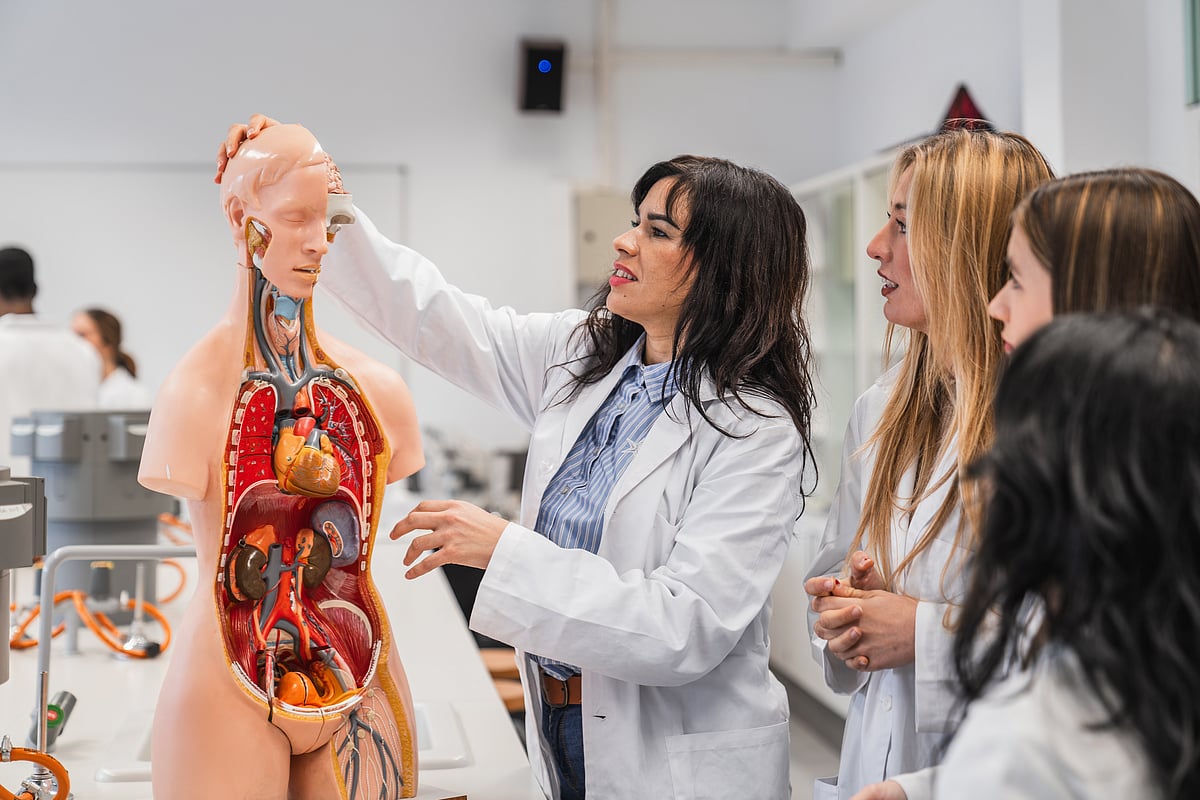
Like every field, medical education is transforming alongside technological, social, and clinical change. As artificial intelligence, digital diagnostics, and data-driven care reshape healthcare delivery, institutions are rethinking how they balance strong foundational academic knowledge with future-focused, practical skills.
Core medical sciences remain essential, but equal emphasis is now placed on adaptability and clinical reasoning, enabling graduates to make sound decisions in uncertain clinical environments.
Increasingly, curricula integrate simulation-based learning, interprofessional training, and exposure to emerging technologies that did not exist a decade ago, ensuring students engage early with the realities of modern healthcare systems.
Medical schools in the UAE are also redesigning learning pathways towards more integrated, technology-enabled training approaches that better reflect real clinical practice.
Prof. Manda Venkatramana, Chancellor, Gulf Medical University and Professor & Consultant Surgeon, Thumbay Hospital, explains how the university combines strong academic knowledge with technologies in medical training.
“At Gulf Medical University, we view foundational academic knowledge and rapid technological advancement as a symbiotic partnership rather than a balancing act. We achieve this by embedding future-focused tech skills directly into our core curriculum.”
This means students develop clinical expertise alongside proficiency in the technologies driving contemporary healthcare.
“While our students master essential medical sciences, they simultaneously train in our advanced simulation labs using virtual reality and AI-driven diagnostic tools,” says Prof. Venkatramana, adding, “This approach ensures that traditional academic rigor is continuously contextualised within the evolving digital landscape of modern healthcare, cultivating adaptable practitioners equipped to embrace innovations that may not even exist yet.”
Learning through collaboration
As healthcare becomes increasingly multidisciplinary, medical institutions are prioritising collaborative learning across medicine, dentistry, pharmacy, nursing, and allied health sciences. The goal is to prepare students for integrated models of care where teamwork and communication are as important as clinical expertise.
Another prestigious medical school in the UAE, RAK Medical and Health Sciences University (RAKMHSU), has embedded this philosophy into its academic framework.
“Students from medicine, dentistry, pharmacy and nursing learn through shared academic experiences, simulation activities, community engagement and research projects. These settings help them understand one another’s roles, communicate clearly, respect different professional perspectives and solve problems collectively,” explains Prof. Mohamed El-Tanani, Vice President Research and Postgraduate Studies at RAK Medical and Health Sciences University.
Prof. Mohamed El-Tanani, Vice President Research and Postgraduate Studies at RAK Medical and Health Sciences University
He adds, “By making interprofessional learning part of the student journey, we prepare graduates who can enter clinical environments ready to collaborate safely, confidently and effectively.”
The university also focuses on developing the personal and professional attributes required in modern healthcare settings, including communication, empathy, professionalism, ethical judgement, adaptability, critical thinking and lifelong learning.
“These attributes are embedded through patient-centred teaching, simulation, community service, research exposure, presentations, teamwork and assessment of professional behaviour. Students are encouraged to ask questions, seek evidence and reflect on their responsibilities to patients and society,” says Prof. El-Tanani.
“For us, a future healthcare professional is not only clinically capable, but compassionate, collaborative, curious and able to keep growing in a rapidly changing health system.”
Internships and early clinical exposure
Medical internships and work-integrated learning play a crucial role in bridging the gap between education and employment. Through placements in healthcare facilities, they gain hands-on experience, professional confidence, and a deeper understanding of patient needs in fast-paced healthcare environments. Learning is embedded within day-to-day clinical workflows, allowing students to apply their knowledge in real-world contexts under guided supervision.
Within this framework, the Gulf Medical University Academic Health System (GMUAHS) model strengthens the continuum between classroom and clinic.
Prof. Venkatramana explains how the system connects education, healthcare, and research, creating a learning environment where clinical exposure begins early and develops throughout a student’s academic journey.
“Our unique GMUAHS seamlessly integrates education, healthcare, and research to completely bridge the gap between classroom and clinic. Through our extensive Thumbay hospital network, work-integrated learning begins early,” says Prof. Venkatramana. “Students are immersed in a dynamic clinical ecosystem where internships are deeply participatory, rather than purely observational.”
This approach gives students exposure to real-world healthcare settings, allowing them to build confidence, clinical judgement, and professional readiness alongside experienced practitioners.
“Our graduates confidently transition into the workforce as highly competent healthcare leaders, armed with both the timeless empathy of medicine and the cutting-edge tools of tomorrow,” Prof. Venkatramana says. ■
Sign up for the Daily Briefing
Get the latest news and updates straight to your inbox
Network Links
GN StoreAbout Gulf NewsTerms & ConditionsReach by GNSitemapContact usPrivacy PolicyGN FocusHave your sayWork with usAdvertise with usGulf News epaperPrinting Services
Download our app
© Al Nisr Publishing LLC 2026. All rights reserved.