Iqra Tariq, Lead Architect and AI Specialist, UAE
How AI is changing healthcare and what it feels like to visit a doctor
Today, patients are arriving at appointments already informed, says Iqra Tariq
Last updated:
2 MIN READ
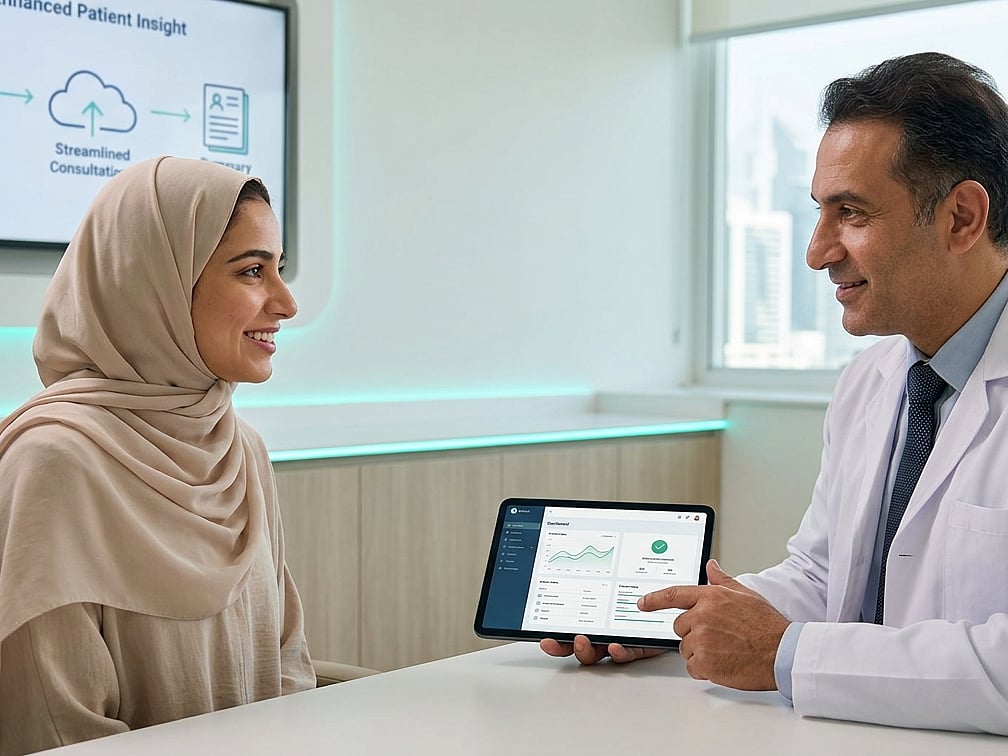
Think about the last time you visited a doctor. You sat in a waiting room, perhaps for longer than you expected. When your name was finally called, you had to explain everything. Why you came. How long the pain has been there. What makes it better or worse. The doctor listened, typed, and the appointment ended before you felt truly heard.
That experience, familiar to millions, is not the fault of doctors. It is the result of a system already working — many patients and manual work standing between a clinician and the person in front of them. But in the UAE, that experience is beginning to change, and artificial intelligence is the reason why.
The doctor already knew why I was there. I did not have to start from the beginning.IQRA TARIQ, Lead Architect and AI Specialist, UAE
The AI architectures powering these platforms represent a fundamental shift in digital healthcare design — from reactive systems to anticipatory care. This is not about replacing clinical expertise, but about elevating it. By removing administrative burden and pre-structuring patient narratives, AI ensures that every consultation begins at a point of clarity. Doctors are no longer decoding fragmented histories; they are applying their expertise where it matters most — diagnosis, judgement, and patient care. In doing so, technology becomes invisible, but its impact becomes central.
The UAE’s progress in this space signals more than technological advancement — it signals intent to redefine the patient experience itself. However, the real benchmark of success will not be platform adoption, funding, or scale. It will be simpler and more human: whether a patient leaves the consultation feeling understood without having to fight to be heard. If AI continues to consistently deliver that outcome across languages, conditions, and healthcare systems, then its role in medicine will be clear — not as an assistant to healthcare, but as an enabler of dignity within it.
What is emerging through platforms like Amal and Medii is a new benchmark for digital healthcare — where intelligent systems quietly reshape clinical workflows, bridge communication gaps, and set new standards for patient-centred care across the region, reflecting the kind of architectural thinking that turns complex healthcare challenges into scalable, human-first innovation.
- The writer is a Lead Architect & AI Specialist working in UAE. She architected AI digital health platforms adopted in an NHS in the United Kingdom and UAE. She has 20+ publications with 100+ citations. She holds an MSc in Computer Systems Engineering.
Sign up for the Daily Briefing
Get the latest news and updates straight to your inbox
Network Links
GN StoreAbout Gulf NewsTerms & ConditionsReach by GNSitemapContact usPrivacy PolicyGN FocusHave your sayWork with usAdvertise with usGulf News epaperPrinting Services
Download our app
© Al Nisr Publishing LLC 2026. All rights reserved.