Zulekha Hospital Medical Team involved in the implant procedure
Groundbreaking cochlear implant surgery restores hearing for 4 year old child following post-infectious hearing loss
Post-operative care is essential for the success of cochlear implantation
Last updated:
3 MIN READ
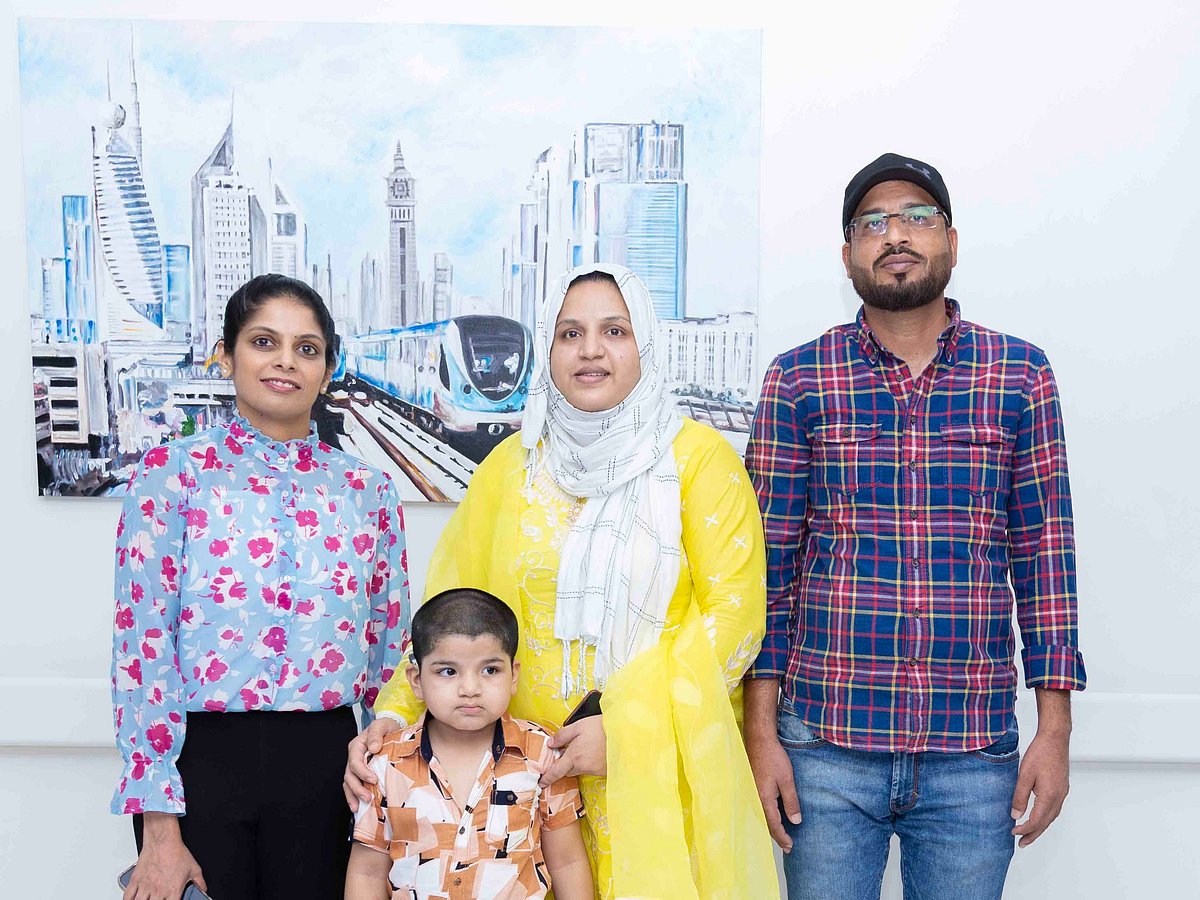
Dr. Mounika Reddy Yalaka with Zahra and her parents
A four year old child Zahra Adeel, who experienced profound hearing loss after recovering from a severe infection has regained the ability to hear thanks to the timely intervention of cochlear implantation. This remarkable story of hope and recovery highlights the importance of early detection and intervention in cases of post-infectious hearing loss.
Zahra’s parents shared that she was born with normal hearing and responded to loud noises. However, at the age of one year and two months, she developed a critical infection, leading to her admission to an intensive care unit. During the course of her illness and recovery, her hearing loss went unnoticed. It wasn’t until she turned four that her parents observed she was not speaking, prompting them to seek medical advice.
After a thorough examination and a BERA (Brainstem Evoked Response Audiometry) test in August last year, she was diagnosed with profound sensorineural hearing loss in both ears, affecting over 90% of her hearing ability. This condition, a result of post-infectious hearing loss, significantly impacted her speech development.
At the same time the parents consulted with Dr. Mounika Reddy Yalaka - Specialist Otolaryngology at Zulekha Hospital Dubai, who evaluated their child's hearing condition. Along with a BERA report, additional tests, including CT scans and MRIs, were conducted to assess the status of the cochlea and auditory nerve. Fortunately, the imaging studies revealed normal results, confirming that Zahra was a suitable candidate for cochlear implantation.
The diagnosis of bilateral profound sensorineural hearing loss was made, and, after ruling out complications such as labyrinthitis ossificans, the family was informed that cochlear implantation would offer the most viable treatment option for hearing rehabilitation.
Challenges Faced by the Family
Prior to the cochlear implant surgery, communication between Zahra and her parents was limited to sign language, creating significant challenges in daily life. Zahra had not attended a special school or undergone any previous treatments for hearing loss, missing critical developmental milestones related to speech and language.
The Decision for Cochlear Implantation
After being thoroughly counseled on the nature of Zahra's hearing loss and the benefits of cochlear implants, the parents chose to proceed with the cochlear implantation surgery. They had initially been unaware of this potential solution but, after understanding the lifelong impact and benefits, including the possibility of speech and language development, they felt confident in their decision.
Dr Mounika shares, “Prior to the surgery, extensive audiological assessments, including BERA, OAE (Otoacoustic Emissions), and tympanometry, were carried out. Radiological investigations, including CT scans and MRIs, were performed to evaluate the cochlear structure and auditory nerve integrity. Zahra was given medical clearance for surgery, and counseling sessions ensured that the parents were well-prepared for the procedure and post-operative care.”
The Cochlear Implant Surgery and “Switch-On”
“Zahra underwent successful cochlear implantation, during which the internal components of the device, including the receiver-stimulator and electrode array was implanted. The recovery period was uneventful, and after two weeks, she underwent the "switch-on" procedure. During this session, the external speech processor was activated, allowing her to hear sound for the first time since the onset of hearing loss.”
The moment of activation was incredibly emotional, with Zahra showing immediate responses to sound, marking the beginning of her auditory rehabilitation journey. Her parents expressed immense relief and gratitude, hopeful for the future.
Post-Operative Care and Ongoing Support
Post-operative care is essential for the success of cochlear implantation. The following measures are recommended for continued progress: Regular mapping sessions to fine-tune the device settings, Intensive auditory-verbal therapy (AVT) to foster listening and speech skills, strict precautions to prevent infections or trauma to the implant site, monitoring for any complications, such as device failure or middle ear infections, and avoidance of areas with strong electromagnetic fields.Dr Mounika added, “With ongoing therapy and device optimization, Zahra is expected to develop age-appropriate speech and language skills. The success of cochlear implantation depends on early detection and intervention, particularly in cases of congenital and post-infectious hearing loss, as demonstrated in this case.”
This transformative procedure not only restores hearing but also opens up opportunities for communication, learning, and connection. Many congratulations extended to the multidisciplinary team at Zulekha Hospital Dubai for their dedication and contribution in Zahra’s care, including Dr. Mounika Reddy Yalaka, Dr. Ahmad Alamadi, Consultant ENT, Anesthetist Dr. Ajay Raj Gupta, OT Manager Marichu, the nursing team including nurse Anitha, Sheja, Robin, Merlin, and Rachel, the audiology team including Sarfarraz and Stephin, Speech Therapists Pinky Biswal, and team Me-del for their support with the implant.
Sign up for the Daily Briefing
Get the latest news and updates straight to your inbox
Network Links
GN StoreAbout Gulf NewsTerms & ConditionsReach by GNSitemapContact usPrivacy PolicyGN FocusHave your sayWork with usAdvertise with usGulf News epaperPrinting Services
Download our app
© Al Nisr Publishing LLC 2026. All rights reserved.