The price of waiting: Why Clint Khan says Dubai’s strongest investment opportunities are becoming more selective
Why investors must look beyond launches, discounts and payment plans
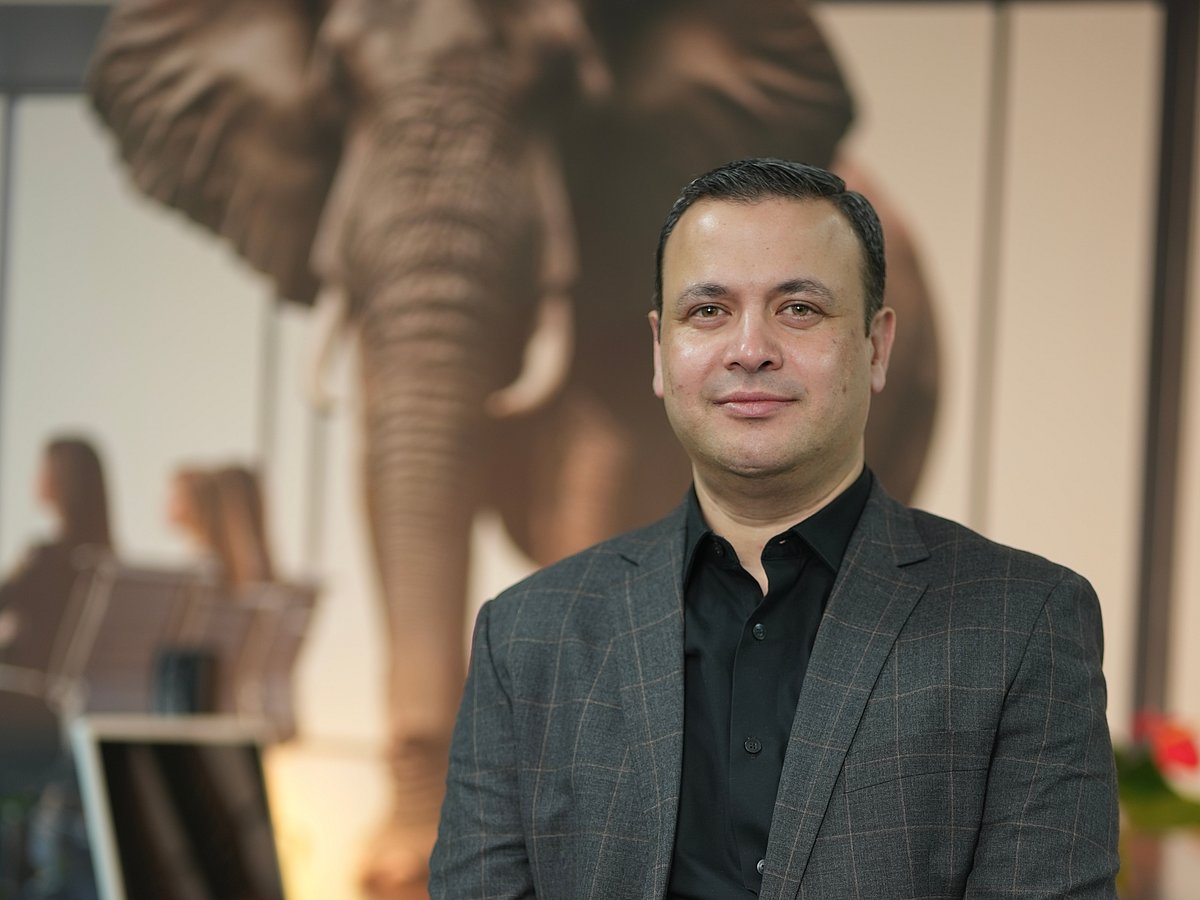
Clint Khan begins every property discussion with one question.
“Would I invest my own money in this?”
“If the answer is no, we do not recommend it to our clients,” says Khan, a senior UAE-based Investment Director.
It is a simple principle, but one that separates investment advice from property sales.
Across his career, Khan says he and his team have advised more than one million individuals and families on investment, residency and international relocation decisions. This global exposure has shown him that serious investors are no longer asking only about price, rental returns or payment plans.
“They want to understand where a city is going, whether demand will remain, how easily they can exit and whether the property will still be relevant in ten or twenty years,” he says.
For Khan, every recommendation must pass seven tests: demand, timing, community, developer reputation, liquidity, long-term legacy and personal conviction.
The numbers are difficult to ignore
Dubai entered 2026 with significant momentum.
During the first quarter alone, real estate transactions reached Dh252 billion, an increase of 31 per cent in value compared with the same period in 2025. Property investments totalled Dh173 billion, while foreign investment reached Dh148.35 billion. Nearly 30,000 new investors entered the market during the quarter.
At the highest end of the market, 296 homes valued above $10 million were sold during the first half of 2026. These transactions were worth a combined $5.1 billion, setting a new half-year record.
“These investors can place their capital almost anywhere in the world,” Khan says. “Their continued investment in Dubai reflects confidence not only in property, but in the city’s regulation, connectivity, security, economic direction and quality of life.”
Dubai’s population reached 4.58 million by the end of 2025, after increasing by 332,000 people in a single year. That represents growth of 7.5 per cent.
For Khan, population growth is one of the clearest indicators of future property demand.
“Every new resident needs a home, but they also need employment, schools, transport, healthcare and community infrastructure,” he says. “The strongest investments are usually found where all these factors are developing together.”
Dubai is investing in future demand
The case for Dubai is not based only on what the city has already achieved.
The Dubai Economic Agenda D33 targets Dh32 trillion in economic activity by 2033 and Dh650 billion in foreign direct investment over the decade. It also aims to double the size of Dubai’s economy and establish it among the world’s three leading global cities.
Major infrastructure projects are supporting that ambition.
The expansion of Al Maktoum International Airport involves an investment of Dh128 billion. When fully developed, the airport is expected to handle up to 260 million passengers annually.
Dubai is also investing more than Dh20.5 billion in the Metro Blue Line. The 30-kilometre route will include 14 stations and serve nine districts expected to accommodate around one million residents.
“These are not proposals in a sales brochure,” Khan says. “They are funded government projects that will influence where businesses operate, where employment is created and where people choose to live.”
Why investors should not buy everything
Khan is equally clear that Dubai’s success does not make every property a good investment.
As more projects enter the market, buyers must assess build quality, community planning, future supply, service charges, unit usability and the developer’s delivery history.
“The next phase of Dubai’s growth will be more selective,” he says. “Properties supported by real demand and strong communities should remain liquid. Ordinary projects in oversupplied locations may find it more difficult to compete.”
This is why he advises investors to begin with the location and the long-term demand story, rather than the appearance of the building or the flexibility of the payment plan.
“A payment plan can make something easier to purchase, but it does not automatically make it a good investment,” he says.
The real cost of waiting
Khan does not believe investors should rush. He believes they should understand the cost of waiting until every uncertainty has disappeared.
Once an airport is operating at scale, a metro station is open, businesses have moved in and a community is fully occupied, the opportunity is clear to everyone. By then, much of that future value may already be reflected in the price.
“The investor who waits for complete certainty usually pays a premium for that certainty,” Khan says.
“The objective is not to speculate early. It is to identify where government investment, infrastructure, population growth, developer capability and genuine end-user demand are beginning to converge.”
For investors considering Dubai in the second half of 2026, his advice is straightforward.
Do not buy because a project is new. Do not buy because a unit is described as limited. Do not buy because someone promises immediate appreciation.
Buy only when the demand, timing, community, developer, liquidity and long-term relevance make sense.
“And always ask the adviser one final question,” Khan says. “Would you invest your own money in this?”
For investors seeking an independent view before making a commitment, Clint Khan is available for private consultations on property investment, long-term residency and capital planning in the UAE
Sign up for the Daily Briefing
Get the latest news and updates straight to your inbox
Network Links
GN StoreDownload our app
© Al Nisr Publishing LLC 2026. All rights reserved.