Sultana Abdullah
FRIDAY
Story Lines: Capturing the untold histories of Abu Dhabi's seniors
A new book preserves the voices of Abu Dhabi’s seniors who shaped the emirate
Last updated:
6 MIN READ
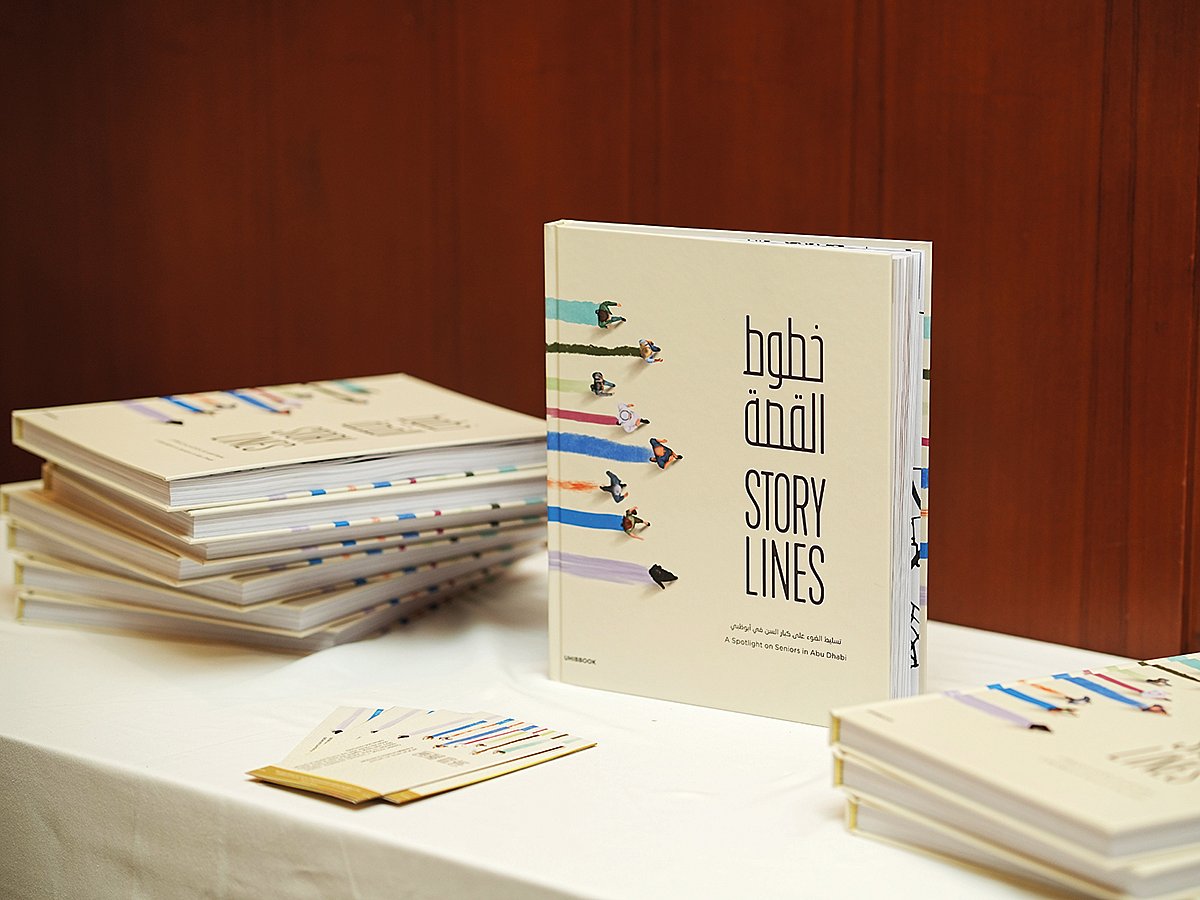
It’s 11am and the café in a Dubai mall hums with the low buzz of conversation, but at our table, the energy is distinctly different - lively, purposeful, and exciting insights punctuating every few sentences. Mehnaz Anshah and Sadia Anwar, co-founders of Uhibbook publishing house that has made storytelling its art and advocacy, are talking animatedly about their latest project, Story Lines - a deeply human and heartwarming book that captures the stories of Abu Dhabi’s senior residents.
Flip through the excellently produced book and you will discover stories that are captivating, insightful and engaging, and which offer a quaint, vivid window into a bygone era. From tales by a 72-year-old pearl diver who has crafted a personal martime museum at his home to an elderly woman who recalls family walks on the beach, and sleeping under the stars; to the gentleman who helped set up Abu Dhabi’s first open-air theatre, where residents watched 16mm Indian and American films beneath the night sky.
As cappuccinos cool untouched between us, Dubai-based Indian expat Mehnaz opens the conversation explaining how they produced the book. “We didn’t want to just write about seniors,” she says. “We wanted people to see them, to understand the richness of their lives, their experiences, their humour, and their resilience. Because the truth is, we live in a world that often overlooks older people.”
We wanted people to see the seniors, to understand the richness of their lives, their experiences, their humour, and their resilience
Mehnaz Anshah Co-founder of Uhibbook
Sadia, also an Indian expat, nods in agreement. “Exactly. It started as a project on community engagement, but it became something much bigger; a way to challenge ageist stereotypes and bridge generations through storytelling.”
They felt that while interacting with seniors directly was meaningful, putting their stories into a book would really amplify the impact allowing people to see seniors in a different light.
That, in essence, is the spirit behind Story Lines - a collaborative initiative between their publishing platform and Abu Dhabi’s Authority of Social Contribution (Ma’an). The book gathers the personal stories of seniors living in Abu Dhabi — Emiratis and expatriates — told in their own voices. Each story, intimate and vivid, shines a light on lives lived fully, dreams pursued, and lessons learned, forming a literary mosaic of shared humanity.
Seeds of empathy
The idea, as Mehnaz tells it, didn’t begin as a book at all. “A few years ago, we were exploring how storytelling could be used for social impact,” she says. “Our presentation was about how stories help us see people beyond labels, beyond stereotypes.”
Age as a stereotype
“In every society, older people tend to be boxed into categories… frail, dependent, passive,” Sadia explains. “But the truth is, they are vibrant, witty, and have so much wisdom to offer. We wanted to capture that through storytelling, not in an academic way, but as real, personal narratives.”
Ma’an, which focuses on social well-being and inclusion, saw potential in that idea. They had gathered data suggesting that many seniors in Abu Dhabi felt isolated, even when surrounded by family or caregivers. “They wanted to do something that would engage seniors more meaningfully,” says Mehnaz. “That’s when they reached out to us. They said ‘you know, you’re already using stories to connect generations; maybe this could work in the social space too’.”
It did, and thus was born Story Lines — out of empathy, imagination, and a shared belief that everyone deserves to be heard.
Cosmopolitan in its approach, the work includes Emiratis and expats “because that’s what the UAE is all about”. That diversity became one of the project’s quiet triumphs - the platform giving speakers a sense of connection.
It started as a project on community engagement, but became something much bigger; a way to challenge ageist stereotypes and bridge generations through storytelling.”
Sadia Anwar Co-founder of Uhibbook
Story access
“The data existed,” Sadia says, “but access didn’t.”
They tried knocking on doors — literally and figuratively. Eventually, persistence paid off. Through a mix of official networks and personal outreach, they began connecting with seniors. “And once we found them,” Sadia says, “it was magic. They were so eager to talk, to participate. They wanted to be part of something, to be seen and heard.”
Mehnaz agrees: “What struck me was how they came alive when they realised someone was listening. Their eyes would light up. You could see the pride in their faces when they talked about their youth, their families, their work. It was beautiful.”
Sense of belonging
The stories range from poignant to playful. There’s the retired teacher who still writes poetry in Arabic and English, the Indian expatriate who built his career in the oil industry, the Emirati grandmother who raised a large family while managing her own business, a British nurse who arrived in the UAE in the 1970s and never left.
Each voice is distinct, yet together they form a shared narrative of belonging, of people who helped shape the country’s story in quiet, meaningful ways.
“One of the Emirati gentlemen told us how he missed the smell of the desert after a rain,” Mehnaz recalls. “An expat woman said she still dreams in the language of her childhood. These are small details, but they’re deeply human. They remind us that beneath all our differences, we’re the same.”
The project, she says, also opened unexpected doors. “It became a model for how storytelling can be used in community development. We’ve had educators, social workers, and even corporations reach out, asking how they can use similar storytelling methods to connect with their communities.”
History lives in everyday people
As our conversation winds down, I ask the two women what they’ve personally learned from this experience. Mehnaz smiles thoughtfully. “Patience,” she says after a moment. “And humility. You realise how much history lives in everyday people. Sometimes, we chase big stories and overlook the quiet ones — but it’s the quiet ones that stay with you.”
Sadia nods. “And the importance of presence,” she adds. “When you sit with someone older and give them your full attention, you’re giving them something priceless: dignity. That’s what Story Lines is really about.”
Voices from the Past
When the Lights Went Out: Sultana Abdullah
For Sultana Abdullah, power outages in the Abu Dhabi of yore weren’t an inconvenience; they were opportunities to connect.
“When the power went off, we’d all head to the beach. Families would sit together, share stories, and enjoy the cool breeze. Abu Dhabi was synonymous with safety, and I think it still is,” she recalls.
She remembers people sleeping on the seashore until dawn, nights filled with laughter, storytelling, and the quiet comfort of community.
Captain of the Sea: Yusuf Ahmad Talib Al Ali
Known affectionately as Grandpa Yusuf, the 72-year-old former nokhada (ship captain) has spent a lifetime with the sea. Beginning pearl diving at the age of 15, he mastered skills ranging from fishing to trade. In his home in Bani Yas, he built a personal heritage museum filled with models of ships, tools, and traditional homes.
“I created this museum with my own hands — from design to planning to implementation. It’s one of my children,” he says. Soon to be registered with Abu Dhabi’s Heritage Authority, the museum will join the emirate’s official cultural landmarks — a living tribute to Grandpa Yusuf’s lifelong passion for preserving the past.
Cinema on the Sand: Ahmad Al Khouri
Born in 1952, Ahmad Al Khouri remembers a childhood where children went to school barefoot.
“My father once bought me a pair of shoes from the only shop in town. But I loved walking barefoot; the sand was so soft,” he says.
Ahmad Al Khouri
Ahmad also helped set up the city’s first cinema, Cinema Al Shaada, showing 16mm films under the open sky.
“It was just four walls and sand. People would sit under the stars, watching Indian and American films. Those nights were pure magic,” he remembers.
Sign up for the Daily Briefing
Get the latest news and updates straight to your inbox
Network Links
GN StoreAbout Gulf NewsTerms & ConditionsReach by GNSitemapContact usPrivacy PolicyGN FocusHave your sayWork with usAdvertise with usGulf News epaperPrinting Services
Download our app
© Al Nisr Publishing LLC 2026. All rights reserved.